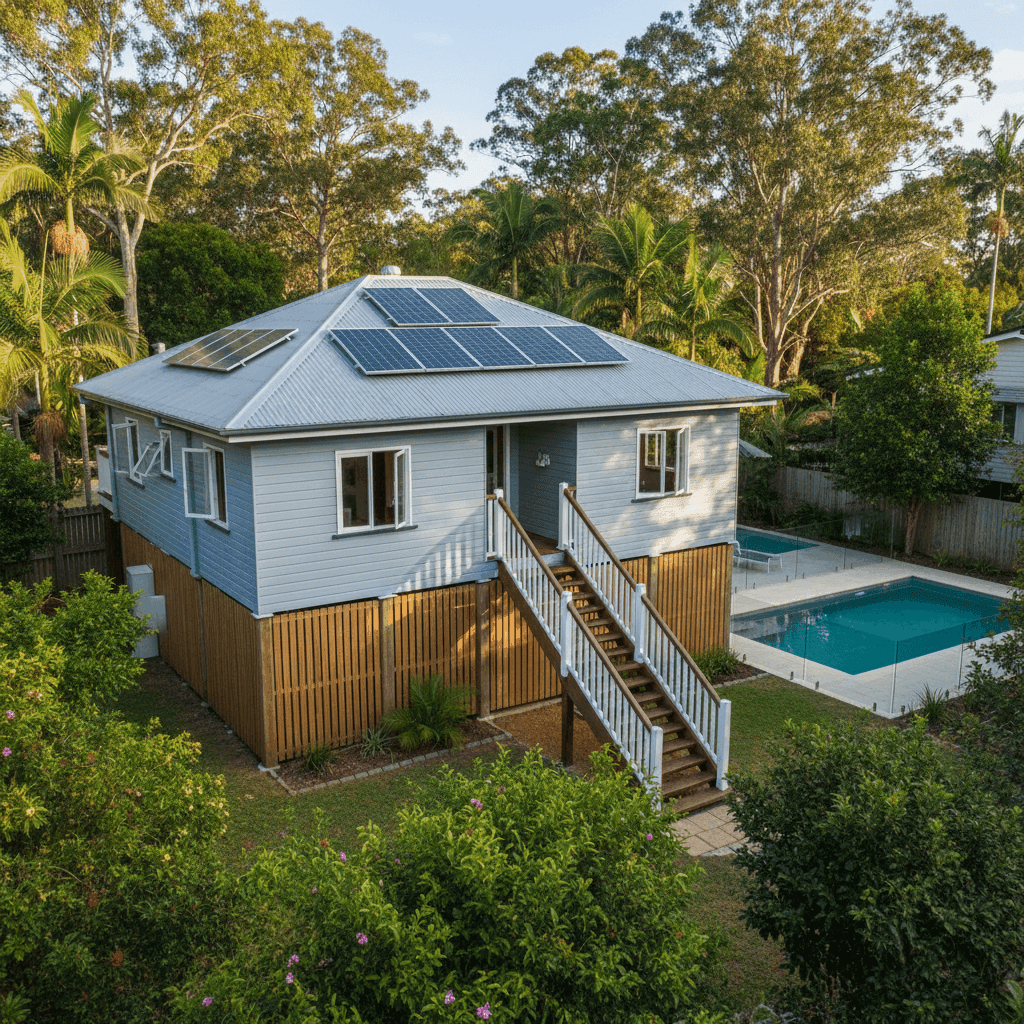
If you own a free standing home in Tyagarah, NSW 2481, you're likely no stranger to the charm — and the complexity — of insuring an older property in one of the Northern Rivers' most laid-back coastal pockets. Tyagarah sits just north of Byron Bay, and while the lifestyle is enviable, the insurance landscape for homes in this region can be anything but straightforward. This article breaks down a real building insurance quote for a 3-bedroom, 1-bathroom weatherboard home in Tyagarah, and explores what's driving the premium, how it compares to broader benchmarks, and what you can do to make sure you're getting the right cover at the right price.
---
Is This Quote Fair?
The quote in question comes in at $5,546 per year (or $531/month) for building-only cover on a home insured for $727,000, with a $2,000 building excess. Our price rating for this quote is CHEAP — meaning it sits below average relative to comparable properties.
That's genuinely good news for the homeowner. When you consider that the NSW state average premium sits at $9,528 per year, this quote represents a saving of nearly $4,000 annually. Even against the national average of $5,347/yr, this quote is competitive — coming in slightly above the national figure but well within a reasonable range given the property's characteristics and location.
It's worth noting, however, that averages can be misleading. The NSW state median premium is $3,770/yr, and the national median is $2,764/yr — both lower than this quote. Medians tend to reflect more modest properties and lower sums insured, so for a $727,000 building cover, sitting above the median is entirely expected and appropriate.
The bottom line: for a property of this age, construction type, and sum insured in the Northern Rivers region, this quote appears to offer solid value.
---
How Tyagarah Compares
Drilling into the numbers reveals just how significant local risk factors can be in shaping premiums. Unfortunately, suburb-level data for Tyagarah (2481) isn't yet available in our database — but the LGA-level picture tells a striking story.
The Ballina LGA average premium is $23,241 per year — nearly four times the NSW state average, and more than four times the quote being analysed here. This figure reflects the elevated risk profile across the broader Ballina local government area, which encompasses coastal and flood-prone communities where insurers price risk aggressively.
That this particular quote lands at roughly one-quarter of the LGA average suggests either that the specific property has favourable characteristics (more on that shortly), the insurer has assessed the individual risk more precisely, or the homeowner has structured their cover — including the excess — in a way that reduces the headline premium.
For a fuller picture of what homeowners across the state are paying, visit the NSW insurance stats page, or explore Tyagarah-specific data as it becomes available.
| Benchmark | Annual Premium |
|---|---|
| This Quote | $5,546 |
| NSW State Average | $9,528 |
| NSW State Median | $3,770 |
| National Average | $5,347 |
| National Median | $2,764 |
| Ballina LGA Average | $23,241 |
---
Property Features That Affect Your Premium
Several characteristics of this particular home have a meaningful influence on what insurers charge — for better and for worse.
Age & Construction (Built 1920, Weatherboard Walls)
A home built in 1920 is over a century old, and insurers treat older properties with caution. Weatherboard timber walls, while charming and common in the Northern Rivers, are considered higher risk than brick or rendered masonry — they're more susceptible to fire, termite damage, and general wear. This factor typically pushes premiums upward.
Elevated on Stumps
Here's where this property gains a significant advantage. Being elevated by at least 1 metre on stumps is a major flood mitigation factor. In a region where flood risk is a primary driver of insurance costs — as the Ballina LGA average powerfully illustrates — being raised above ground level can dramatically reduce an insurer's exposure. This likely explains a large part of why this quote sits so far below the LGA average.
Steel/Colorbond Roof
A Colorbond steel roof is viewed favourably by most insurers. It's durable, fire-resistant, and performs well in high-wind events. Compared to older tile or fibro roofing common on homes of this era, a steel roof is a genuine premium reducer.
Pool, Solar Panels & Ducted Climate Control
These additions increase the overall replacement value of the property and add complexity to any claim. A swimming pool introduces liability considerations, while solar panels and ducted climate control systems are expensive to repair or replace. Collectively, they contribute to the higher sum insured of $727,000 and justify a more substantial premium than a bare-bones property of the same size.
Timber/Laminate Flooring
Timber flooring in an elevated, stumped home can be vulnerable to moisture ingress and flooding — though the elevation mitigates much of this risk. It's still a factor insurers consider when assessing internal finishing replacement costs.
---
Tips for Homeowners in Tyagarah
1. Don't underinsure — especially with older homes The cost to rebuild a 1920s weatherboard home to current building codes is often significantly higher than people expect. Labour shortages and material costs in regional NSW have pushed rebuild costs up sharply in recent years. Review your sum insured regularly to ensure $727,000 still reflects true replacement cost.
2. Maintain your elevation advantage If your home is on stumps, keep the subfloor area clear and well-ventilated. Insurers may ask about subfloor conditions, and any signs of structural compromise could affect your cover or claims outcome. Document the elevated foundation clearly in your records.
3. Review your excess strategically This policy carries a $2,000 building excess, which is on the higher side. A higher excess generally lowers your premium, but make sure you can comfortably cover that amount out of pocket in the event of a claim. If cash flow is a concern, it may be worth comparing quotes with a lower excess to find the right balance.
4. Bundle where it makes sense — but compare first While this quote is building-only, many homeowners benefit from comparing bundled building and contents policies. That said, bundling isn't always cheaper. Use a comparison tool to run the numbers both ways before committing.
---
Compare Your Home Insurance Today
Whether you're reviewing an existing policy or shopping for the first time, it pays to compare. The difference between a well-priced policy and an overpriced one can run into thousands of dollars each year — and in a region like Tyagarah, where risk profiles vary dramatically from one street to the next, getting a quote tailored to your property is essential. Get a personalised home insurance quote at CoverClub and see how your current premium stacks up in seconds.