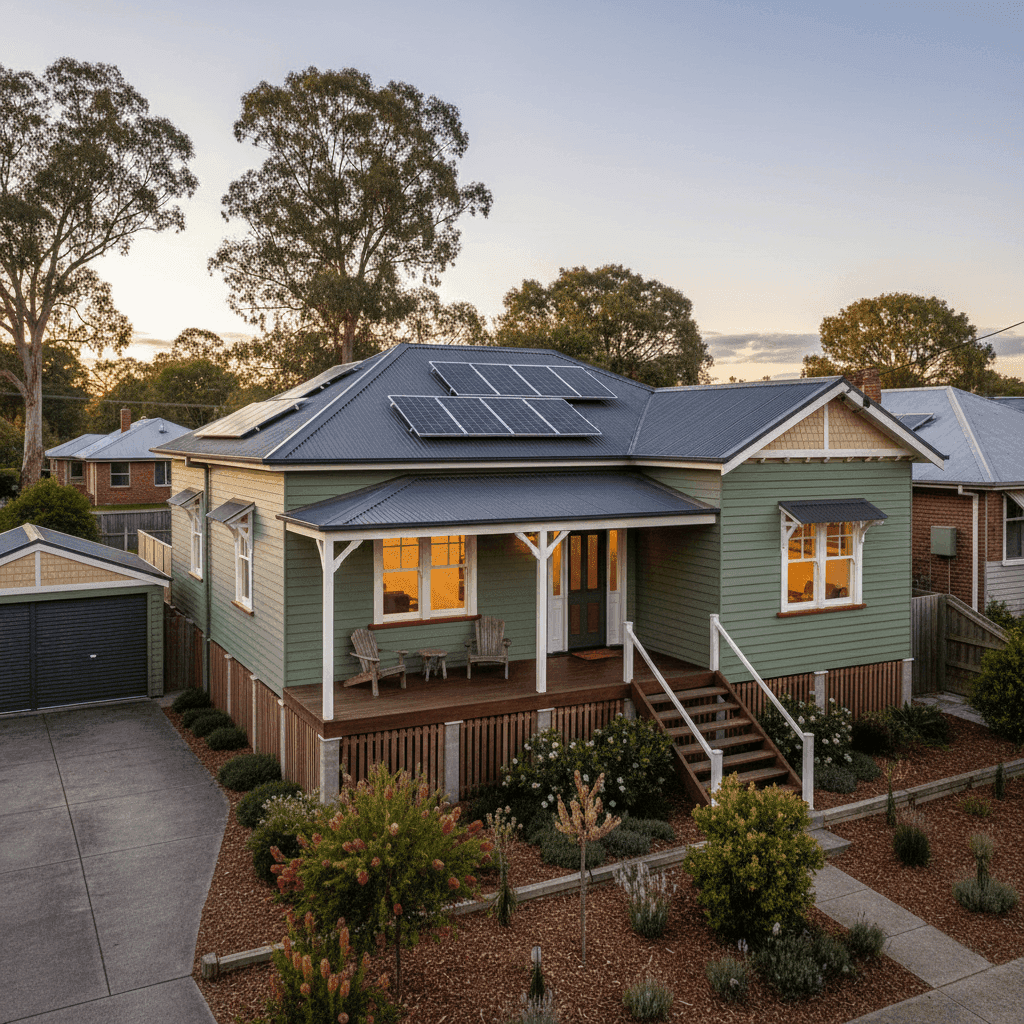
If you own a free standing home in Tynong, VIC 3813, you've probably wondered whether you're paying a fair price for home and contents insurance — or whether there's a better deal out there. Tynong is a semi-rural locality in Melbourne's outer south-east, sitting within the Cardinia Shire. Properties here tend to be spacious, leafy, and a little further from the hustle of the CBD, which brings its own set of insurance considerations. In this article, we break down a real home and contents insurance quote for a 3-bedroom, 1-bathroom free standing home in Tynong and stack it up against local, state, and national benchmarks.
---
Is This Quote Fair?
The quote in question comes in at $2,626 per year (or $257 per month) for combined home and contents cover, with a building sum insured of $591,000 and contents valued at $50,000. Both the building and contents excess are set at $1,000.
Our price rating for this quote is FAIR — Around Average. That's a reasonable outcome, particularly given the property's characteristics and location. It's not a standout bargain, but it's also not a cause for concern. For homeowners in regional Victoria, landing near the average mark often reflects a balanced risk profile — not too exposed, not unusually cheap either.
It's worth noting that a "fair" rating doesn't mean you should stop shopping around. Insurance markets are competitive, and even a modest saving of $200–$300 per year adds up significantly over time. That said, this quote gives a solid baseline to work from.
---
How Tynong Compares
Let's put the $2,626 annual premium in context. You can explore detailed local pricing data on the Tynong suburb stats page, but here's a snapshot of how this quote lines up:
| Benchmark | Annual Premium |
|---|---|
| This Quote | $2,626 |
| VIC State Average | $3,000 |
| VIC State Median | $2,718 |
| Cardinia LGA Average | $3,089 |
| National Average | $5,347 |
| National Median | $2,764 |
A few things stand out here. This quote sits below the Victorian state average of $3,000 and also below the Cardinia LGA average of $3,089 — which is the local government area Tynong falls within. It's also comfortably below the national average of $5,347, though that figure is heavily influenced by high-risk regions like North Queensland and parts of Western Australia where cyclone and flood exposure pushes premiums dramatically higher.
Compared to the VIC state median of $2,718, this quote is only marginally higher — a difference of just $92 per year. Against the national median of $2,764, it's similarly close. All things considered, this is a competitive result for the area.
---
Property Features That Affect Your Premium
Every property is different, and insurers weigh up a range of physical characteristics when calculating your premium. Here's how the key features of this Tynong home are likely influencing the price:
Weatherboard Timber Walls
Weatherboard construction is common in older Victorian homes and adds a degree of risk from an insurer's perspective. Timber is more susceptible to fire and rot than brick veneer or double brick, which can push premiums slightly higher. That said, weatherboard homes are well understood by Australian insurers, and the impact is typically modest rather than dramatic.
Steel/Colorbond Roof
A Colorbond roof is generally viewed favourably by insurers. It's durable, fire-resistant, and low-maintenance compared to terracotta tiles or older corrugated iron. This feature likely helps keep the premium competitive.
Stump Foundation
Homes on stumps (also known as pier foundations) are common in Victoria, particularly in older builds. They can be more vulnerable to movement and, in some cases, pest damage, which insurers factor into their risk assessment. Ensuring your stumps are regularly inspected and in good condition is worthwhile for both safety and insurance purposes.
Construction Year: 1985
At around 40 years old, this home sits in a bracket where some wear and tear is expected. Older homes can attract slightly higher premiums due to ageing wiring, plumbing, and structural elements — though a well-maintained 1985 build is generally not a major concern.
Solar Panels
Solar panels are increasingly common and most insurers now include them under standard building cover, though it's always worth confirming this with your insurer. They add replacement value to the building sum insured, which can nudge premiums upward slightly.
Ducted Climate Control
Ducted systems are a significant fixture and are typically covered under building insurance. Their inclusion adds to the overall replacement cost of the home, which is reflected in the building sum insured of $591,000.
Above Average Fittings Quality
Above average fittings — think quality kitchen cabinetry, stone benchtops, upgraded bathrooms — increase the cost to rebuild, which in turn supports a higher sum insured. This is appropriate and helps avoid underinsurance, a common and costly mistake.
---
Tips for Homeowners in Tynong
Whether you're reviewing your current policy or shopping for the first time, here are four practical steps to make sure you're getting the best value:
- Review your sum insured annually. Building costs in Victoria have risen sharply in recent years. A sum insured that was adequate three years ago may no longer reflect the true cost to rebuild your home. Use a building cost calculator or speak with a quantity surveyor to stay on top of this.
- Bundle building and contents cover. As demonstrated by this quote, combining home and contents insurance under a single policy often results in a better overall price than purchasing them separately. It also simplifies claims management.
- Compare quotes before renewing. Insurers often reserve their best rates for new customers. When your renewal notice arrives, take 15 minutes to compare quotes on CoverClub before automatically paying the same insurer again.
- Maintain your property proactively. For a weatherboard home on stumps, regular maintenance is both a safety and financial consideration. Keep gutters clear, check for signs of timber pest activity, and ensure your stumps are structurally sound. Poorly maintained properties can lead to claim disputes or policy exclusions.
---
Compare Your Home Insurance Today
Whether this quote matches your own situation or you're simply curious about what's available, it pays to shop around. CoverClub makes it easy to compare home and contents insurance quotes from a range of Australian insurers in one place. Enter your address to get started and see how your current premium stacks up against the market.