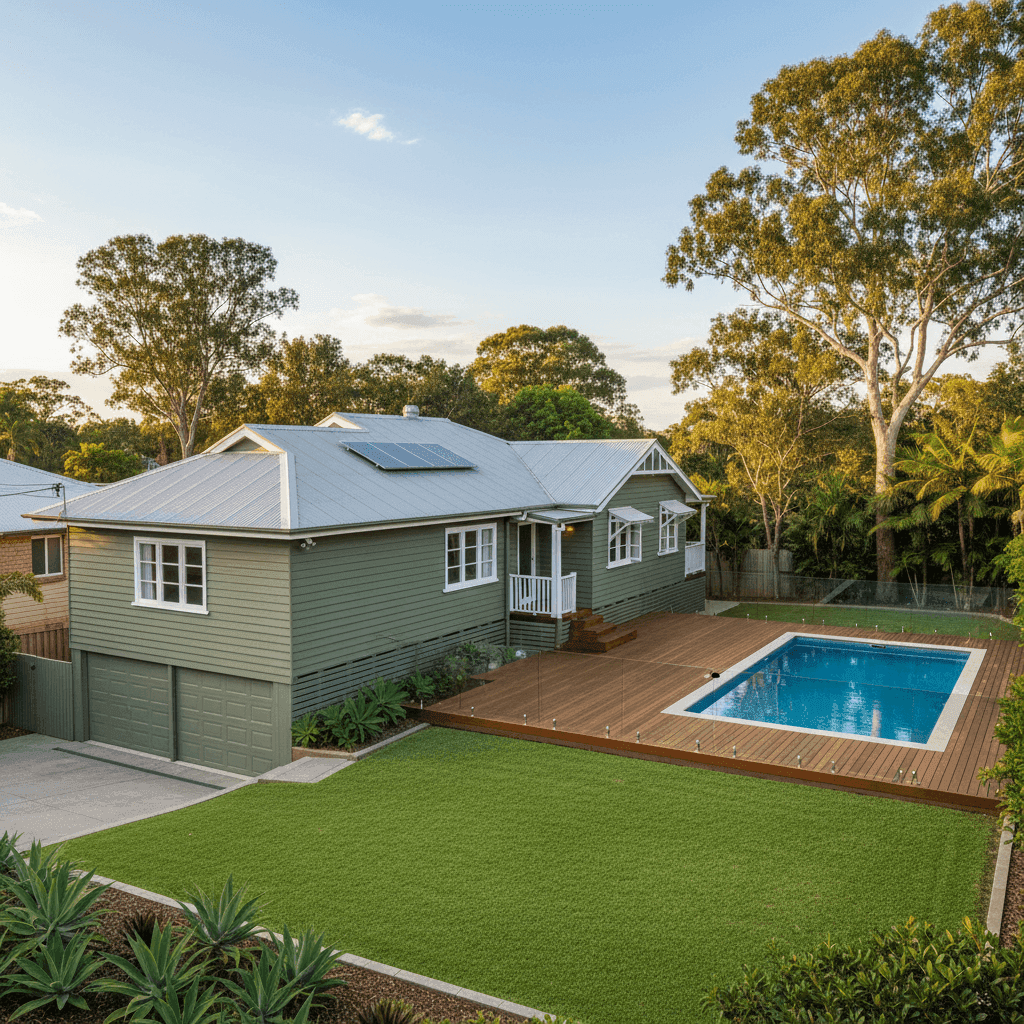
If you own a free standing home in Underwood, QLD 4119, you're probably curious whether your home insurance premium is competitive — or whether you're quietly paying more than you need to. This article breaks down a real home and contents insurance quote for a four-bedroom, two-bathroom weatherboard home in Underwood, comparing it against suburb, state, and national benchmarks so you can make a genuinely informed decision.
---
Is This Quote Fair?
The quote in question comes in at $1,828 per year (or $175 per month) for combined home and contents cover, with a building sum insured of $350,000 and contents valued at $130,000. Both the building and contents excess are set at $2,000.
Our price rating for this quote is FAIR — Around Average, which is a reasonable outcome for a property of this type and age. It's not the cheapest on the market, but it's far from the most expensive either. For a 1975-built weatherboard home with a pool and ducted climate control in suburban Brisbane's south, landing near the middle of the market is a solid result.
That said, "fair" doesn't mean you shouldn't shop around. Even a modest saving of $200–$300 per year compounds significantly over time, and the contents and building cover levels here are substantial enough that getting the right policy — not just the cheapest — matters.
---
How Underwood Compares
To put this quote in proper context, it helps to look at what other homeowners in Underwood and across Queensland are actually paying. You can explore the full data on our Underwood suburb stats page.
| Benchmark | Premium |
|---|---|
| This quote | $1,828/yr |
| Suburb average (Underwood) | $1,762/yr |
| Suburb median (Underwood) | $1,951/yr |
| Suburb 25th percentile | $877/yr |
| Suburb 75th percentile | $2,349/yr |
| LGA average (Logan) | $4,617/yr |
| QLD state average | $9,129/yr |
| QLD state median | $3,903/yr |
| National average | $5,347/yr |
| National median | $2,764/yr |
A few things stand out here. First, this quote sits just above the Underwood suburb average of $1,762/yr but below the suburb median of $1,951/yr — meaning more than half of comparable quotes in the area come in higher. That's a reasonably healthy position to be in.
Second, the contrast with broader Queensland figures is striking. The QLD state average of $9,129/yr is heavily skewed by high-risk coastal and cyclone-prone areas in Far North Queensland, where premiums can be eye-watering. Underwood, sitting in Brisbane's southern suburbs, benefits from a much lower risk profile — no cyclone zone designation, no coastal flooding exposure of the same magnitude, and well-established infrastructure.
Compared to the national average of $5,347/yr, this quote looks particularly competitive. Even the national median of $2,764/yr is notably higher than what's been quoted here, reinforcing that Underwood is a relatively affordable suburb for home insurance by Australian standards.
The Logan LGA average of $4,617/yr also deserves mention — it's significantly higher than this quote, likely reflecting a broader mix of property types, ages, and risk profiles across the Logan council area.
---
Property Features That Affect Your Premium
Several characteristics of this property directly influence the premium, and it's worth understanding how each one plays a role.
Weatherboard timber construction is one of the more notable factors. Older timber-framed homes are generally considered higher risk by insurers than brick or rendered-brick properties, primarily due to fire susceptibility and the cost of sourcing and replacing period-appropriate materials. A 1975-built weatherboard home in Queensland is a common profile, but it does attract slightly higher premiums than a comparable brick home of the same size.
The Colorbond steel roof is actually a positive from an insurer's perspective. Steel roofing is durable, resistant to hail damage relative to older tile options, and less prone to the kind of catastrophic failure that can occur with ageing terracotta or concrete tiles. This likely helps moderate the premium.
The slab foundation is another neutral-to-positive factor. Slab-on-ground construction is straightforward to assess and repair, and doesn't carry the additional risk profile of elevated or suspended timber floors, which can be more vulnerable to moisture and pest damage.
Timber and laminate flooring adds some replacement cost consideration to the contents and building valuation, but is broadly standard for a home of this era and style.
The swimming pool adds a layer of liability and replacement cost to the policy. Pools require specific cover considerations — from structural damage to the pool shell through to surrounding paving and filtration equipment. It's worth confirming exactly what your policy covers in relation to the pool, as exclusions can vary significantly between insurers.
Ducted climate control is another asset that increases the overall replacement value of the home. These systems can cost $10,000–$20,000 or more to replace, and ensuring your sum insured accounts for this is important to avoid being underinsured.
At 214 sqm, this is a comfortably sized family home, and the $350,000 building sum insured works out to roughly $1,635 per sqm — a reasonable estimate for a weatherboard home in this condition, though homeowners should periodically review this figure against current construction costs, which have risen considerably in recent years.
---
Tips for Homeowners in Underwood
1. Review your sum insured annually. Construction costs in South East Queensland have increased substantially since 2020. If your building sum insured hasn't kept pace, you may be underinsured — meaning you'd face a shortfall in the event of a total loss. Use a building cost calculator or speak to a quantity surveyor to validate your figure.
2. Check exactly what your pool cover includes. Not all home insurance policies treat swimming pools the same way. Some cover the pool shell under building insurance, while others require specific endorsements for filtration equipment, pumps, and pool surrounds. Read the Product Disclosure Statement (PDS) carefully and ask your insurer directly if you're unsure.
3. Consider your excess strategically. Both the building and contents excess on this policy are set at $2,000. A higher excess generally means a lower premium, but you need to be confident you can comfortably cover that amount out of pocket in the event of a claim. If cash flow is a concern, a lower excess with a slightly higher premium may be worth it for peace of mind.
4. Bundle — but still compare. Many insurers offer discounts when you combine home and contents cover under a single policy, which this quote already does. However, bundling doesn't always guarantee the best price. It's worth getting separate quotes and comparing the total cost to ensure the bundle is genuinely saving you money.
---
Compare Your Options at CoverClub
Whether this quote looks right for your situation or you're keen to see what else is out there, CoverClub makes it easy to compare home and contents insurance options across Australia. Get a quote today and see how your current premium stacks up — you might be surprised by what's available.