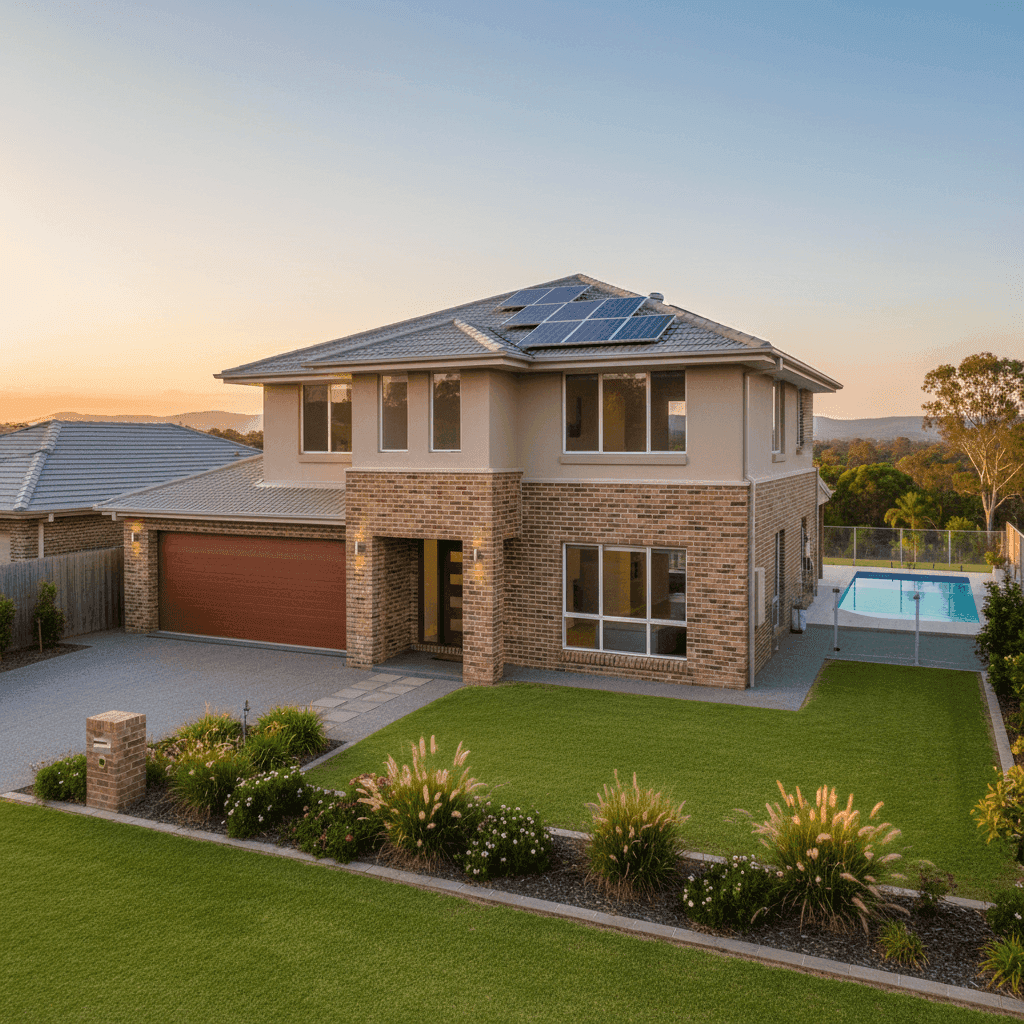
Upper Coomera is one of the Gold Coast's fastest-growing residential corridors — a suburb of wide streets, family homes, and well-established estates that has attracted thousands of Queensland homeowners over the past two decades. If you own a free standing home here, understanding what you should be paying for building insurance is just as important as knowing the value of your property itself. This article breaks down a real building-only insurance quote for a four-bedroom home in Upper Coomera (postcode 4209), compares it against local, state, and national benchmarks, and offers practical guidance for getting the right cover at a fair price.
---
Is This Quote Fair?
The quote in question covers a four-bedroom, two-bathroom free standing home with a building sum insured of $649,000, returning an annual premium of $2,974 (or roughly $278 per month) with a $1,000 building excess.
Our pricing engine rates this quote as FAIR — around average for the area. That's a meaningful finding. It tells you the insurer hasn't dramatically overpriced this policy, but there's also room to do better depending on your circumstances.
To put the number in perspective: the suburb average premium in Upper Coomera sits at $3,117 per year, meaning this quote comes in roughly $143 below the local average. It's also comfortably below the suburb's 75th percentile of $3,693 — so roughly three quarters of comparable quotes in the area cost the same or more. The suburb median, however, is $2,606, which means about half of Upper Coomera homeowners are finding cover for less than this quote. That gap is worth exploring if you haven't shopped around recently.
The bottom line: this is a reasonable quote — not a bargain, but not a rip-off either. Homeowners who are price-sensitive may be able to improve on it by comparing alternatives.
---
How Upper Coomera Compares
One of the most striking takeaways from the Upper Coomera insurance data is just how favourably this suburb sits relative to the broader Queensland market.
| Benchmark | Annual Premium |
|---|---|
| This quote | $2,974 |
| Upper Coomera suburb average | $3,117 |
| Upper Coomera suburb median | $2,606 |
| Gold Coast LGA average | $8,161 |
| QLD state average | $9,129 |
| QLD state median | $3,903 |
| National average | $5,347 |
| National median | $2,764 |
The Queensland state average of $9,129 per year is eye-watering — and it reflects the enormous insurance burden carried by homeowners in high-risk flood and cyclone zones across the state. Upper Coomera, by contrast, is not classified as a cyclone risk area, which is a significant factor in keeping premiums comparatively modest.
Even against the national average of $5,347, this quote looks competitive. Upper Coomera homeowners are, in general, paying well below what Australians fork out on average — a reflection of the suburb's relatively benign risk profile and modern housing stock.
The Gold Coast LGA average of $8,161 is notably higher than Upper Coomera's suburb figures, which suggests that coastal and canal-front properties elsewhere on the Gold Coast are pulling that number up considerably. Inland suburbs like Upper Coomera benefit from distance from storm surge and tidal flood risk.
---
Property Features That Affect Your Premium
Every insurer prices a policy based on the specific characteristics of your home. Here's how the features of this property influence what you pay:
Brick Veneer Walls Brick veneer is one of the most common external wall materials in Australian suburban homes, and insurers generally view it favourably. It offers solid fire resistance and reasonable structural durability, which can contribute to lower premiums compared to timber-framed or clad exteriors.
Tiled Roof Concrete or terracotta tiles are considered a robust roofing material. They perform well in storms and have a long service life, making them a lower-risk choice in the eyes of underwriters compared to Colorbond or older corrugated iron.
Slab Foundation A concrete slab is the standard foundation type for homes built in South East Queensland from the 1990s onward. It's structurally sound and less susceptible to subsidence issues than older pier-and-beam foundations, which can reduce risk assessments.
Swimming Pool Pools add to the replacement cost of a property and are factored into the sum insured. They also introduce a minor liability consideration, though this is more relevant to contents or landlord policies than a building-only cover.
Solar Panels Solar panels are increasingly common on Queensland rooftops, and most modern building policies include them as a fixed fixture. However, it's worth confirming your policy explicitly covers panel replacement — both for storm damage and electrical fault scenarios.
Ducted Climate Control Ducted air conditioning systems are a significant fixed asset in any home. As a permanent fixture, the system is typically covered under building insurance, and its inclusion in the sum insured is appropriate for a home of this size and standard.
Construction Year: 2002 A home built in 2002 falls under Queensland's post-1990s building codes, which introduced significantly improved cyclone and storm-resistance standards. This vintage generally attracts more favourable underwriting than homes built prior to the 1980s.
214 sqm Floor Area, Standard Fittings At 214 square metres with standard-quality fittings, this home sits comfortably in the mid-range for a four-bedroom property. The $649,000 sum insured equates to approximately $3,033 per square metre — a reasonable rebuild estimate for this specification in South East Queensland.
---
Tips for Homeowners in Upper Coomera
1. Shop the market at renewal time The spread between the 25th percentile ($1,822) and 75th percentile ($3,693) in Upper Coomera is substantial — over $1,800 per year. That range tells you insurers are pricing this suburb very differently. If you haven't compared quotes in the past 12 months, you may be leaving real money on the table. Use CoverClub to compare quotes before your renewal date arrives.
2. Review your sum insured annually Construction costs in South East Queensland have risen sharply since 2020. A sum insured that was accurate two or three years ago may now leave you underinsured. Check that your $649,000 (or equivalent) still reflects the true cost of rebuilding — including demolition, debris removal, and professional fees — not just the market value of the land and structure combined.
3. Confirm your solar panels and pool are explicitly covered While most building policies cover fixed fixtures, it's worth reading your Product Disclosure Statement (PDS) to confirm solar panels are included and that there are no exclusions around pool structures or equipment. Some policies cap coverage on these items or exclude certain types of damage.
4. Consider your excess carefully A $1,000 building excess is standard, but increasing it voluntarily can reduce your annual premium. If you have an emergency fund and wouldn't claim for minor damage anyway, a higher excess (say, $2,500) could meaningfully lower what you pay each year. Conversely, if cash flow is a concern, keeping the excess lower provides more predictable out-of-pocket costs in the event of a claim.
---
Compare Your Home Insurance Today
Whether you're renewing soon or just curious about what the market looks like, CoverClub makes it easy to see how your current premium stacks up. We analyse real quotes across Upper Coomera and the broader Gold Coast region so you can make an informed decision — not just accept whatever your insurer sends at renewal. Get a building insurance quote now and find out if you're paying a fair price for your home.