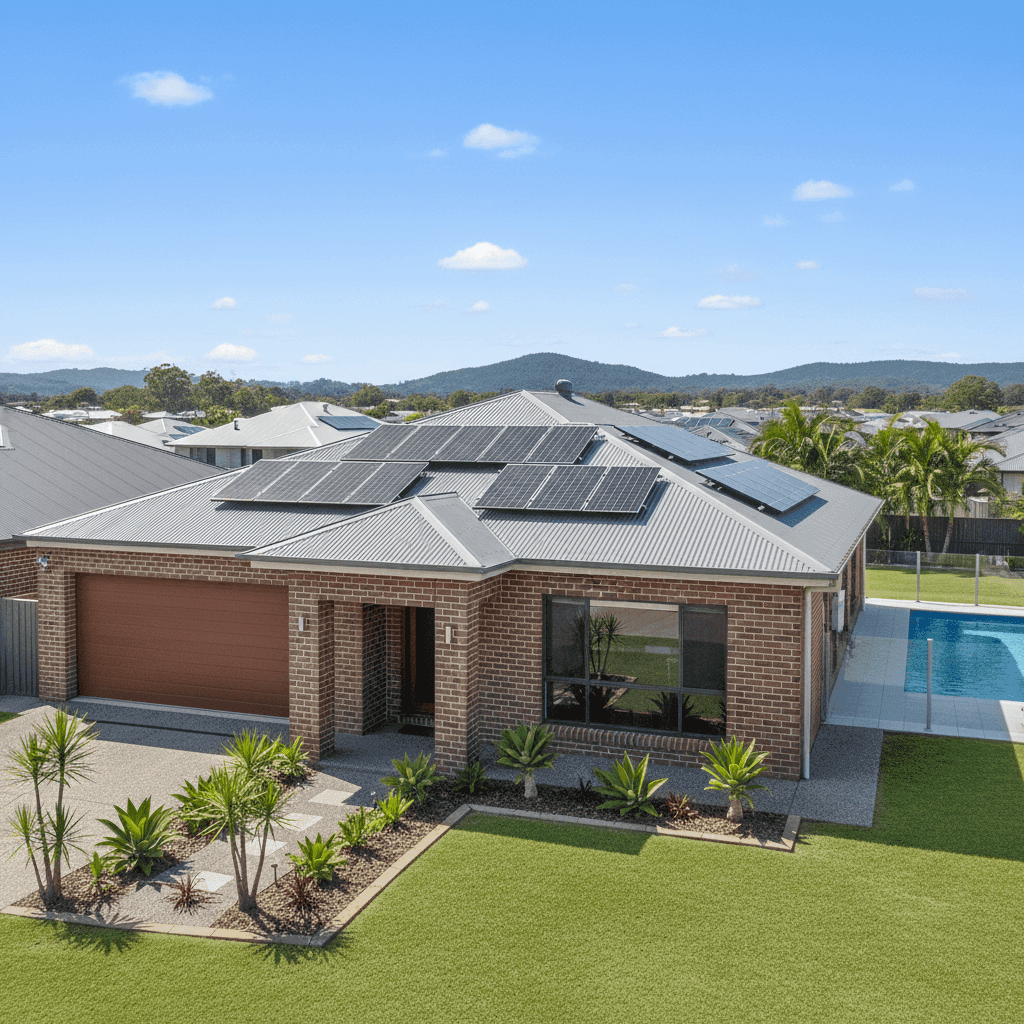
Upper Coomera is one of South East Queensland's fastest-growing suburbs, sitting in the heart of the Gold Coast corridor. For owners of free standing homes in this area, understanding what drives home insurance costs — and whether a given quote represents fair value — is an important part of protecting what is likely your most significant asset. This article breaks down a real building insurance quote for a four-bedroom, two-bathroom home in Upper Coomera (postcode 4209) and puts it into context against local, state, and national benchmarks.
---
Is This Quote Fair?
The quote in question sits at $2,266 per year (or $217 per month) for building-only cover, with a $1,000 building excess and a sum insured of $679,000. Our analysis rates this as FAIR — around average for the area.
That "fair" rating is worth unpacking. It doesn't mean you're getting a bargain, but it does mean you're not being overcharged relative to what most Upper Coomera homeowners are paying. The quote lands comfortably between the suburb's 25th percentile ($1,822/yr) and the median ($2,606/yr), which tells us this is a reasonably competitive price for a property of this size and specification.
If you're a value-conscious homeowner, the 25th percentile benchmark is a useful target — it represents what the most competitively priced quarter of quotes in the suburb look like. At $444 per year less than this quote, there may be room to shop around. That said, premium alone shouldn't drive your decision; policy inclusions, sub-limits, and insurer reputation all matter too.
---
How Upper Coomera Compares
One of the most striking things about this quote is just how reasonable it looks when you zoom out beyond the suburb level.
Upper Coomera's suburb average premium sits at $3,117 per year, with a median of $2,606/yr — meaning this quote is already tracking below both figures. But the contrast becomes even more dramatic at the broader level:
| Benchmark | Premium |
|---|---|
| This quote | $2,266/yr |
| Upper Coomera suburb average | $3,117/yr |
| Upper Coomera suburb median | $2,606/yr |
| Gold Coast LGA average | $8,161/yr |
| QLD state average | $9,129/yr |
| QLD state median | $3,903/yr |
| National average | $5,347/yr |
| National median | $2,764/yr |
The Gold Coast LGA average of $8,161/yr and the Queensland state average of $9,129/yr are heavily influenced by high-risk coastal and flood-prone properties — areas where insurers price in significant natural hazard exposure. Upper Coomera, sitting further inland and away from the most vulnerable coastal zones, benefits from a more moderate risk profile, which is reflected in these comparatively lower premiums.
Even against the national median of $2,764/yr, this quote holds up well — coming in roughly $500 below that figure. Based on 87 quotes sampled in the suburb, Upper Coomera appears to be a relatively insurable postcode by Queensland standards.
---
Property Features That Affect Your Premium
Several characteristics of this particular property play a meaningful role in how insurers price the risk.
Brick Veneer Walls & Colorbond Roof Brick veneer is generally viewed favourably by insurers — it offers solid fire resistance and structural durability. Paired with a steel Colorbond roof, this combination is considered low-maintenance and resilient, particularly against hail and high winds. Colorbond roofing is a popular choice in Queensland for good reason, and it typically attracts more competitive premiums than older materials like terracotta tiles or fibrous cement sheeting.
Concrete Slab Foundation A slab foundation is standard for homes built in this era and region, and it's generally considered a stable, lower-risk foundation type. It avoids the complications associated with stumped or pier-and-beam foundations, which can be more susceptible to movement and moisture issues.
Built in 2010 At around 15 years old, this home sits in a sweet spot for insurers. It's modern enough to meet contemporary building codes — including those introduced after cyclone and storm damage reviews in Queensland — but old enough that any early construction defects would likely have already surfaced. Homes in this age bracket often attract more favourable pricing than older properties.
Swimming Pool A pool adds to the insurable value of the property and can slightly increase premiums due to liability considerations and the cost of repairs or replacement. It's worth confirming your policy covers pool-related structures (fencing, pumps, filtration systems) and checking any liability conditions.
Solar Panels Solar panels are increasingly common on Queensland homes, but they're not always automatically covered under standard building policies. It's essential to confirm whether your panels are included in your sum insured and that the $679,000 figure accounts for their replacement cost. Some insurers treat rooftop solar as a fixed fixture; others may require a specific endorsement.
Ducted Climate Control Ducted air conditioning systems are a significant fixed asset, and their replacement cost can run into the tens of thousands of dollars. Ensuring this is factored into your sum insured is important — underinsurance remains one of the most common and costly mistakes Australian homeowners make.
No Cyclone Risk Upper Coomera falls outside designated cyclone risk zones, which is a meaningful factor in keeping premiums lower than many other Queensland postcodes. Coastal and far-north Queensland properties can face dramatically higher premiums due to cyclone exposure — this property avoids that loading entirely.
---
Tips for Homeowners in Upper Coomera
1. Check your sum insured regularly Construction costs have risen sharply across Australia in recent years. A sum insured of $679,000 for a 214 sqm home works out to roughly $3,173 per square metre — a reasonable figure, but one worth validating against current builder rates in the Gold Coast region. Use an independent building cost calculator annually to make sure you're not underinsured.
2. Confirm solar panels and pool equipment are covered Before renewing, contact your insurer and ask specifically whether rooftop solar panels and pool equipment (pump, filter, heating) are included in your building cover. If they're not explicitly listed, request an endorsement or factor them into a higher sum insured.
3. Compare quotes at renewal — every year The insurance market in Queensland is competitive, and pricing can shift significantly between years. Even if your current quote feels fair, running a fresh comparison at renewal time takes only a few minutes and could save you hundreds. The suburb's 25th percentile of $1,822/yr shows there are more competitive options available in this postcode.
4. Consider bundling building and contents cover This quote covers building only. If you also need contents insurance, bundling both under a single policy often unlocks a multi-policy discount. It also simplifies claims — particularly for damage events where it's not always clear-cut whether a loss falls under building or contents.
---
Find a Better Deal on CoverClub
Whether you're reviewing your existing policy or shopping for cover on a new purchase, comparing quotes is the single most effective way to make sure you're not overpaying. Get a home insurance quote on CoverClub and see how your property stacks up — it takes just a few minutes and gives you real data to negotiate with or switch on. You can also explore Upper Coomera suburb insurance statistics and Queensland-wide pricing trends to better understand the market before you commit.