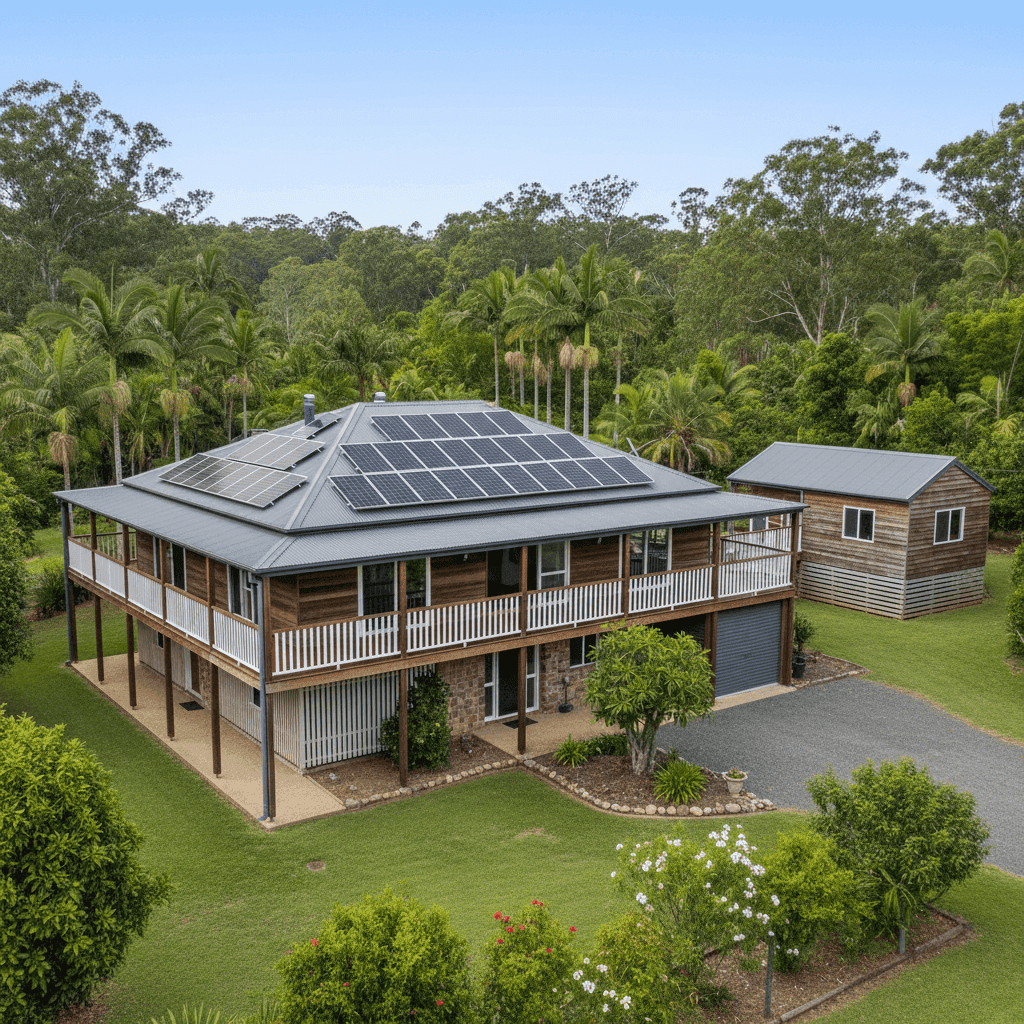
Nestled in the lush hinterland of northern New South Wales, Upper Horseshoe Creek (postcode 2474) is a quiet rural locality in the Tweed region. If you own a free standing home here — particularly one built on poles with a Colorbond roof and timber flooring — understanding what you should be paying for home and contents insurance is essential. This article breaks down a real quote of $3,699 per year for a 1-bedroom, 1-bathroom free standing home and puts it into context against local, state, and national benchmarks.
---
Is This Quote Fair?
The short answer: yes — and then some. This quote has been rated Cheap (Below Average), meaning the premium sits comfortably below what most homeowners in comparable situations are paying.
At $3,699 per year (or roughly $354 per month), this policy covers:
- Building sum insured: $626,000
- Contents value: $50,000
- Building excess: $1,000
- Contents excess: $1,000
For a combined home and contents policy with those cover levels, landing below the NSW state median of $3,770/year is a solid outcome. It's worth noting the policy is only $71 below that median — so while it's a good result, it's not dramatically cheap. The real story emerges when you zoom out and look at the broader regional picture.
---
How Upper Horseshoe Creek Compares
To appreciate just how competitive this quote is, it helps to look at the numbers side by side.
| Benchmark | Annual Premium |
|---|---|
| This quote | $3,699 |
| NSW state median | $3,770 |
| NSW state average | $9,528 |
| National median | $2,764 |
| National average | $5,347 |
| Tweed LGA average | $26,089 |
The figure that really stands out is the Tweed LGA average of $26,089 per year — more than seven times what this homeowner is paying. The Tweed region carries significant insurance risk, driven by its exposure to flooding, storms, and severe weather events. The fact that this particular property sits well below that LGA average suggests a combination of favourable property features and smart shopping has paid off.
You can explore more local data on the Upper Horseshoe Creek insurance stats page, compare it against the broader NSW insurance landscape, or see how it stacks up against national averages.
It's also worth acknowledging that the national median of $2,764 is lower than this quote. That's not unusual — premiums in coastal and hinterland NSW tend to run higher than the national midpoint, reflecting the elevated weather and environmental risks in the region.
---
Property Features That Affect Your Premium
Every home is different, and insurers price risk based on a detailed picture of your property. Here's how the specific features of this home likely influence the premium:
Pole Foundation (Elevated Home)
This home is built on poles and elevated by less than 1 metre — a classic construction style in the NSW hinterland and northern rivers region. Elevated homes can actually fare better in flood events, as water may pass beneath the structure rather than inundating the living areas. However, the elevated design also introduces some structural complexity that insurers factor into their calculations.
Steel/Colorbond Roof
Colorbond roofing is generally viewed favourably by insurers. It's durable, fire-resistant, and holds up well against hail and high winds — all relevant concerns in the Tweed hinterland. This roof type may contribute to keeping the premium competitive.
Timber and Laminate Flooring
Timber and laminate floors are a common feature in elevated, pole-frame homes. While aesthetically appealing and structurally practical, these materials can be more vulnerable to water damage than tiles or concrete. Insurers typically account for this in their contents and building assessments.
Solar Panels
This property has solar panels installed, which adds to the insured value of the building. Solar systems can be expensive to repair or replace after a storm or hail event, so it's important to confirm your building sum insured reflects their replacement cost.
Granny Flat
The presence of a granny flat on the property is a notable feature. A secondary dwelling adds to the overall rebuild cost, which is likely reflected in the $626,000 building sum insured. Homeowners should ensure their policy explicitly covers any secondary structures on the land.
No Pool, No Ducted Climate Control, Not in a Cyclone Risk Zone
The absence of a pool and ducted climate control system simplifies the risk profile slightly. More significantly, the property is not in a designated cyclone risk area, which removes one of the most significant premium loading factors for properties in far northern NSW.
---
Tips for Homeowners in Upper Horseshoe Creek
Whether you're reviewing an existing policy or shopping for cover for the first time, here are four practical steps worth taking:
1. Verify Your Building Sum Insured
With a granny flat and solar panels on site, the $626,000 sum insured needs to reflect the true cost of rebuilding everything from scratch — not just the main dwelling. Underinsurance is one of the most common and costly mistakes homeowners make. Use a building cost calculator or speak with a local builder to sense-check the figure.
2. Understand Your Flood and Storm Cover
The Tweed hinterland is no stranger to heavy rainfall and flooding. Before signing any policy, read the Product Disclosure Statement (PDS) carefully to confirm what flood events are covered, under what circumstances, and whether any exclusions apply to pole-frame or elevated homes.
3. Review Your Contents Estimate Annually
A $50,000 contents value covers the basics, but it's easy to underestimate the cumulative value of furniture, appliances, clothing, and personal items. Walk through each room and take stock — many Australians discover they're underinsured on contents when it's too late.
4. Compare Quotes Before Renewing
Given the enormous spread between the Tweed LGA average ($26,089) and this quote ($3,699), it's clear that not all insurers price this area the same way. Loyalty doesn't always pay — shopping around at renewal time can make a substantial difference. Use a comparison tool to ensure you're not overpaying.
---
Ready to Compare Home Insurance Quotes?
Whether you're a homeowner in Upper Horseshoe Creek or anywhere else in Australia, getting multiple quotes is the single best way to ensure you're not overpaying for cover. CoverClub makes it easy to compare home and contents insurance options in one place — so you can find a policy that fits your property and your budget.