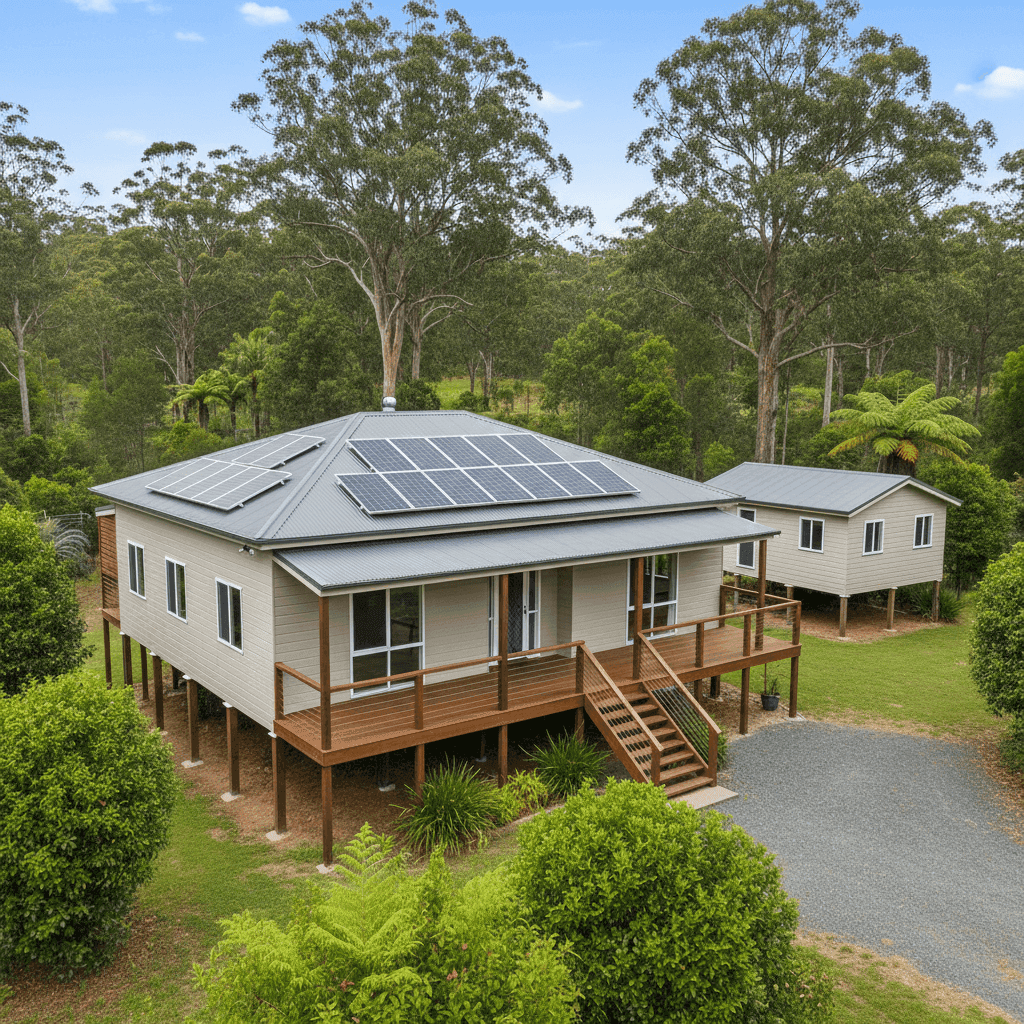
Upper Lansdowne is a quiet rural locality tucked into the Manning Valley in the Mid-Coast region of New South Wales. It's the kind of place where properties have character — elevated homes on stumps, timber floors, and acreage surroundings that make every house feel a little different from the next. For owners of free standing homes in this postcode, understanding what drives home insurance costs is genuinely useful, because premiums here can vary quite dramatically depending on a property's features and the insurer doing the pricing.
This article breaks down a real home and contents insurance quote for a three-bedroom free standing home in Upper Lansdowne (NSW 2430), rated CHEAP by CoverClub's pricing engine. We'll unpack what that means, how it compares to local and national benchmarks, and what homeowners in this area can do to keep their cover competitive.
---
Is This Quote Fair?
The annual premium on this quote comes in at $4,114 per year (or $394/month), covering a building sum insured of $667,000 and $50,000 in contents, each with a $1,000 excess. CoverClub's analysis rates this as CHEAP — below the suburb average — and the numbers back that up clearly.
The suburb average for Upper Lansdowne sits at $5,668/year, with a median of $6,246. That means this quote is coming in roughly $1,554 below the local average — a saving of around 27%. When you look at the suburb's 25th percentile ($6,227) and 75th percentile ($6,892), this quote sits well beneath even the cheapest end of the local range, which is a strong signal that the insurer has priced this property favourably.
For a homeowner in Upper Lansdowne, this represents genuine value — particularly given the building sum insured of $667,000, which is a meaningful level of cover for a 214 sqm home.
---
How Upper Lansdowne Compares
Putting this quote in a broader context is where things get interesting. Here's how the numbers stack up across different benchmarks:
| Benchmark | Annual Premium |
|---|---|
| This Quote | $4,114 |
| Suburb Average (Upper Lansdowne) | $5,668 |
| Suburb Median | $6,246 |
| LGA Average (Mid-Coast) | $5,840 |
| NSW Average | $9,528 |
| NSW Median | $3,770 |
| National Average | $5,347 |
| National Median | $2,764 |
A few things stand out here. The NSW average of $9,528 is notably high — this is partly driven by expensive metropolitan and high-risk coastal postcodes pulling the average up. The NSW median of $3,770 is a more representative figure for typical NSW homeowners, and this quote sits just above that mark.
Against the national average of $5,347, this quote is below average, which reinforces the CHEAP rating. The national median of $2,764 is lower, but that figure includes a broad mix of properties — many with lower sum insured values and simpler risk profiles than a 214 sqm elevated home with solar panels and a granny flat.
The Mid-Coast LGA average of $5,840 provides perhaps the most relevant local comparison. This quote comes in $1,726 below that figure, suggesting the specific combination of features on this property is working in the homeowner's favour.
---
Property Features That Affect Your Premium
Several characteristics of this property are worth examining through an insurance lens:
Hardiplank / Hardiflex External Walls Fibre cement cladding like Hardiplank is generally viewed positively by insurers. It's durable, resistant to rot and termites, and holds up well in variable weather conditions — all factors that can reduce the likelihood of a claim.
Steel / Colorbond Roof Colorbond roofing is a popular choice across regional NSW for good reason. It's lightweight, long-lasting, and performs well in high-wind events. Insurers typically regard it as a lower-risk roofing material compared to older options like terracotta tiles or corrugated iron.
Elevated on Stumps (At Least 1 Metre) Being elevated by at least one metre is a significant feature in flood-prone regions. The Manning Valley has a history of flooding, and properties that sit high off the ground are less exposed to inundation damage. This elevation is likely contributing meaningfully to the competitive premium on this quote.
Solar Panels The property has solar panels installed, which adds to the replacement cost of the home. It's important that the building sum insured accounts for the cost of reinstating the solar system — at $667,000, there's a reasonable buffer here, but homeowners should confirm this with their insurer.
Granny Flat The presence of a granny flat increases the overall replacement value of the property. Homeowners need to ensure their building sum insured covers both the main dwelling and the secondary structure. Underinsurance is a common issue with properties that have additional structures, so it's worth getting a professional valuation if you're unsure.
Ducted Climate Control Ducted systems are a built-in fixture and should be included in the building sum insured. At $667,000, the cover here appears adequate for a home of this size and specification.
Timber / Laminate Flooring Timber floors can be costly to repair or replace following water damage. This is worth keeping in mind if the property is in a flood-adjacent area — ensuring flood cover is included (or understanding if it's excluded) is an important step.
---
Tips for Homeowners in Upper Lansdowne
1. Check Your Flood Cover Status The Manning Valley region has experienced significant flood events historically. Before assuming your policy covers flood damage, read the Product Disclosure Statement carefully. Some policies exclude flood by default or define it differently from storm surge or rainwater runoff. If flood cover isn't included, it may be worth adding.
2. Don't Underinsure Your Granny Flat Secondary dwellings are easy to overlook when calculating your building sum insured. Make sure your insurer is aware of the granny flat and that its full replacement cost is factored into the $667,000 figure. If you've renovated or extended it recently, it's worth revisiting that number.
3. Review Your Contents Cover Annually A $50,000 contents sum may be appropriate for some households, but it's worth doing a room-by-room audit of your belongings to make sure it reflects reality. Electronics, furniture, appliances, and clothing add up quickly — and many people discover they're underinsured only after a claim.
4. Consider the Value of Your Solar System Solar panel systems can range from $5,000 to $15,000 or more depending on capacity. Confirm with your insurer whether the panels are covered under the building or contents section, and whether accidental damage (such as from hail) is included.
---
Compare Quotes and Find Better Value
Whether you're renewing your existing policy or shopping around for the first time, it pays to compare. CoverClub makes it easy to see how different insurers price your specific property — not just a generic estimate. Get a quote for your Upper Lansdowne home today and find out if you're paying a fair price or leaving money on the table.
You can also explore detailed premium data for Upper Lansdowne and the 2430 postcode, compare figures across all of NSW, or see where your premium sits against national benchmarks.