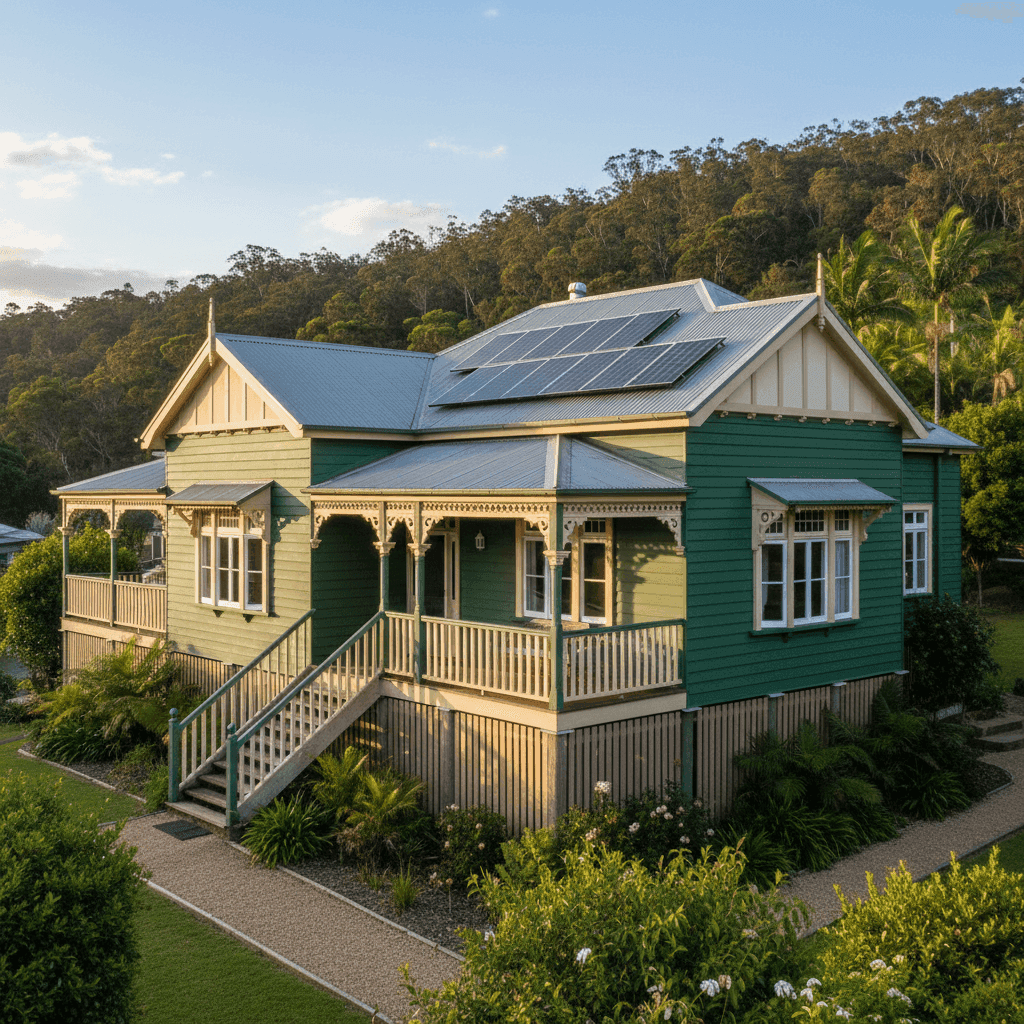
Nestled in the hinterland behind Coffs Harbour, Upper Orara is a quiet rural locality in the Clarence Valley where older homes with genuine character are common. This analysis looks at a building-only insurance quote for a four-bedroom, two-bathroom free-standing home in Upper Orara NSW 2450 — a heritage-listed weatherboard property built in 1900, sitting on stumps and covering 244 square metres. If you own a similar home, read on to understand what's driving the premium and whether there's room to save.
---
Is This Quote Fair?
The annual premium on this quote comes in at $10,805 per year (or $1,035 per month), with a $1,000 building excess. CoverClub's pricing engine has rated this quote as Fair — Around Average, which is a reasonable result given the unique risk profile of this property.
To put that in perspective, the NSW state average home insurance premium sits at $9,528 per year, while the national average is considerably lower at $5,347 per year. This quote lands modestly above the NSW average — not surprising given the heritage listing, age of construction, and the rural setting of the property.
"Fair" doesn't necessarily mean cheap, but it does mean you're not being significantly overcharged relative to comparable risk profiles. For a 124-year-old heritage home with a high sum insured of $1,356,000, a premium in this range is broadly defensible. That said, it's always worth comparing offers from multiple insurers to make sure you're getting the best available rate for your circumstances.
---
How Upper Orara Compares
Understanding where your premium sits relative to broader benchmarks is key to evaluating any insurance quote. Here's how this property's annual premium stacks up:
| Benchmark | Annual Premium |
|---|---|
| This Property | $10,805 |
| NSW State Average | $9,528 |
| NSW State Median | $3,770 |
| National Average | $5,347 |
| National Median | $2,764 |
| Clarence Valley LGA Average | $31,244 |
The most striking figure in this table is the Clarence Valley LGA average of $31,244 per year. This premium is dramatically higher than what this property is quoted, suggesting that at $10,805, this homeowner is actually faring quite well relative to many others in the same local government area. The elevated LGA average likely reflects a combination of flood risk, bushfire exposure, and the prevalence of older or high-value rural properties across the broader Clarence Valley region.
The NSW state median of $3,770 and the national median of $2,764 are both significantly lower, but medians can be misleading — they're heavily influenced by newer, lower-value homes in metropolitan areas that carry far less risk than a heritage rural property like this one.
You can explore more localised data on the Upper Orara suburb stats page as more comparison data becomes available for this postcode.
---
Property Features That Affect Your Premium
Several characteristics of this property have a meaningful influence on the cost of building insurance. Understanding these factors can help you have more informed conversations with insurers.
Heritage Listing
This is one of the most significant premium drivers. Heritage-listed properties are subject to strict restoration requirements — if damaged, repairs must use period-appropriate materials and techniques, which are substantially more expensive than standard construction. Insurers price this risk accordingly, and it's a key reason the sum insured is set as high as $1,356,000 for a regional property.
Age and Construction Type
Built in 1900, this home is over 120 years old. Weatherboard timber construction, while charming and durable when well maintained, carries elevated fire risk compared to brick veneer or rendered masonry. Older homes can also have ageing electrical wiring, plumbing, and structural elements that increase the likelihood of a claim. Insurers factor all of this into their risk assessment.
Stump Foundation
Homes built on stumps (also called stumps or pier foundations) are common in older Queensland and northern NSW construction. While they offer excellent ventilation and are well suited to the local climate, they can be more susceptible to structural movement, termite activity, and underfloor moisture — all of which can influence premiums.
Steel / Colorbond Roof
On the positive side, a Colorbond steel roof is considered a lower-risk roofing material. It's durable, fire-resistant, and holds up well in storms — which can work in your favour when insurers assess weather-related risk.
Solar Panels
Solar panels add replacement value to the building and can introduce specific risks (such as electrical faults or storm damage to panels), both of which insurers consider when calculating the sum insured and premium.
Ducted Climate Control
Ducted air conditioning systems are factored into building replacement costs. These systems are expensive to replace if damaged and contribute to the overall sum insured figure.
---
Tips for Homeowners in Upper Orara
Whether you're reviewing your current policy or shopping for a new one, these practical steps can help you manage your home insurance costs without compromising on cover.
- Review your sum insured annually. Building costs have risen sharply in recent years. A sum insured of $1,356,000 may be appropriate now, but it should be reviewed each year using a professional building cost estimator or quantity surveyor — particularly for a heritage property where rebuild costs can be unpredictable.
- Document your heritage features thoroughly. Keep detailed records, photographs, and any heritage reports relating to your property's original features. In the event of a claim, this documentation can help ensure you receive the correct settlement to restore the home to its heritage standard rather than a generic equivalent.
- Maintain your weatherboard cladding. Regular painting and timber maintenance reduces the risk of rot and moisture ingress, which can lead to costly structural claims. Demonstrating a well-maintained property can also support your case when negotiating premiums with insurers.
- Compare quotes before renewal. The Clarence Valley LGA average premium of $31,244 shows that costs in this region can vary enormously. Shopping around at renewal time — rather than simply accepting your insurer's renewal offer — could save you thousands. Use CoverClub's quote comparison tool to see what competing insurers will offer for your specific property.
---
Compare Your Options with CoverClub
Whether this is your first time insuring a heritage property or you're simply wondering if you can do better on your renewal, CoverClub makes it easy to compare building insurance quotes from leading Australian insurers. Get a quote today and see how your premium stacks up — you might be surprised at the difference a comparison can make.