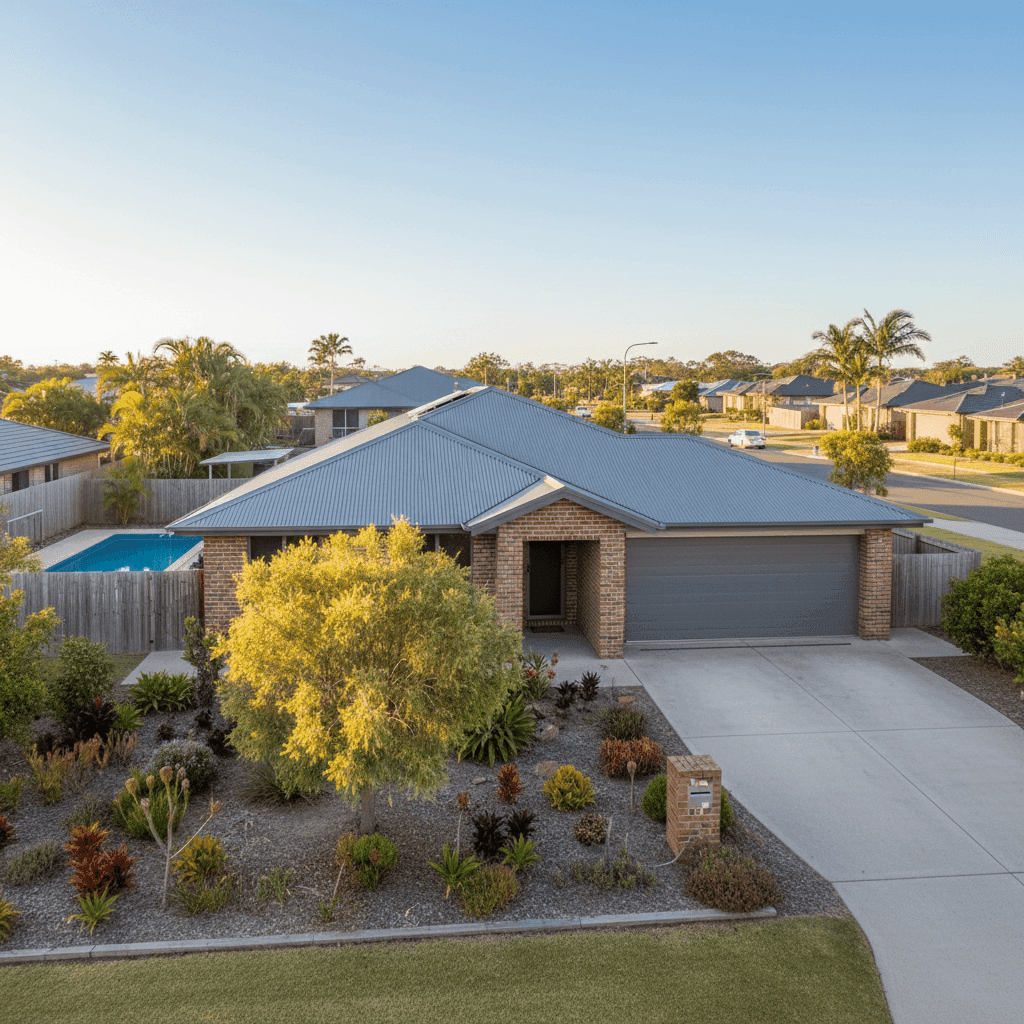
If you own a free standing home in Urangan, QLD 4655, you'll know that finding the right home insurance at a fair price isn't always straightforward. Urangan sits on the Fraser Coast, a region that comes with its own unique mix of property characteristics and insurance considerations. This article breaks down a real home and contents insurance quote for a three-bedroom, two-bathroom brick veneer home in the suburb — and puts it into context against local, state, and national benchmarks.
---
Is This Quote Fair?
The annual premium for this quote comes in at $1,178 per year (or around $113 per month), covering a building sum insured of $631,000 and $50,000 worth of contents. Our price rating for this quote is CHEAP — below average for the area.
To put that in perspective: based on 79 quotes collected for Urangan (postcode 4655), the suburb average sits at $3,284 per year, and the median is $2,925. This quote comes in well below even the 25th percentile of $1,788 — meaning it's cheaper than at least 75% of comparable quotes in the suburb. That's a genuinely strong result.
For a property with a pool, a relatively modern construction year (2018), and a solid $631,000 building sum insured, landing a premium under $1,200 annually is an outcome worth noting. Of course, it's important to weigh up the excess structure — the building excess here is $5,000, which is on the higher side, and the contents excess is $1,000. Higher excesses are a common lever insurers use to reduce premiums, so factor that into your decision if you're comparing policies.
---
How Urangan Compares
Insurance premiums vary enormously across Queensland and Australia, and Urangan is no exception to that pattern.
| Benchmark | Average Premium | Median Premium |
|---|---|---|
| Urangan (QLD 4655) | $3,284/yr | $2,925/yr |
| Queensland (State) | $4,547/yr | $3,931/yr |
| National | $2,965/yr | $2,716/yr |
A few things stand out here. First, Queensland's state average of $4,547 is significantly higher than the national average of $2,965 — a gap of over $1,500 per year. This reflects the elevated risk profile that Queensland insurers price in, including cyclone exposure across much of the state, flooding, and storm surge risks in coastal and low-lying areas.
Interestingly, Urangan's suburb average of $3,284 sits below the Queensland state average but above the national figure. This suggests that while the Fraser Coast region carries some risk premiums, it's not at the extreme end of the Queensland spectrum — particularly for properties that fall outside designated cyclone risk zones.
This quote at $1,178 is 64% below the suburb average and 74% below the state average — a remarkable saving if the cover is adequate for the property's needs.
---
Property Features That Affect Your Premium
Several characteristics of this property work in its favour from an insurance pricing perspective.
Construction year (2018): A relatively modern build is a strong positive signal for insurers. Newer homes are built to current Australian Standards, including updated electrical wiring, plumbing, and structural requirements. This reduces the likelihood of claims related to ageing infrastructure.
Brick veneer external walls: Brick veneer is generally viewed favourably by insurers compared to timber or lightweight cladding. It offers good fire resistance and structural durability, which can translate to lower premiums.
Steel/Colorbond roof: Colorbond roofing is extremely common in Queensland and is well-regarded for its durability, resistance to corrosion, and performance in high-wind events. It's a practical choice that most insurers price competitively.
Slab foundation and tile flooring: A concrete slab foundation is a stable, low-risk base that doesn't carry the moisture and pest vulnerabilities of some older sub-floor systems. Tile flooring similarly poses minimal risk compared to timber or carpet in terms of water damage claims.
Swimming pool: Pools add a layer of complexity to home insurance. They're typically covered under the building component of a policy, but they can increase the sum insured requirement and may affect liability considerations. It's worth confirming exactly what your policy covers regarding pool equipment, fencing, and structural damage.
No cyclone risk designation: This is a meaningful factor for this property. Much of coastal Queensland attracts cyclone risk loadings that can dramatically inflate premiums. A property in Urangan that falls outside the cyclone risk zone avoids this surcharge, which likely contributes significantly to the competitive premium seen here.
Standard fittings quality: Mid-range, standard fittings keep replacement costs predictable and reasonable. High-end or bespoke fittings can push up the sum insured and, consequently, the premium.
---
Tips for Homeowners in Urangan
Whether you're reviewing an existing policy or shopping for new cover, here are some practical steps to make sure you're getting the right deal.
1. Validate your building sum insured regularly At $631,000 for a 214 sqm home, this policy's sum insured works out to roughly $2,948 per sqm — a reasonable figure for a modern brick veneer build in regional Queensland. However, construction costs have risen sharply in recent years. Review your sum insured annually to ensure you're not underinsured, particularly as labour and materials costs continue to fluctuate.
2. Understand your excess before you commit The $5,000 building excess in this quote is higher than many standard policies. While it contributes to the lower premium, it means you'll need to cover the first $5,000 of any building claim yourself. Consider whether you have the financial buffer to absorb that cost in the event of storm damage or another insurable event.
3. Check flood and storm surge definitions carefully Even outside designated cyclone zones, the Fraser Coast can experience significant rainfall events and localised flooding. Make sure your policy clearly defines what "flood" means and whether storm surge or riverine flooding is included. These definitions vary significantly between insurers.
4. Don't overlook your pool in the sum insured Pools, pumps, filtration systems, and associated fencing can add tens of thousands of dollars to your rebuild cost. Ensure these are factored into your building sum insured so you're not left short if something goes wrong.
---
Compare Your Own Quote
Whether this quote reflects your situation or you're just starting to explore your options, comparing multiple policies is always the smartest move. Premiums for the same property can vary by thousands of dollars between insurers — as the data from Urangan clearly shows, with quotes ranging from well below $1,788 at the 25th percentile all the way up to $3,932 at the 75th percentile.
Get a home insurance quote through CoverClub to see how your property stacks up and find cover that fits your budget without compromising on protection.