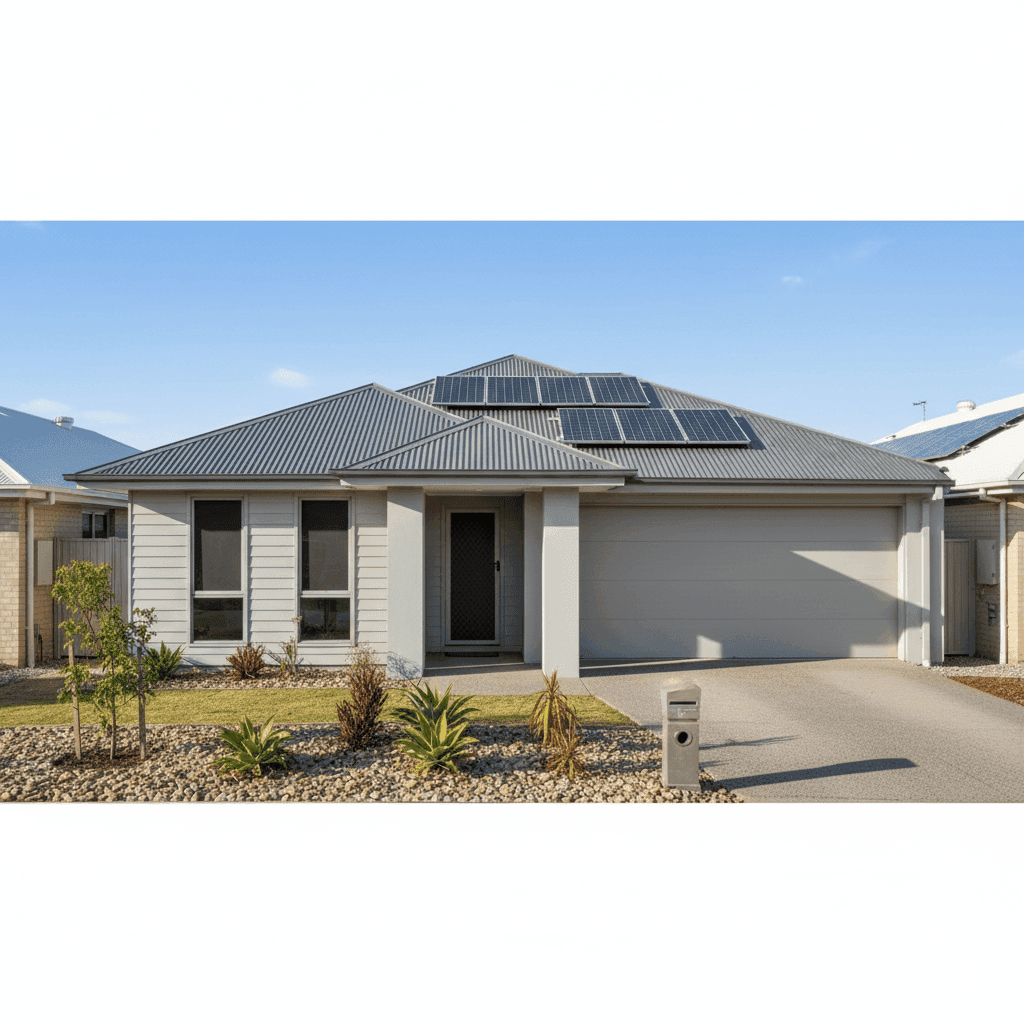
Urangan is a popular coastal suburb on the Fraser Coast in Queensland, known for its relaxed lifestyle, proximity to Hervey Bay, and easy access to Fraser Island. It's also a suburb where home insurance premiums can vary enormously — making it all the more important to understand what you're actually paying and whether your quote stacks up. In this article, we analyse a real home and contents insurance quote for a four-bedroom free standing home in Urangan (QLD 4655) and put the numbers in context.
---
Is This Quote Fair?
The quote in question comes in at $1,804 per year (or $177/month) for a combined home and contents policy. The building is insured for $723,000, and contents are covered for $150,000, with a $3,000 building excess and $1,000 contents excess.
Our price rating for this quote is FAIR — Around Average.
At first glance, $1,804/yr might sound like a reasonable figure, and in many parts of Australia it would be. But in the context of Urangan specifically, it's worth understanding where this sits in the local market. The suburb's 25th percentile sits at $1,788/yr — meaning this quote is just above the cheapest quarter of policies in the area. In other words, it's not the lowest you could find, but it's meaningfully below the suburb average of $3,284/yr and the median of $2,925/yr.
For a coastal Queensland property with a solid sum insured, this is a competitive result. That said, "fair" doesn't mean "the best available" — there may be room to do better with the right insurer.
---
How Urangan Compares
To put this quote in proper perspective, here's how Urangan's insurance costs compare to broader benchmarks:
| Benchmark | Average Premium | Median Premium |
|---|---|---|
| Urangan (QLD 4655) | $3,284/yr | $2,925/yr |
| Queensland | $4,547/yr | $3,931/yr |
| National | $2,965/yr | $2,716/yr |
A few things stand out here. Queensland as a state carries some of the highest home insurance premiums in the country — driven largely by cyclone risk, flooding, and severe storm exposure across many parts of the state. At $4,547/yr on average, QLD homeowners pay significantly more than the national average of $2,965/yr.
Urangan itself sits below the Queensland state average, which reflects the fact that it's not classified as a cyclone risk area — a significant factor in coastal QLD pricing. However, it still comes in above the national average, which is consistent with the broader Fraser Coast region's exposure to storm events and its coastal location.
This particular quote at $1,804/yr is well below both the suburb average and the state average, placing it in a genuinely competitive position based on 79 quotes collected in the area.
---
Property Features That Affect Your Premium
Several characteristics of this property play a meaningful role in how insurers assess and price the risk:
Hardiplank / Hardiflex Cladding
The external walls are clad in Hardiplank (also known as Hardiflex) — a fibre cement product that's widely used across Queensland. Insurers generally view this material favourably compared to older timber weatherboard, as it offers good resistance to moisture, rot, and fire. It can, however, be more costly to repair or replace than brick veneer, which may influence the building sum insured.
Steel / Colorbond Roof
A Colorbond steel roof is considered a strong choice by most insurers. It performs well in high-wind events, resists corrosion, and has a long lifespan. In a coastal suburb like Urangan, where salt air is a factor, Colorbond's durability is a genuine advantage — and it's typically viewed more favourably than older tile roofs that can crack or shift.
Slab Foundation
A concrete slab foundation is a stable and well-regarded construction type. Unlike homes on stumps or timber piers, slab homes have fewer vulnerabilities to subsidence or pest damage beneath the floor, which can reduce risk in the eyes of underwriters.
Solar Panels
This property has solar panels installed. While solar adds value and reduces energy costs, it's worth confirming with your insurer that panels are explicitly covered under your building policy — including damage from storms, hail, or accidental breakage. Not all standard policies automatically include full replacement cover for solar systems.
Built in 1995
A construction year of 1995 places this home in a period of solid but not modern building standards. It predates some of the more stringent cyclone-resistant construction codes introduced in Queensland after 2006. This can slightly increase risk ratings for wind-related damage, though the Colorbond roof and fibre cement cladding help offset this.
214 sqm Floor Area
At 214 square metres, this is a comfortably sized four-bedroom home. Building sum insured calculations should account for full replacement cost — not market value — and at $723,000, this works out to roughly $3,378 per square metre, which is broadly in line with current Queensland construction costs.
---
Tips for Homeowners in Urangan
1. Review Your Building Sum Insured Annually
Construction costs in Queensland have risen sharply in recent years. If your building sum insured hasn't been reviewed since you took out the policy, there's a real risk of being underinsured. Use a quantity surveyor or your insurer's calculator to verify your figure reflects current rebuild costs — not what you paid for the property.
2. Confirm Solar Panel Coverage
As noted above, solar panels aren't always covered as standard. Contact your insurer and ask specifically: Are my solar panels covered for storm damage, accidental breakage, and theft? If not, ask what it costs to add this cover. Given the investment involved, it's worth the extra scrutiny.
3. Shop Around at Renewal Time
A "fair" rating means this quote is competitive — but not necessarily the best on the market. Insurers reprice policies regularly, and loyalty doesn't always pay. Set a reminder to compare quotes before your renewal date each year. Even saving $200–$400/yr adds up significantly over time.
4. Consider Your Excess Carefully
This policy carries a $3,000 building excess. A higher excess typically lowers your premium, but it also means more out-of-pocket cost when you do make a claim. Think about what you could comfortably cover in an emergency — and whether a lower excess (with a slightly higher premium) might give you better peace of mind.
---
Compare Your Own Quote
Whether you're a first-time buyer or a long-term Urangan resident, it pays to know where your premium sits relative to the market. CoverClub makes it easy to compare home and contents insurance quotes in one place — so you can see exactly what's available for your property.
Get a quote and compare today →
You can also explore detailed premium data for Urangan and the QLD 4655 postcode, the broader Queensland market, or national home insurance benchmarks to see how your area stacks up.