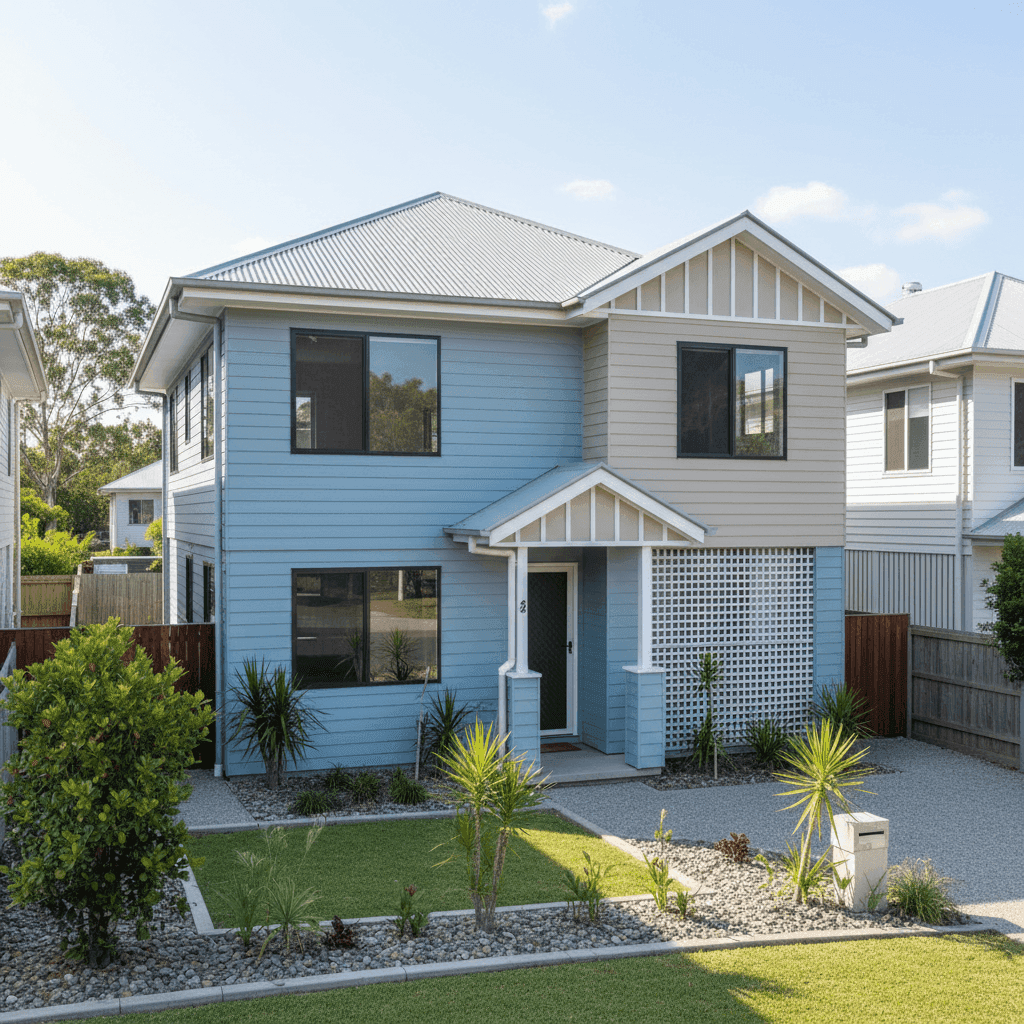
Urangan is a coastal suburb sitting on the shores of Hervey Bay in Queensland's Wide Bay region — a popular destination for sea changers, retirees, and families drawn to its relaxed lifestyle and proximity to the Great Barrier Reef. If you own a townhouse here, understanding what you should be paying for home and contents insurance is an important part of protecting one of your biggest assets. This article breaks down a real insurance quote for a 3-bedroom, 2-bathroom townhouse in Urangan (postcode 4655) and puts it into context against local, state, and national benchmarks.
---
Is This Quote Fair?
The quote in question comes in at $1,529 per year (or $149/month) for combined home and contents cover, with a building sum insured of $535,000 and contents valued at $31,500. The building excess is $3,000 and the contents excess is $1,000.
Our pricing model rates this quote as CHEAP — below average for the area. That's genuinely good news for the homeowner. Based on 79 quotes collected for Urangan (4655), the suburb average sits at $3,284/year and the median at $2,925/year. This quote comes in well below even the 25th percentile of $1,788/year — meaning it's cheaper than at least 75% of quotes we've seen for this suburb.
To put it plainly: at $1,529/year, this homeowner is paying roughly 53% less than the suburb average. That's a significant saving, and it's worth understanding why.
---
How Urangan Compares
Urangan's insurance costs are notably elevated compared to national norms — and that's no surprise given its coastal Queensland location. Here's how the numbers stack up:
| Benchmark | Average Premium | Median Premium |
|---|---|---|
| Urangan (4655) | $3,284/yr | $2,925/yr |
| Queensland | $4,547/yr | $3,931/yr |
| National | $2,965/yr | $2,716/yr |
Interestingly, Urangan's suburb average of $3,284 sits below the Queensland state average of $4,547 — which reflects the fact that many parts of regional Queensland, particularly in cyclone-prone zones further north, attract significantly higher premiums. Urangan itself is not classified as a cyclone risk area, which helps keep costs more manageable compared to towns like Cairns or Townsville.
That said, Urangan premiums still run above the national average of $2,965/year, reflecting the elevated risks associated with coastal Queensland properties more broadly — including storm surge, flooding, and severe weather events.
You can explore more detailed pricing data on the Urangan suburb stats page, the Queensland state overview, or the national insurance statistics hub.
---
Property Features That Affect Your Premium
Several characteristics of this particular property help explain why the quote lands so favourably:
✅ Modern Construction (Built 2022)
A construction year of 2022 means this townhouse is built to current Australian Standards and Queensland's updated building codes, which have become progressively more stringent following major weather events. Newer builds are generally considered lower risk by insurers, which translates directly into lower premiums.
✅ Hardiplank / Hardiflex Cladding
The external walls are clad in fibre cement sheeting (Hardiplank/Hardiflex), a material well-regarded by insurers for its durability, fire resistance, and resistance to rot and termites. Compared to older timber weatherboard homes, this cladding type is viewed as a lower-risk construction material.
✅ Steel / Colorbond Roof
Colorbond steel roofing is a popular choice across Queensland for good reason — it's lightweight, durable, and performs well in high-wind conditions. Insurers generally view it more favourably than older tile roofs, which can crack or dislodge during storms.
✅ Elevated Foundation (At Least 1m)
The property is elevated by at least one metre, which is a meaningful advantage in a coastal suburb like Urangan. Elevation reduces flood and inundation risk, and insurers often reward this with lower premiums. It's one of the more impactful structural features when it comes to pricing.
✅ Concrete Slab Foundation
A slab foundation on a newer build provides structural stability and is straightforward for insurers to assess. Combined with the elevated design, this creates a solid risk profile.
⚠️ Above-Average Fittings
The property features above-average quality fittings, which contributes to the higher building sum insured of $535,000 for a 139 sqm townhouse. Better fittings mean higher rebuild costs, which does push the insured value — and therefore the premium — upward slightly. However, it's essential to insure to the correct rebuild value to avoid being underinsured.
➕ Ducted Climate Control
Ducted air conditioning is a valuable inclusion that adds to the contents and building value. It's factored into the sum insured and is worth documenting carefully in your policy.
---
Tips for Homeowners in Urangan
Whether you're reviewing your existing policy or shopping for the first time, here are some practical steps to make sure you're getting the best deal without compromising on cover.
1. Don't underinsure to save on premiums It can be tempting to lower your sum insured to reduce your annual cost, but underinsurance is a serious risk — particularly in a coastal area where rebuild costs can escalate quickly after a major weather event. Make sure your $535,000 building sum insured reflects current construction costs, including your above-average fittings and ducted climate control system.
2. Review your excess settings carefully This quote carries a $3,000 building excess and a $1,000 contents excess. Higher excesses typically reduce your premium, but make sure you could comfortably cover those amounts out of pocket in the event of a claim. If $3,000 would be a stretch, consider whether a lower excess (and slightly higher premium) is a smarter trade-off.
3. Reassess annually — don't auto-renew blindly Insurance markets shift, and the competitive quote you secured this year may not be the best available next year. Set a reminder to compare quotes at renewal time. Given that the suburb average is more than double this quote, there's clearly a wide range of pricing in Urangan — which means shopping around pays off.
4. Document your contents and fittings With above-average fittings and ducted climate control, make sure you have a detailed home inventory. Photographs, receipts, and serial numbers for major items will make any contents claim significantly smoother and help ensure you're not caught short.
---
Compare Your Home Insurance Quote Today
Whether you're a Urangan local or considering a move to Hervey Bay's beautiful coastline, it pays to know what you should be spending on home insurance. The quote analysed here shows just how much variation exists — even within a single suburb. Get a home insurance quote at CoverClub and see how your current premium stacks up against real data from your area. It takes just a few minutes and could save you hundreds of dollars a year.