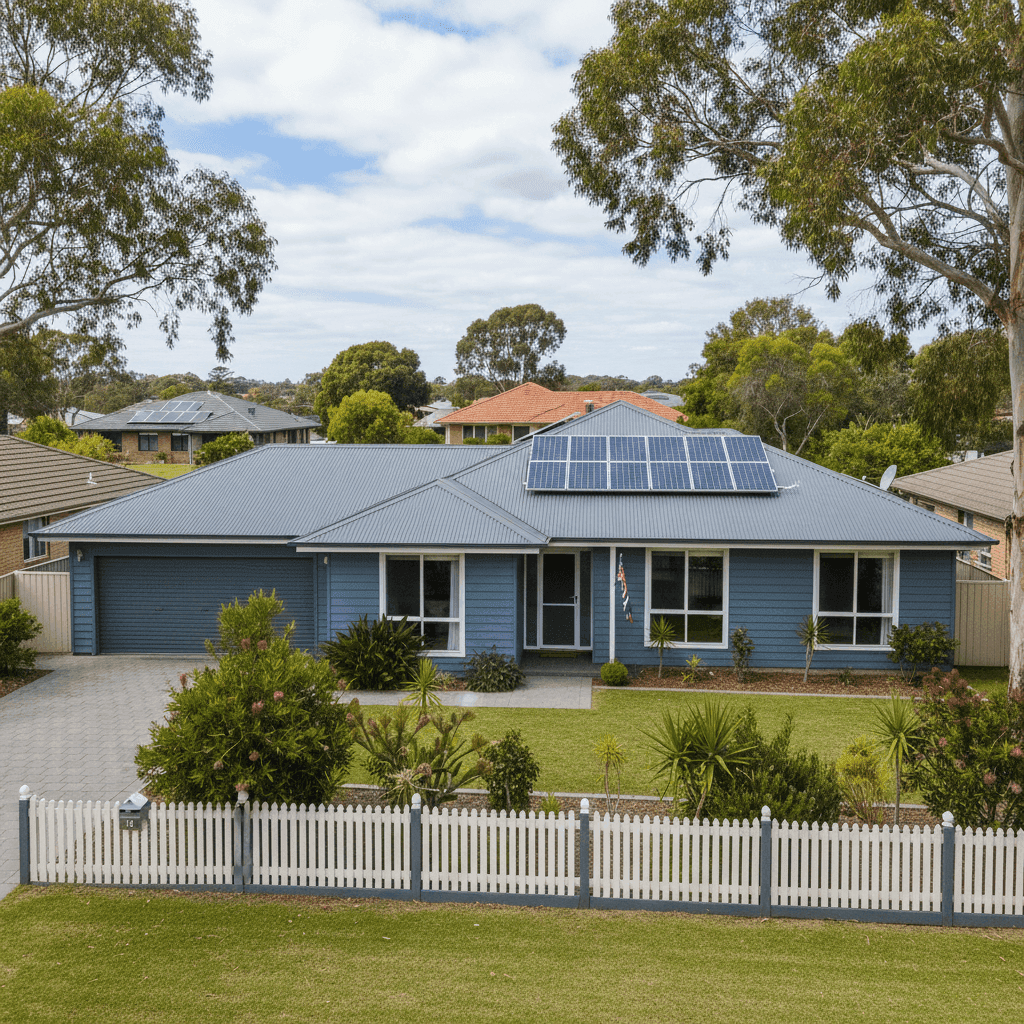
If you own a free standing home in Valentine, NSW 2280, you're likely no stranger to the beautiful lakeside lifestyle that makes this suburb so desirable. But with great real estate comes the responsibility of protecting it properly — and that means understanding what you're paying for when it comes to home insurance.
This article breaks down a real home and contents insurance quote for a five-bedroom, four-bathroom free standing home in Valentine, examining whether the price stacks up against local, state, and national benchmarks.
---
Is This Quote Fair?
The annual premium for this property came in at $5,888 per year (or $624/month), covering both building (sum insured: $1,219,000) and contents ($50,000). Our analysis rates this quote as FAIR — around average.
That rating reflects where this premium sits relative to other quotes we've seen for similar properties in the area. It's not a bargain, but it's not an outlier either. For a home of this size, age, and construction type, a premium in this range is broadly in line with what insurers are pricing for the suburb.
It's worth noting that the building excess is $3,000 and the contents excess is $1,000. Higher excesses like these typically help bring the premium down — so if you were to reduce your excess, you could expect the annual cost to rise. Conversely, if cash flow is your priority, a lower excess means more out of pocket at claim time.
---
How Valentine Compares
To put this quote into context, here's how it lines up against suburb, state, and national data drawn from CoverClub's Valentine insurance stats:
| Benchmark | Average | Median |
|---|---|---|
| Valentine (2280) | $5,131/yr | $4,768/yr |
| NSW | $9,528/yr | $3,770/yr |
| National | $5,347/yr | $2,764/yr |
| Lake Macquarie LGA | $11,064/yr | — |
At $5,888/yr, this quote sits above the Valentine suburb average of $5,131 and above the suburb median of $4,768 — but well within the suburb's 75th percentile of $6,056. In other words, roughly three-quarters of comparable quotes in the area come in at or below this price, which is consistent with the "fair" rating.
Compared to NSW as a whole, the quote looks very reasonable. The state average of $9,528 is heavily skewed by high-risk coastal and flood-prone areas, which is why the NSW median of $3,770 tells a different story. Valentine sits in a comfortable middle ground.
On a national basis, the quote is slightly above the $5,347 average but significantly above the national median of $2,764 — reflecting the fact that this is a large, high-value property in a sought-after lakeside suburb, not a modest suburban dwelling.
The Lake Macquarie LGA average of $11,064 is notably high, likely driven by waterfront and flood-exposed properties across the broader council area. Valentine's figures are considerably more moderate by comparison, which is reassuring for homeowners in this part of the lake.
(Note: Valentine suburb data is based on a sample of 9 quotes, so averages may shift as more data becomes available.)
---
Property Features That Affect Your Premium
Several characteristics of this property have a direct bearing on what insurers charge. Here's what's at play:
Age and Construction (Built 1960, Weatherboard Walls)
At over 60 years old, this home predates modern building codes, which can make it more expensive to insure. Weatherboard timber construction, while charming and common in older Australian homes, is considered a higher fire risk than brick veneer or double brick. Insurers factor this in when calculating replacement costs and risk exposure.
Steel/Colorbond Roof
On the positive side, a Colorbond steel roof is generally well-regarded by insurers. It's durable, resistant to ember attack, and less susceptible to hail damage than terracotta tiles. This is a modest premium-friendly feature.
Stump Foundation
Homes on stumps (also known as pier or post foundations) are common in older Australian builds. While they offer excellent ventilation and can be easier to repair, they can also be more vulnerable to certain weather events and pest damage. Insurers may apply a slight loading for this construction type.
Timber and Laminate Flooring
Timber flooring in a weatherboard home on stumps adds to the overall combustibility profile of the property, which insurers consider when pricing fire risk. It also carries a higher replacement cost than tiles or carpet.
Solar Panels
This property has solar panels installed, which adds to the sum insured and can slightly increase premiums due to the cost of replacement and any associated electrical risk. However, many insurers now include solar panels as standard under building cover — it's worth confirming this with your insurer.
Ducted Climate Control
Ducted air conditioning is a high-value fixture that contributes to the overall building sum insured. At $1,219,000, the building cover is substantial, and systems like ducted HVAC are part of what drives that figure.
Above-Average Fittings
The property is noted as having above-average fittings quality. Kitchens, bathrooms, and finishes that exceed standard specifications increase the cost to rebuild — and therefore the appropriate sum insured. Underinsuring a home with premium fittings is a common and costly mistake.
---
Tips for Homeowners in Valentine
1. Review your sum insured regularly At $1,219,000, the building sum insured is significant. Construction costs have risen sharply in recent years, and a figure that was accurate two years ago may now leave you underinsured. Use a building cost calculator or speak with a quantity surveyor to ensure your cover keeps pace with rebuild costs.
2. Consider the trade-off between excess and premium This quote carries a $3,000 building excess. If you have sufficient savings to cover that in the event of a claim, keeping the excess high is a smart way to manage your annual premium. If not, it may be worth adjusting — but factor in the premium increase.
3. Get multiple quotes before renewing With only 9 quotes in our Valentine dataset, the local market is still developing. Premiums can vary significantly between insurers for the same property, so it pays to shop around. Compare quotes on CoverClub to see what else is available in your area.
4. Disclose your solar panels and ducted systems accurately Failing to disclose installed systems like solar panels or ducted climate control can result in a claim being reduced or denied. Make sure your policy schedule reflects what's actually on and in your home.
---
Find a Better Deal with CoverClub
Whether you're renewing your policy or shopping for the first time, CoverClub makes it easy to compare home and contents insurance quotes tailored to your property. Our data covers suburbs across Australia, so you can see exactly how your quote stacks up before you commit.