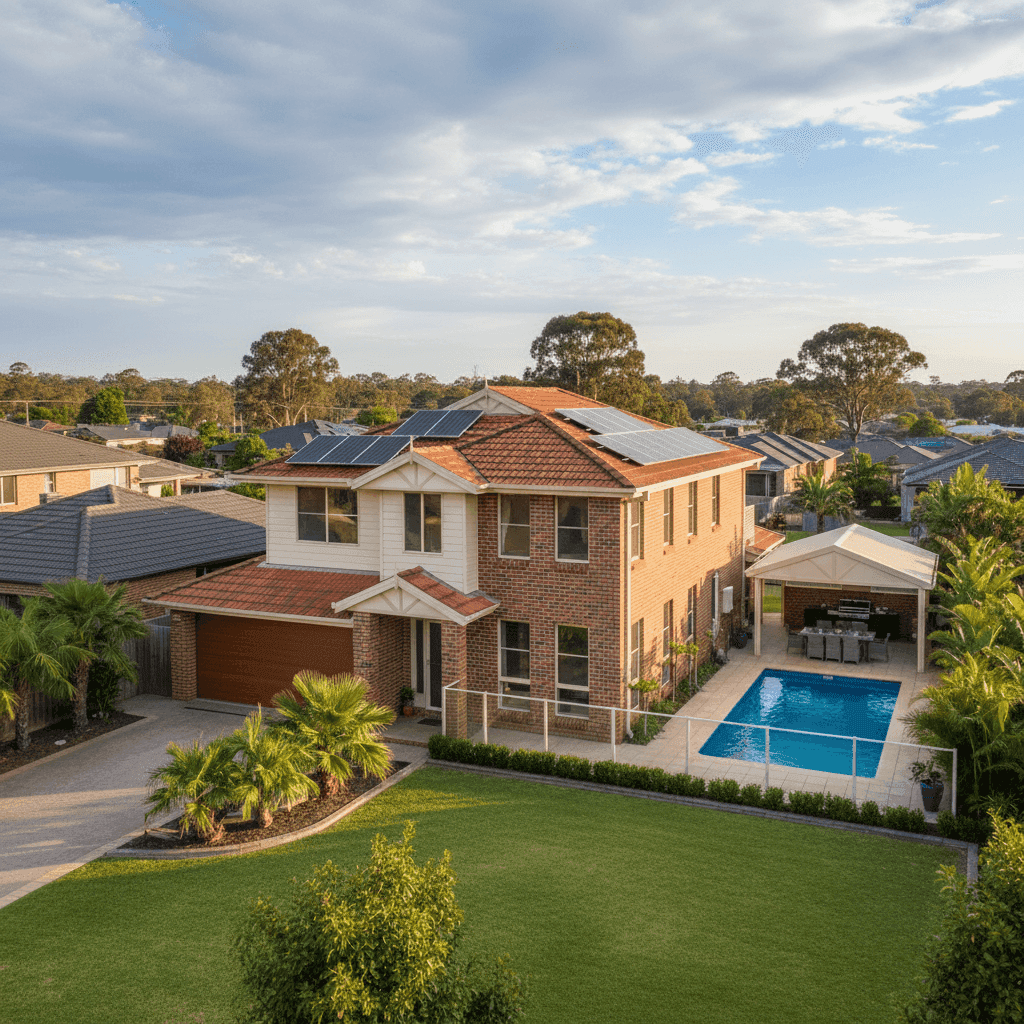
Valentine is a leafy, lakeside suburb on the western shore of Lake Macquarie in New South Wales — a sought-after pocket of the Hunter Region known for its relaxed lifestyle, waterfront streets, and family-friendly atmosphere. For owners of a five-bedroom, free-standing home in this area, understanding what drives your insurance premium is just as important as choosing the right cover. This article breaks down a real home and contents insurance quote for a property in Valentine NSW 2280, benchmarks it against local, state, and national data, and offers practical guidance for getting better value on your policy.
---
Is This Quote Fair?
The quote in question comes in at $7,048 per year (or $689/month) for combined home and contents cover, with a building sum insured of $1,560,000 and contents valued at $50,000. Both the building and contents excess are set at $1,000.
Our price rating for this quote is Expensive (Above Average) — and the data backs that up.
Compared to the Valentine suburb average of $5,131/year, this quote sits roughly 37% higher. It also exceeds the suburb's 75th percentile benchmark of $6,056/year, meaning it's more expensive than at least three-quarters of comparable quotes in the area. The suburb median sits at $4,768/year, so the gap is even more pronounced when viewed against the middle of the market.
That said, context matters. This is a large, well-appointed home — 315 sqm, five bedrooms, three bathrooms — with a pool, solar panels, and ducted climate control. These features all contribute to a higher replacement cost and, consequently, a higher premium. The $1,560,000 building sum insured reflects the substantial rebuild value of a home of this size and specification, which is a key driver of cost.
---
How Valentine Compares
To put this quote in broader perspective, here's how Valentine stacks up against state and national benchmarks:
| Benchmark | Average Premium | Median Premium |
|---|---|---|
| Valentine (NSW 2280) | $5,131/yr | $4,768/yr |
| New South Wales | $9,528/yr | $3,770/yr |
| National | $5,347/yr | $2,764/yr |
| Lake Macquarie LGA | $11,064/yr | — |
A few things stand out here. The NSW state average of $9,528/year is significantly higher than the Valentine suburb average — but the NSW median of just $3,770/year tells a different story. This wide gap between mean and median is a classic sign of a skewed distribution, where a relatively small number of very high-risk or high-value properties pull the average upward. Valentine, as a non-cyclone-risk area with predominantly brick-veneer construction, sits in a more moderate risk band.
At the national level, the average premium of $5,347/year is close to the Valentine suburb average, while the national median of $2,764/year reflects how many Australian homeowners — particularly those in lower-risk areas with modest homes — pay considerably less. For a large, feature-rich property in Valentine, the $7,048 quote is above the local norm but not entirely out of step with what comparable properties attract.
Interestingly, the Lake Macquarie LGA average of $11,064/year is notably elevated — likely influenced by higher-risk or higher-value waterfront properties across the broader LGA. Viewed against that benchmark, the Valentine quote looks more reasonable.
---
Property Features That Affect Your Premium
Several characteristics of this property have a meaningful influence on what insurers charge:
Size and rebuild value: At 315 sqm with five bedrooms and three bathrooms, this is a large home. The $1,560,000 building sum insured reflects a significant rebuild cost, and insurers price accordingly. Larger homes simply cost more to replace.
Brick veneer construction and tiled roof: These are generally viewed favourably by insurers. Brick veneer offers solid fire resistance and durability, while a tiled roof is considered a lower-risk roofing material compared to, say, Colorbond or timber shingles. Together, they can help moderate your premium relative to other construction types.
Slab foundation: A concrete slab foundation is standard for homes of this era and is generally considered stable and low-risk, particularly in non-flood-prone areas.
Swimming pool: Pools add to the insurable value of a property and can also introduce liability considerations. Most home and contents policies include legal liability cover, and a pool increases the exposure insurers factor into pricing.
Solar panels: Rooftop solar systems are an increasingly common feature on Australian homes, but they add to the replacement cost of the building. Some insurers include solar panels automatically under building cover; others require specific endorsement. It's worth confirming your policy covers the full replacement value of your system.
Ducted climate control: Like solar, ducted air conditioning adds to the rebuild value of the home and is a fixed installation that falls under building cover. A full ducted system in a five-bedroom home can represent a significant replacement cost.
No cyclone risk: Valentine is not classified as a cyclone risk area, which removes one of the most significant premium loading factors seen in northern Queensland and parts of WA. This is a meaningful advantage for homeowners in this region.
---
Tips for Homeowners in Valentine
1. Review your building sum insured regularly With construction costs rising across Australia, the cost to rebuild a home has increased substantially in recent years. Make sure your $1,560,000 sum insured still reflects current rebuild costs — not the figure set when you first took out the policy. Underinsurance is one of the most common and costly mistakes homeowners make.
2. Shop around at renewal time Insurance loyalty rarely pays off. Premiums can vary significantly between insurers for the same property, and many providers offer competitive pricing to attract new customers. Use a comparison tool like CoverClub to benchmark your renewal quote against the market before automatically renewing.
3. Confirm solar panels and pool are correctly covered Ask your insurer explicitly whether your solar system and pool are included in your building sum insured — and whether the coverage extends to accidental damage, storm damage, and electrical faults. Gaps in cover for these features can be costly to discover at claim time.
4. Consider your excess level Both the building and contents excess on this policy are set at $1,000. Opting for a higher voluntary excess can reduce your annual premium, which may be worth considering if you have a strong claims-free history and can comfortably absorb a higher out-of-pocket cost in the event of a claim.
---
Compare Your Quote with CoverClub
Whether you're reviewing an existing policy or shopping for new cover, it pays to know where your premium sits relative to the market. CoverClub aggregates real insurance quote data from across Australia, so you can see exactly how your suburb, property type, and cover level compare. Get a home insurance quote today and make sure you're not paying more than you need to for the protection your home deserves.