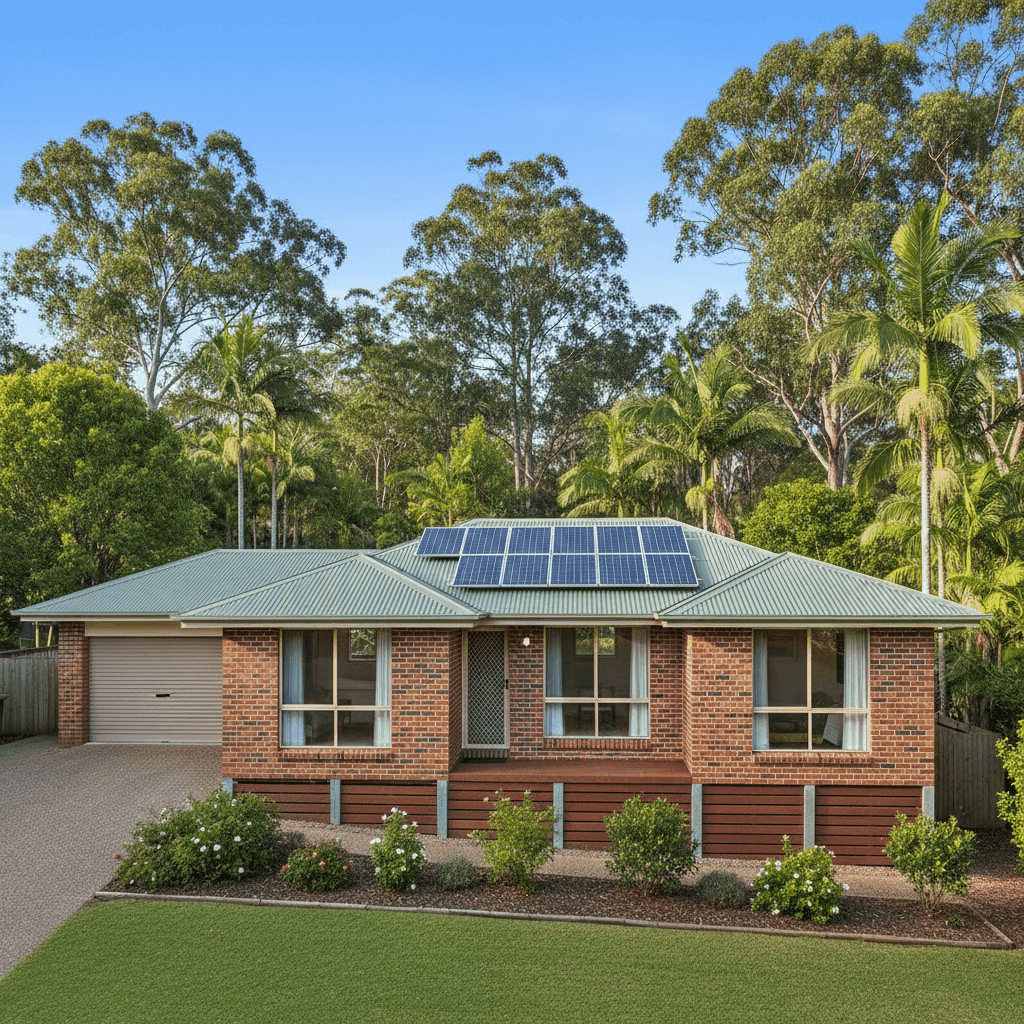
If you own a free standing home in Valla, NSW 2448, you've probably noticed that home insurance isn't cheap. Nestled on the Mid North Coast of New South Wales, Valla is a relaxed semi-rural community — but that doesn't mean insurers price it that way. This article breaks down a real building insurance quote for a three-bedroom brick veneer home in the area, compares it against local, state, and national benchmarks, and offers practical advice for homeowners looking to get better value.
---
Is This Quote Fair?
The quote in question comes in at $4,742 per year (or $448/month) for building-only cover, with a building excess of $2,000 and a sum insured of $734,000. Our price rating for this quote is EXPENSIVE — above average for the Valla area.
To put that in perspective: the suburb average premium sits at $2,932/yr, and the median is even lower at $2,649/yr. That means this quote is running roughly 62% above the local average and nearly 79% above the suburb median. Even the 75th percentile of quotes in the area — meaning 75% of quotes are cheaper — comes in at just $3,019/yr. This quote sits well above that threshold.
So what's driving the price up? A combination of factors are likely at play, including the sum insured amount, the property's age and construction type, and the specific insurer's risk appetite for the region. It's worth noting that with only 7 quotes sampled in the Valla suburb dataset, the local comparison pool is relatively small — so individual results can vary more than they might in a larger suburb. That said, the gap between this quote and the local benchmarks is significant enough to warrant a closer look.
---
How Valla Compares
Understanding where Valla sits within the broader insurance landscape helps put this quote into context. Here's a snapshot:
| Benchmark | Average Premium | Median Premium |
|---|---|---|
| Valla (suburb) | $2,932/yr | $2,649/yr |
| Bellingen LGA | $4,175/yr | — |
| NSW (state) | $9,528/yr | $3,770/yr |
| National | $5,347/yr | $2,764/yr |
A few things stand out here. The NSW state average of $9,528/yr is dramatically higher than the median of $3,770/yr — a classic sign that a small number of very high-risk or high-value properties are pulling the average upward. The national average of $5,347/yr tells a similar story.
When you focus on medians — which are generally a more reliable indicator of what most homeowners actually pay — Valla's median of $2,649/yr sits comfortably below both the NSW median ($3,770/yr) and the national median ($2,764/yr). This suggests that most Valla homeowners are paying relatively modest premiums, making this particular quote of $4,742/yr stand out even more.
At the LGA level, the Bellingen average of $4,175/yr is the closest comparison and does indicate that properties across the broader local government area tend to attract higher-than-suburb premiums — likely reflecting a mix of rural risk factors, bushfire exposure, and higher-value rural properties. Even so, this quote exceeds the LGA average by over $500/yr.
For more local data, explore the Valla suburb insurance stats, the NSW state overview, or national home insurance benchmarks.
---
Property Features That Affect Your Premium
Every property is different, and insurers weigh up a range of construction and location factors when calculating your premium. Here's how this particular home's features likely influence what you pay:
Brick Veneer Walls Brick veneer is generally viewed favourably by insurers — it's durable, fire-resistant, and widely used in Australian residential construction. This should, in theory, work in the homeowner's favour compared to timber or clad exteriors.
Steel/Colorbond Roof Colorbond roofing is another positive signal for insurers. It's low-maintenance, resistant to corrosion, and performs well in both fire and storm conditions. Combined with brick veneer walls, the construction profile of this home is relatively solid.
Stump Foundation Homes built on stumps are more common in coastal and semi-rural NSW, and insurers are generally comfortable with this construction type. However, it does mean the underfloor space needs to be maintained to avoid moisture and pest issues, which could affect claims down the track.
Vinyl Flooring Vinyl is a practical and cost-effective flooring choice that's easy to replace after water damage — an important consideration in coastal areas. This is unlikely to significantly raise premiums.
Solar Panels This property has solar panels installed, which can add modest cost to a building policy. Panels are typically covered under building insurance, and their replacement value contributes to the overall sum insured. Ensure your policy explicitly covers solar panels and that your sum insured reflects their replacement cost.
Ducted Climate Control Ducted air conditioning systems are a fixed building feature and are generally included in building cover. Like solar panels, they add to the total replacement cost of the home and should be factored into your sum insured calculation.
Construction Year: 1998 At around 27 years old, this home is neither brand new nor particularly aged. However, older properties can attract higher premiums as insurers account for the potential cost of bringing the building up to current standards following a claim — known as "code upgrades."
Sum Insured: $734,000 This is a significant sum insured for a 139 sqm home, which will directly influence the premium. It's worth periodically reviewing your sum insured to ensure it reflects realistic rebuilding costs — neither under-insuring (which leaves you exposed) nor over-insuring (which inflates your premium unnecessarily).
---
Tips for Homeowners in Valla
1. Shop around — seriously With this quote sitting well above the local average, comparing offers from multiple insurers is the single most effective thing you can do. Premiums for the same property can vary by hundreds or even thousands of dollars between providers. Use a comparison tool like CoverClub to see a range of quotes side by side.
2. Review your sum insured A sum insured of $734,000 for a 139 sqm home is on the higher end. Make sure this figure is based on an accurate rebuild cost estimate — not the market value of your property. Tools like the Cordell Sum Sure Calculator can help you arrive at a more precise figure. If your sum insured is higher than it needs to be, reducing it to an accurate level could meaningfully lower your premium.
3. Consider a higher excess This policy already carries a $2,000 building excess, which is moderate. Opting for a higher voluntary excess can reduce your annual premium — just make sure the excess amount is something you could genuinely afford to pay in the event of a claim.
4. Ask about discounts for security and safety features Some insurers offer discounts for properties with monitored alarm systems, deadbolts, or other security measures. It's also worth asking whether your solar panels or ducted system qualify for any energy-efficient home discounts, depending on the insurer.
---
Compare Your Options with CoverClub
Whether you're renewing your current policy or shopping for the first time, there's rarely a good reason to accept the first quote you receive. CoverClub makes it easy for Australian homeowners to compare building and contents insurance from a range of providers — all in one place. Get a quote today and see how much you could save on your Valla home insurance.