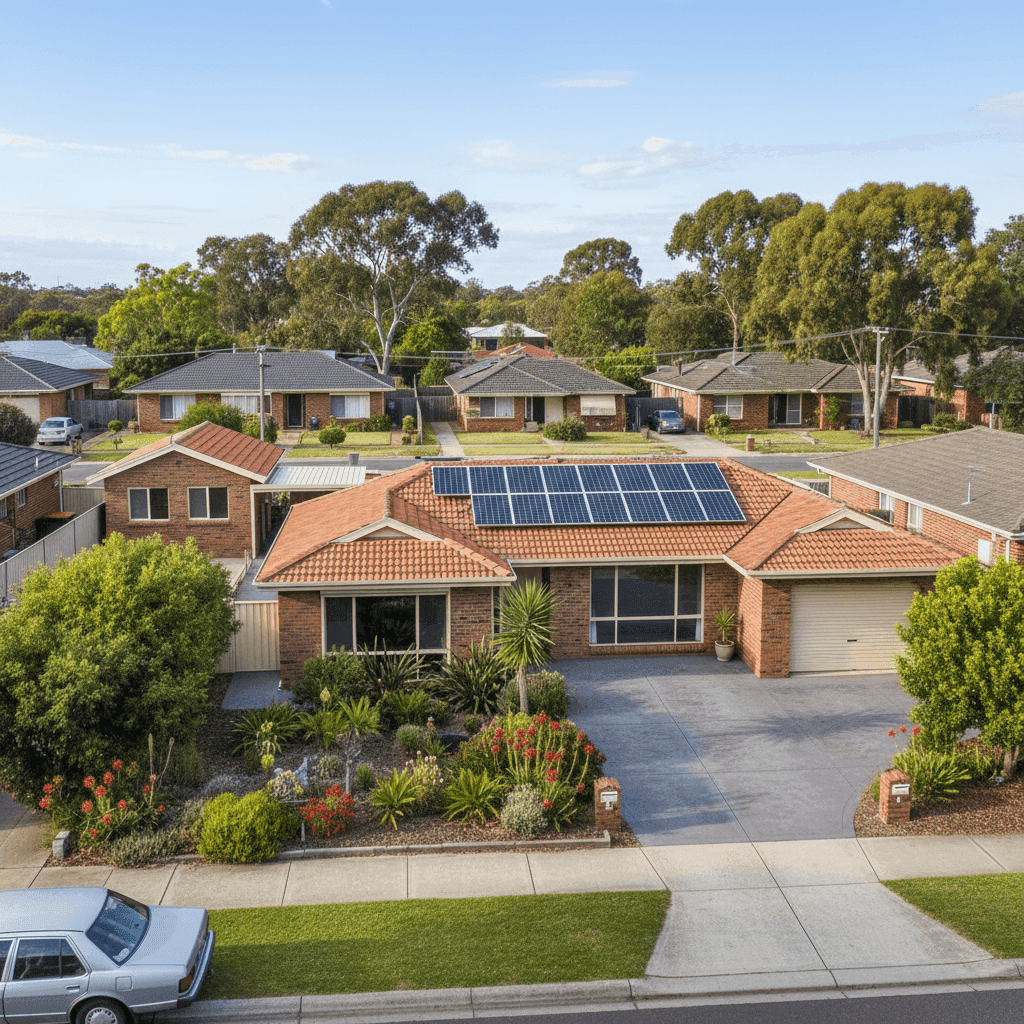
If you own a free standing home in Valley View, SA 5093, you're probably curious about whether you're paying a fair price for home insurance — or leaving money on the table. This article breaks down a real home and contents insurance quote for a three-bedroom brick veneer property in this north-eastern Adelaide suburb, benchmarking it against local, state and national figures so you can make a more informed decision.
---
Is This Quote Fair?
The quote in question comes in at $893 per year (or roughly $83 per month) for combined home and contents cover, with a building sum insured of $409,000 and contents valued at $50,000. The building excess is set at $2,000, and the contents excess at $1,000.
Our price rating for this quote is FAIR — Around Average, and the numbers back that up. Based on 30 quotes collected for Valley View (SA 5093), the suburb average sits at $1,162/year and the median at $1,294/year. This quote falls below both benchmarks — and it actually sits close to the 25th percentile of $864/year, meaning it's cheaper than roughly three-quarters of comparable quotes in the area.
That said, "fair" doesn't necessarily mean "the best available." There's still a reasonable spread in the market, with the 75th percentile reaching $1,419/year in Valley View. That's a difference of over $500 annually compared to this quote, which illustrates just how much premiums can vary for similar properties in the same suburb.
---
How Valley View Compares
Context is everything when evaluating an insurance premium. Here's how Valley View stacks up against broader benchmarks:
| Benchmark | Average Premium | Median Premium |
|---|---|---|
| Valley View (SA 5093) | $1,162/yr | $1,294/yr |
| Tea Tree Gully LGA | $1,440/yr | — |
| South Australia | $1,933/yr | $1,787/yr |
| National (Australia) | $2,965/yr | $2,716/yr |
Valley View homeowners are, on the whole, paying significantly less than the South Australian average and a fraction of the national figure. The SA state average of $1,933/year is more than double this particular quote, and the national average of $2,965/year is more than three times higher.
Much of this difference comes down to geography and risk profile. Valley View is an established suburban area without exposure to cyclones, coastal flooding, or the extreme bushfire risk that drives premiums sky-high in other parts of the country. Compared to regional SA or high-risk coastal zones, properties here benefit from a relatively benign risk environment — and that's reflected in the pricing.
---
Property Features That Affect Your Premium
Several characteristics of this particular property play a meaningful role in how insurers price the risk. Here's what stands out:
Brick Veneer Construction & Tiled Roof Brick veneer walls and a tiled roof are generally viewed favourably by insurers. Both materials offer solid fire resistance and durability compared to alternatives like timber weatherboard or Colorbond steel. This combination typically attracts lower premiums and is common in Adelaide's post-war suburban stock.
Construction Year: 1974 Built in 1974, this home is over 50 years old. Older properties can attract slightly higher premiums due to the cost of replacing period-appropriate materials and the potential for ageing plumbing, wiring, or structural elements. However, a well-maintained brick veneer home of this era generally holds up well in the eyes of underwriters.
Stumps Foundation & Timber/Laminate Flooring A stump foundation (also known as a pier and beam foundation) is common in older South Australian homes and can be a double-edged sword. While it allows for ventilation and easier access for repairs, it may be viewed as a slightly higher risk than a concrete slab in some scenarios. The timber and laminate flooring is consistent with this foundation type and is factored into the building sum insured.
Solar Panels The presence of solar panels adds to the replacement value of the home and is correctly reflected in the building sum insured. Insurers treat solar panels as a fixed part of the structure, so it's important they're included in your building cover — which they are here.
Granny Flat This property includes a granny flat, which adds both value and complexity to the insurance equation. A granny flat increases the total insurable area and replacement cost, which is a key reason the building sum insured of $409,000 is on the higher end for a 130 sqm primary dwelling. Make sure your policy explicitly covers the granny flat as part of the building structure.
Ducted Climate Control Ducted air conditioning is a meaningful fixed asset and contributes to the building replacement cost. It's a common inclusion in Adelaide homes given the city's hot summers, and its presence here is appropriately factored into the insured value.
No Pool, No Cyclone Risk The absence of a swimming pool removes a common liability concern, and Valley View's location outside any cyclone risk zone keeps the premium from being loaded for wind and storm damage in the way that Queensland or WA coastal properties are.
---
Tips for Homeowners in Valley View
1. Review Your Building Sum Insured Regularly With a granny flat, solar panels, and ducted climate control, the replacement cost of this home is higher than a standard 130 sqm dwelling. Construction costs have risen sharply in recent years — make sure your sum insured keeps pace. Underinsurance is one of the most common and costly mistakes homeowners make.
2. Consider Adjusting Your Excess This quote carries a $2,000 building excess and a $1,000 contents excess. Opting for a higher excess is one of the most straightforward ways to reduce your annual premium — just make sure you can comfortably cover that amount out of pocket if you need to make a claim.
3. Compare Quotes Before Renewing Insurance premiums can shift significantly at renewal time, and loyalty doesn't always pay. The spread between the 25th and 75th percentile in Valley View alone is over $550/year. Even if your current insurer is competitive, it costs nothing to compare — and the savings can be substantial.
4. Check That Your Granny Flat Is Fully Covered Not all policies automatically extend full cover to secondary dwellings. Review your Product Disclosure Statement (PDS) carefully to confirm your granny flat is covered for the same events as the main dwelling, including storm, fire, and accidental damage.
---
Get a Better Deal on Home Insurance
Whether you're renewing your policy or shopping around for the first time, comparing quotes is the single most effective way to ensure you're not overpaying. CoverClub makes it easy to see how your premium stacks up against real data from your suburb and beyond.
Get a home insurance quote today at CoverClub and find out if you could be paying less — without sacrificing the cover you need.