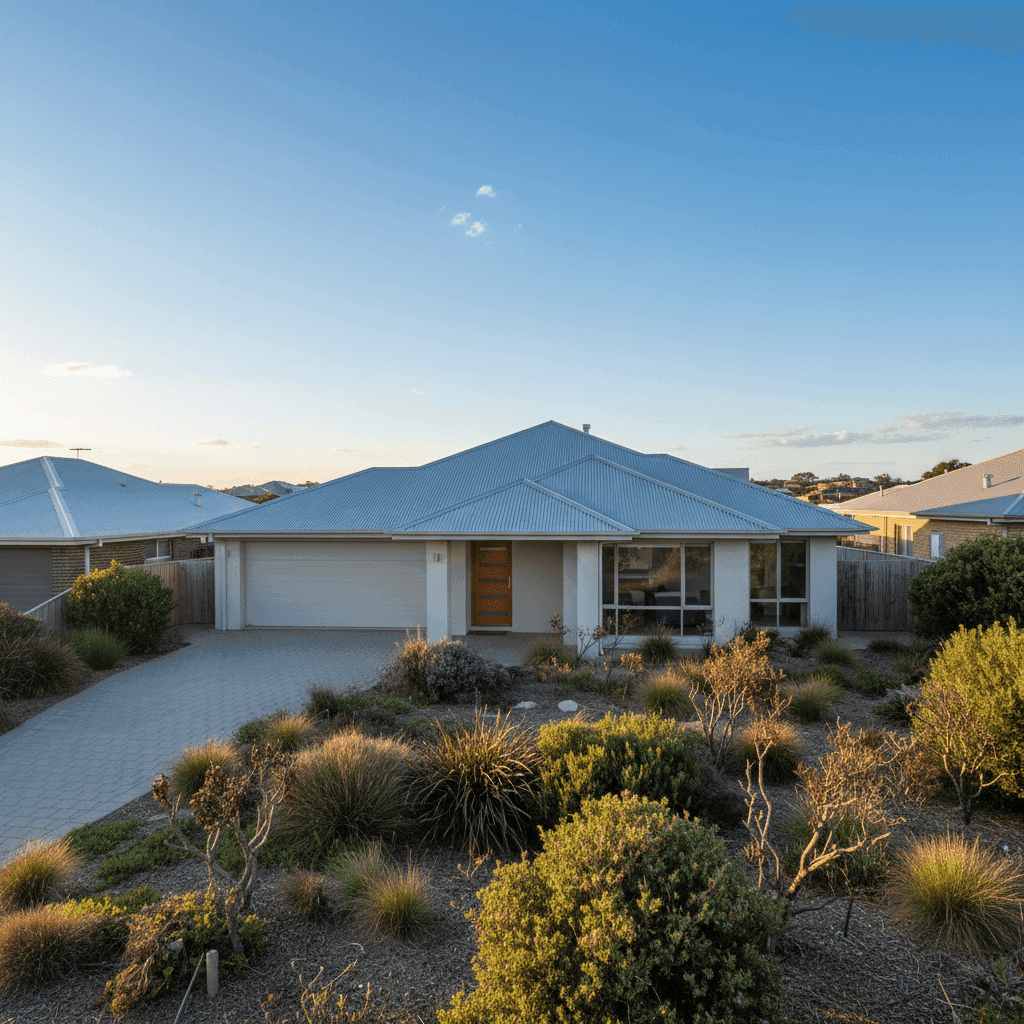
Ventnor is a quiet coastal locality on Phillip Island in Victoria's Bass Coast region — a place known for its relaxed lifestyle, stunning natural surrounds, and a strong mix of permanent residents and holiday homeowners. For a three-bedroom, free-standing home in this area, understanding what you're paying for home and contents insurance — and whether that price stacks up — is well worth the effort.
This article breaks down a real insurance quote for a property in Ventnor, comparing it against local, state, and national benchmarks to help you make a more informed decision.
---
Is This Quote Fair?
The annual premium for this quote comes in at $2,118 per year (or around $203 per month), covering both building (insured at $600,000) and contents ($30,000), each with a $1,000 excess.
Our price rating for this quote is FAIR — Around Average, which is a solid outcome for a coastal Victorian property. It sits comfortably within the middle of the market, meaning you're not overpaying significantly, but there may still be room to find a more competitive deal depending on the insurer and your specific circumstances.
To put it in perspective: the suburb's 25th percentile premium is $2,089 per year, meaning this quote is only marginally above the cheapest quarter of quotes seen in the area. That's a good sign — it suggests the pricing is competitive without being an outlier in either direction.
---
How Ventnor Compares
When you look at the broader data, this quote holds up well across every comparison point. Here's how it stacks up:
| Benchmark | Premium |
|---|---|
| This Quote | $2,118/yr |
| Ventnor Suburb Average | $2,583/yr |
| Ventnor Suburb Median | $2,476/yr |
| Bass Coast LGA Average | $2,160/yr |
| Victoria Average | $3,000/yr |
| Victoria Median | $2,718/yr |
| National Average | $5,347/yr |
| National Median | $2,764/yr |
This quote comes in $465 below the Ventnor suburb average and $358 below the suburb median — meaningful savings for a like-for-like property. It also sits well below both the Victorian state average of $3,000/yr and the national average of $5,347/yr, the latter of which is heavily influenced by high-risk areas in Queensland and Western Australia prone to cyclones and flooding.
Compared to the Ventnor suburb data — drawn from a sample of 20 quotes — this property appears to be attracting a more favourable rate than many of its neighbours, which is worth noting given Phillip Island's coastal exposure and the insurance industry's general sensitivity to proximity to water.
It's also worth highlighting that the Bass Coast LGA average sits at $2,160/yr, very close to this quote, suggesting the pricing is well-calibrated for the region overall.
---
Property Features That Affect Your Premium
Several characteristics of this property will influence how insurers assess and price the risk. Here's what's likely at play:
Steel/Colorbond Roof Colorbond roofing is generally viewed favourably by insurers. It's durable, fire-resistant, and performs well in coastal environments where salt air can degrade other materials. This is likely contributing positively to the premium.
Slab Foundation A concrete slab foundation is considered a low-risk construction type. It's stable, resistant to movement in most soil conditions, and doesn't carry the underfloor risks associated with raised or timber stumped homes. Insurers tend to reward this with more competitive pricing.
Timber/Laminate Flooring Flooring type can influence contents and building claims — timber and laminate floors can be more susceptible to water damage than tiles, which may be a minor consideration for insurers, particularly in a coastal area.
External Walls Listed as "Other" The wall construction material is categorised as "other," which can sometimes prompt insurers to apply a slightly more conservative assessment since non-standard materials are harder to benchmark. It's worth confirming exactly what your walls are made of when obtaining quotes, as accurate information can prevent claim complications down the track.
Built in 2000 A home constructed in 2000 sits in a comfortable middle ground — not so old as to raise concerns about ageing infrastructure, and built under modern building codes that improved structural standards significantly from the 1990s onward.
No Pool, Solar, or Cyclone Risk The absence of a pool, solar panels, and cyclone risk classification all simplify the risk profile. Pools add liability exposure, solar panels introduce additional replacement costs, and cyclone zones carry significant premium loadings — none of which apply here.
Standard Fittings Quality Standard fittings mean the cost to repair or replace internal fixtures is more predictable and generally lower than high-end or custom fittings. This keeps the building sum insured more straightforward to calculate and helps avoid over-insurance.
---
Tips for Homeowners in Ventnor
Whether you're a permanent resident or using the property as a holiday home, here are some practical ways to manage your insurance costs and coverage:
1. Review Your Building Sum Insured Annually Construction costs in regional Victoria have risen significantly in recent years. A $600,000 sum insured may have been appropriate when the policy was first taken out, but it's worth cross-checking against current rebuild cost estimates — not the market value of the property — to make sure you're neither underinsured nor paying for more cover than you need.
2. Consider Your Contents Value Carefully At $30,000, the contents cover is on the modest side for a three-bathroom home. If you use the property as a holiday rental or have quality furniture, appliances, and personal belongings on site, it's worth doing a room-by-room audit to make sure your contents figure reflects reality.
3. Ask About Coastal or Holiday Home Discounts Some insurers offer specific products for holiday homes or properties that are unoccupied for extended periods. If this is a second property, you may be able to access tailored cover — or alternatively, ensure your standard policy doesn't have exclusions around vacancy periods that could affect a claim.
4. Compare Quotes Before Renewal The insurance market in coastal Victoria is competitive. Given that this quote already sits below the suburb average, it's a reasonable benchmark — but running a fresh comparison at renewal time is always worthwhile. Premiums can shift significantly between insurers for the same property.
---
Ready to Find a Better Rate?
Whether this quote is your current policy or one you're considering, it's always smart to see what else is out there. CoverClub makes it easy to compare home and contents insurance quotes for properties across Ventnor and the wider Bass Coast region.
Get a quote today at CoverClub and see how your premium stacks up — it only takes a few minutes and could save you hundreds of dollars a year.