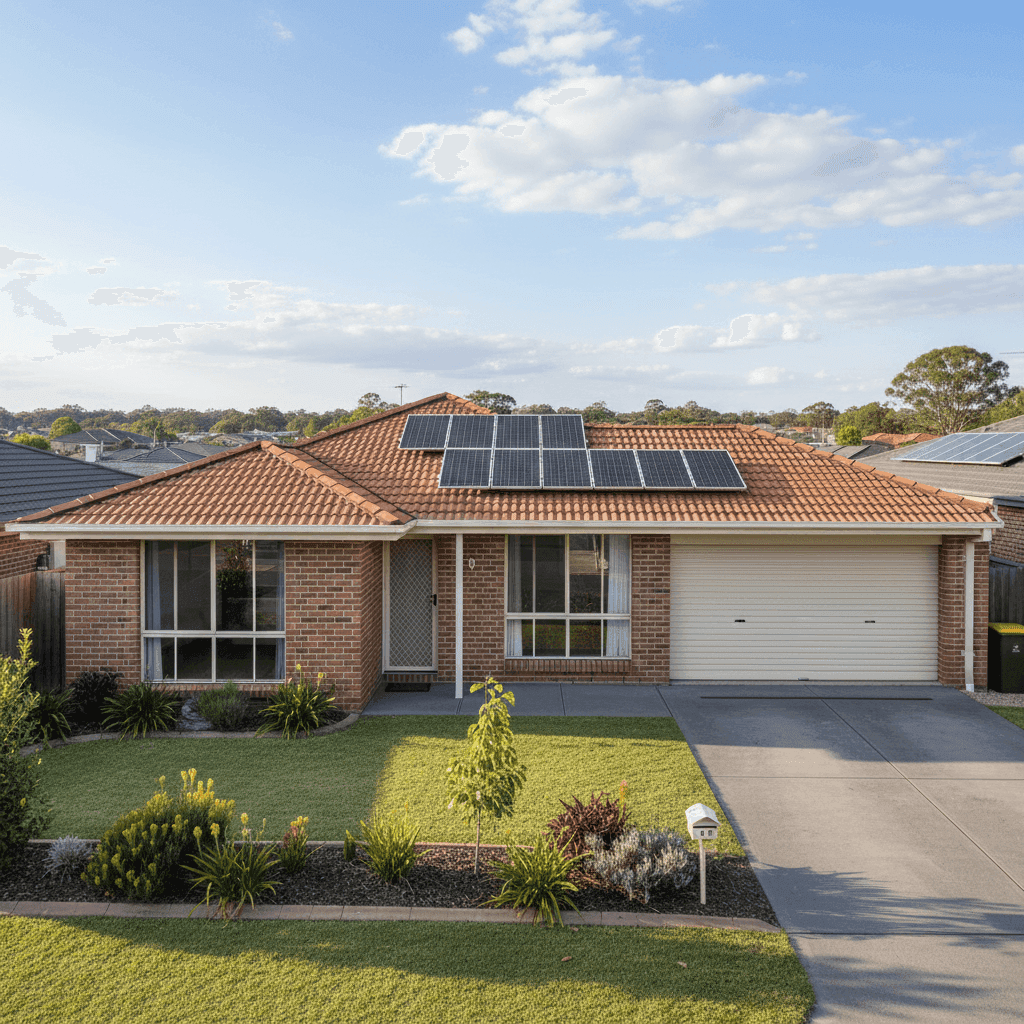
If you own a free standing home in Victoria Point, QLD 4165, you've probably noticed that home insurance can vary wildly depending on who you ask. This article breaks down a real home and contents insurance quote for a four-bedroom, two-bathroom brick veneer home in the suburb — and puts that number into context against local, state-wide, and national benchmarks. Whether you're shopping around for the first time or reviewing your renewal, this analysis will help you understand what's driving your premium and where you might find savings.
---
Is This Quote Fair?
The short answer: yes — and then some. At $962 per year (or about $93 per month) for combined home and contents cover, this quote lands firmly in the "Cheap" category, sitting well below the average for Victoria Point.
To put that in perspective, the suburb average premium for Victoria Point sits at $3,494 per year, with a median of $3,043. That means this quote is paying roughly 72% less than the typical homeowner in the same postcode. Even compared to the cheapest quarter of quotes in the area — the 25th percentile at $1,659 per year — this premium is still significantly lower.
It's worth noting that the building is insured for $611,000 with a $3,000 building excess, and contents are covered for $20,000 with a $1,000 excess. The higher building excess is likely one of the key levers pulling the premium down. Choosing a higher excess is a common and legitimate way to reduce your annual cost — provided you're comfortable covering that amount out of pocket in the event of a claim.
---
How Victoria Point Compares
Victoria Point sits in the Redland City Council local government area, on the eastern shore of Moreton Bay. It's a bayside suburb that enjoys a relaxed lifestyle, but insurers factor in a range of local risk variables when pricing policies here.
Here's how the premiums stack up across different levels:
| Benchmark | Annual Premium |
|---|---|
| This Quote | $962 |
| Victoria Point 25th Percentile | $1,659 |
| Victoria Point Median | $3,043 |
| Victoria Point Average | $3,494 |
| Victoria Point 75th Percentile | $5,860 |
| Redland LGA Average | $3,178 |
| QLD State Average | $4,547 |
| QLD State Median | $3,931 |
| National Average | $2,965 |
| National Median | $2,716 |
A few things stand out here. Queensland as a whole carries some of the highest home insurance premiums in the country, driven by cyclone risk in the north, flooding in low-lying areas, and storm activity throughout the state. At $4,547, the QLD state average is more than 50% higher than the national average of $2,965.
Victoria Point's own average of $3,494 is notably above the national median, which reflects the elevated risk profile of South East Queensland properties more broadly. The spread between the 25th percentile ($1,659) and the 75th percentile ($5,860) is also quite wide — a sign that individual property characteristics and insurer pricing models vary considerably in this area.
Based on a sample of 60 quotes collected for this suburb, the data paints a clear picture: this $962 quote is an outlier in the best possible way.
---
Property Features That Affect Your Premium
Several characteristics of this property likely contribute to its competitive premium:
Brick Veneer Construction Brick veneer is generally viewed favourably by insurers. It offers solid fire resistance and durability compared to timber or weatherboard cladding, which can translate to lower rebuild risk and, in turn, lower premiums.
Tiled Roof Concrete or terracotta tile roofs are considered a robust roofing material in Australia. They hold up well in storms and have a long lifespan, both of which are positive signals for insurers.
Slab Foundation A concrete slab is a stable and common foundation type in Queensland, and it doesn't carry the same moisture or subsidence concerns that can affect older stumped homes. This is another tick in the low-risk column.
Built in 1989 At around 35 years old, this home is neither brand new nor ageing to the point of concern. Homes of this era typically have modern wiring and plumbing systems in place, without the heritage complications that can affect older properties.
Solar Panels The property has solar panels installed. While solar adds value and can complicate replacement costs slightly, many insurers now factor this in as standard. It's important to confirm that your policy explicitly covers solar panels as part of the building sum insured — not all policies do by default.
No Pool, No Cyclone Risk Zone The absence of a swimming pool removes a source of liability and additional cover complexity. Victoria Point is also outside designated cyclone risk areas, which is a meaningful factor in keeping QLD premiums from climbing even higher for this property.
Contents Insured at $20,000 The relatively modest contents sum insured of $20,000 keeps that component of the premium low. Homeowners should regularly review their contents value to ensure it accurately reflects the replacement cost of their belongings — underinsurance is a common and costly mistake.
---
Tips for Homeowners in Victoria Point
1. Review your sum insured regularly Building costs in Queensland have risen sharply in recent years. Make sure your $611,000 building sum insured still reflects the actual cost to rebuild your home from scratch — not just its market value. Underinsurance can leave you significantly out of pocket after a major claim.
2. Check that solar panels are covered Ask your insurer directly whether your solar panel system is included in the building cover, and for how much. With systems often worth $5,000–$15,000 or more, you don't want to discover a gap in cover after a hailstorm.
3. Consider your excess carefully This policy carries a $3,000 building excess, which is on the higher end. That's a meaningful trade-off — lower premiums now, but a larger out-of-pocket cost if you need to claim. Make sure you have that amount readily accessible, and weigh whether a mid-range excess might offer a better balance for your situation.
4. Compare quotes at renewal time Even if you're happy with your current insurer, the home insurance market shifts constantly. Loyalty doesn't always pay — in fact, many insurers offer their best rates to new customers. Running a fresh comparison each year is one of the simplest ways to avoid overpaying.
---
Compare Home Insurance Quotes in Victoria Point
Whether your current premium looks like this one or sits closer to the suburb average, it always pays to know your options. CoverClub makes it easy to compare home and contents insurance quotes tailored to your property. Get a quote today and see how much you could save — you might be surprised by what's available for a home in Victoria Point.
For more data on insurance pricing in your area, explore the Victoria Point suburb stats, the QLD state overview, or the national insurance benchmarks.