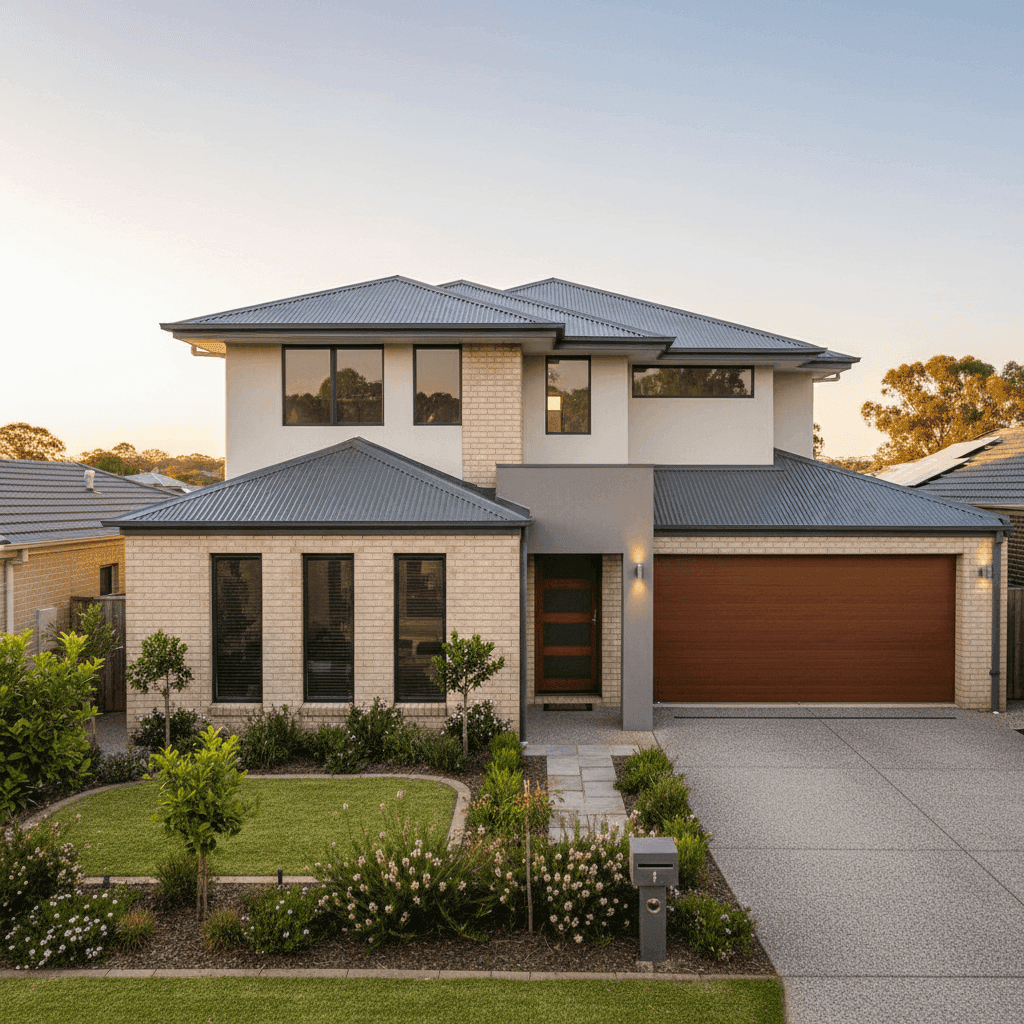
Victoria Point is a sought-after bayside suburb on the Redland Peninsula, known for its relaxed coastal lifestyle, strong community feel, and proximity to both Brisbane and the Southern Moreton Bay Islands. For owners of a five-bedroom, free-standing home in this area, understanding what you should be paying for home and contents insurance is an important part of protecting one of your most significant assets. This article breaks down a real quote we analysed — $3,021 per year for combined building and contents cover — and puts it into context using suburb, state, and national data.
---
Is This Quote Fair?
The short answer: yes, broadly speaking. Our price rating for this quote is Fair (Around Average), and the numbers back that up.
At $3,021 per year (or roughly $295 per month), this quote sits just below the Victoria Point suburb median of $3,043/yr — meaning it's right in the middle of the pack for comparable properties in the area. It also comes in noticeably below the suburb average of $3,494/yr, which is often pulled upward by outlier properties with higher risk profiles or greater sum-insured values.
That said, "fair" doesn't necessarily mean "the best available." Insurance pricing varies significantly between providers, and there's a wide spread of premiums in Victoria Point — from $1,659/yr at the 25th percentile all the way to $5,860/yr at the 75th percentile. That's a difference of over $4,200 per year for broadly similar homes, which underscores just how much value there is in comparing quotes rather than simply accepting the first offer you receive.
The cover details are worth noting here too. This quote includes a $1,000,000 building sum insured and $180,000 in contents cover, with a $5,000 excess applying to both building and contents claims. The higher excess is one lever that can bring premiums down — if you're comfortable absorbing a larger out-of-pocket cost in the event of a claim, it can meaningfully reduce what you pay annually.
---
How Victoria Point Compares
To put this quote in proper perspective, it helps to look at the broader pricing landscape across Queensland and nationally.
| Benchmark | Average Premium | Median Premium |
|---|---|---|
| Victoria Point (suburb) | $3,494/yr | $3,043/yr |
| Redland LGA | $3,312/yr | — |
| Queensland (state) | $4,547/yr | $3,931/yr |
| Australia (national) | $2,965/yr | $2,716/yr |
A few things stand out here. First, Queensland as a state is significantly more expensive than the national average — the QLD average of $4,547/yr is roughly 53% higher than the national average of $2,965/yr. This reflects the elevated risk profile of much of Queensland, where extreme weather events including storms, flooding, and cyclones drive up insurer costs across the board.
Victoria Point, however, sits in a comparatively more favourable position within Queensland. The suburb's median premium of $3,043/yr is well below the state median of $3,931/yr, suggesting that local risk factors — while not negligible — are less severe than in many other parts of the state. The Redland LGA average of $3,312/yr also sits comfortably below the statewide figure, reinforcing this picture.
Compared to the national median of $2,716/yr, Victoria Point does run a little higher, which is typical for coastal Queensland suburbs where storm and inundation risk carries some weight in insurer pricing models.
---
Property Features That Affect Your Premium
The characteristics of this particular property play a meaningful role in how insurers price the risk. Here's what's relevant:
Brick veneer construction is generally viewed favourably by insurers. It offers solid structural integrity and reasonable resistance to fire and wind compared to lighter cladding materials, which can translate to more competitive premiums.
Steel/Colorbond roofing is another positive factor. Colorbond is durable, low-maintenance, and performs well in Australian weather conditions. It's less susceptible to storm damage than some tile alternatives, and insurers tend to reflect this in their pricing.
Concrete slab foundation provides stability and is a standard, well-understood construction type for insurers — no surprises here, and no premium loading you'd typically see with more complex or older foundation types.
Timber and laminate flooring is worth flagging from a contents and building perspective. Timber floors can be costly to repair or replace following water damage events, so it's worth ensuring your sum insured adequately accounts for this.
Built in 2009, this home is relatively modern. Properties built after the introduction of updated building codes (particularly post-2006 in Queensland) often benefit from improved structural standards designed to withstand severe weather, which insurers generally view positively.
At 235 square metres, this is a sizeable home, and the $1,000,000 building sum insured reflects the cost of full reconstruction at today's prices — an important consideration given rising construction costs across Australia in recent years.
---
Tips for Homeowners in Victoria Point
1. Review your sum insured annually. Construction costs have risen sharply over the past few years, and many homeowners find themselves underinsured without realising it. Use a building cost calculator or speak with a local builder to sense-check whether your current sum insured would genuinely cover a full rebuild — not just the market value of your home.
2. Understand your flood and storm cover. Victoria Point is a coastal suburb with waterway exposure. Before renewing your policy, confirm exactly what weather-related events are covered. Flood cover in particular is often a separate inclusion or exclusion, and the definitions vary between insurers. Don't assume — read the Product Disclosure Statement carefully.
3. Shop around at renewal time. The $4,200+ spread between the 25th and 75th percentile premiums in Victoria Point tells you everything you need to know: loyalty doesn't always pay. Insurers frequently offer better rates to new customers, so comparing at least two or three quotes each year is one of the easiest ways to avoid overpaying.
4. Consider your excess carefully. This quote carries a $5,000 excess on both building and contents. While a higher excess reduces your annual premium, make sure it's an amount you could genuinely afford to pay at short notice following a damaging event. If $5,000 would be a financial stretch, it may be worth paying a slightly higher premium for a lower excess.
---
Compare Your Options with CoverClub
Whether you're renewing an existing policy or taking out cover for the first time, it pays to know where your quote stands. CoverClub makes it easy to benchmark your premium against real data from properties like yours in Victoria Point and across Queensland. Get a quote today at CoverClub and find out if you're getting a fair deal — or if there's a better one waiting for you.