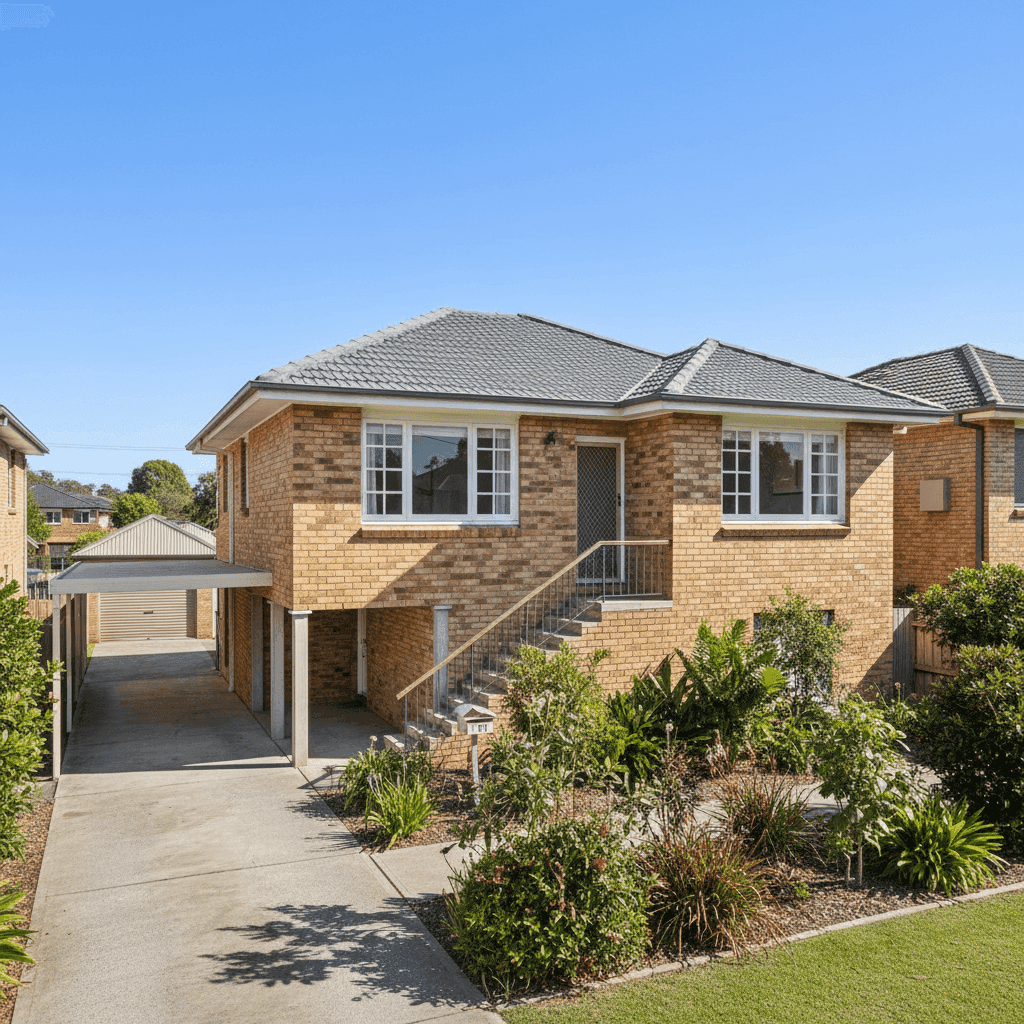
If you own a free standing home in Villawood, NSW 2163, you've probably wondered whether you're paying a fair price for building insurance — or quietly overpaying while your insurer quietly profits. This article breaks down a real building-only insurance quote for a three-bedroom, two-bathroom brick veneer home in Villawood, benchmarks it against local, state, and national data, and gives you practical steps to take control of your premium.
---
Is This Quote Fair?
The quote in question sits at $2,875 per year (or $282 per month) for building-only cover, with a $2,000 building excess and a sum insured of $597,000.
Our price rating for this quote is EXPENSIVE — Above Average.
To put that in perspective: the average building insurance premium for comparable homes in the Villawood area is $1,748 per year, and the median sits at $1,623. That means this quote is running roughly 65% above the suburb average and nearly 77% above the median. Even at the 75th percentile — where only one in four quotes are higher — the suburb benchmark is $2,141, still well below the $2,875 being quoted here.
That's a meaningful gap, and it's worth understanding why before simply accepting the figure at renewal.
---
How Villawood Compares
Zooming out to a broader picture helps contextualise where Villawood sits in the national landscape. You can explore the full data on our Villawood suburb stats page, the NSW state overview, and the national insurance stats hub.
| Benchmark | Average Premium | Median Premium |
|---|---|---|
| Villawood (NSW 2163) | $1,748/yr | $1,623/yr |
| Canterbury-Bankstown LGA | $9,344/yr | — |
| NSW State | $9,528/yr | $3,770/yr |
| National | $5,347/yr | $2,764/yr |
A few things stand out here. The NSW state average of $9,528 is dramatically higher than the state median of $3,770 — a classic sign that a small number of very high-risk or high-value properties are pulling the average upward. The same dynamic plays out at the LGA level, where Canterbury-Bankstown's average of $9,344 is heavily skewed.
The more reliable comparison for a typical Villawood homeowner is the median — and on that measure, the quote of $2,875 is above both the suburb median ($1,623) and the national median ($2,764), though it sits below the NSW state median of $3,770. Villawood itself appears to be a relatively affordable suburb to insure compared to broader NSW — which makes this particular quote stand out even more.
---
Property Features That Affect Your Premium
Insurers don't just look at your postcode. Every detail of your property feeds into the risk calculation. Here's how the features of this home likely influence the premium:
Brick Veneer Walls & Tiled Roof Brick veneer construction with a tiled roof is generally regarded as a solid, fire-resistant combination, and insurers tend to reward it with more competitive premiums compared to timber-clad or metal-roofed homes. These features should, in theory, work in favour of a lower premium.
Elevated Foundation (Stumps, at least 1m) This is likely one of the more significant premium drivers. Homes elevated on stumps by at least one metre can face higher premiums because the underfloor space introduces additional risk — from vermin, moisture, and structural vulnerability. However, elevation can also reduce flood risk in low-lying areas, so the net effect depends heavily on the insurer's flood modelling for the specific location.
Ducted Climate Control The presence of ducted climate control adds to the replacement cost of the home, which may contribute to the higher sum insured of $597,000. Ducted systems are expensive to install and replace, and insurers factor this into their assessment of rebuilding costs.
Built in 2005 At roughly 20 years old, this home is relatively modern and should comply with building codes that improved significantly through the late 1990s and early 2000s. This generally works in the homeowner's favour, as older homes can carry higher premiums due to outdated wiring, plumbing, or materials.
No Pool, No Solar The absence of a pool and solar panels simplifies the risk profile. Both can add complexity and cost to a policy, so their absence is a mild positive.
143 sqm Building Size At 143 square metres, this is a modestly sized home. The sum insured of $597,000 works out to approximately $4,175 per square metre — which is on the higher end for a standard-quality fit-out. It may be worth reviewing whether the sum insured accurately reflects current rebuild costs in the area, as both over-insurance and under-insurance carry their own risks.
---
Tips for Homeowners in Villawood
1. Shop around — seriously The data makes it clear: there's significant variation in what insurers charge for the same property. With a suburb average of $1,748 and this quote at $2,875, switching insurers could save over $1,000 per year. Use a comparison tool like CoverClub to see multiple quotes side by side.
2. Review your sum insured Make sure your building sum insured reflects the actual cost to rebuild — not the market value of the property. Tools like the Cordell Sum Sure Calculator (often available through insurers) can help you arrive at a more accurate figure. Being over-insured means you're paying premiums on coverage you'll never claim; being under-insured can leave you exposed after a major event.
3. Consider a higher excess This policy carries a $2,000 building excess. If you have the financial buffer to absorb a larger out-of-pocket cost in the event of a claim, opting for a higher excess at renewal can meaningfully reduce your annual premium. Just make sure the trade-off makes sense for your situation.
4. Ask about loyalty discounts — or leave Many insurers quietly reserve their best rates for new customers. If you've been with the same insurer for several years without renegotiating, there's a good chance you're paying a loyalty tax. Call and ask for a better rate, and be prepared to follow through if they won't budge.
---
Compare Your Home Insurance Today
Whether you're reviewing a quote or shopping for the first time, CoverClub makes it easy to see what you should be paying. Our platform aggregates real quote data from across Australia so you can make an informed decision — not just accept the first number that lands in your inbox.