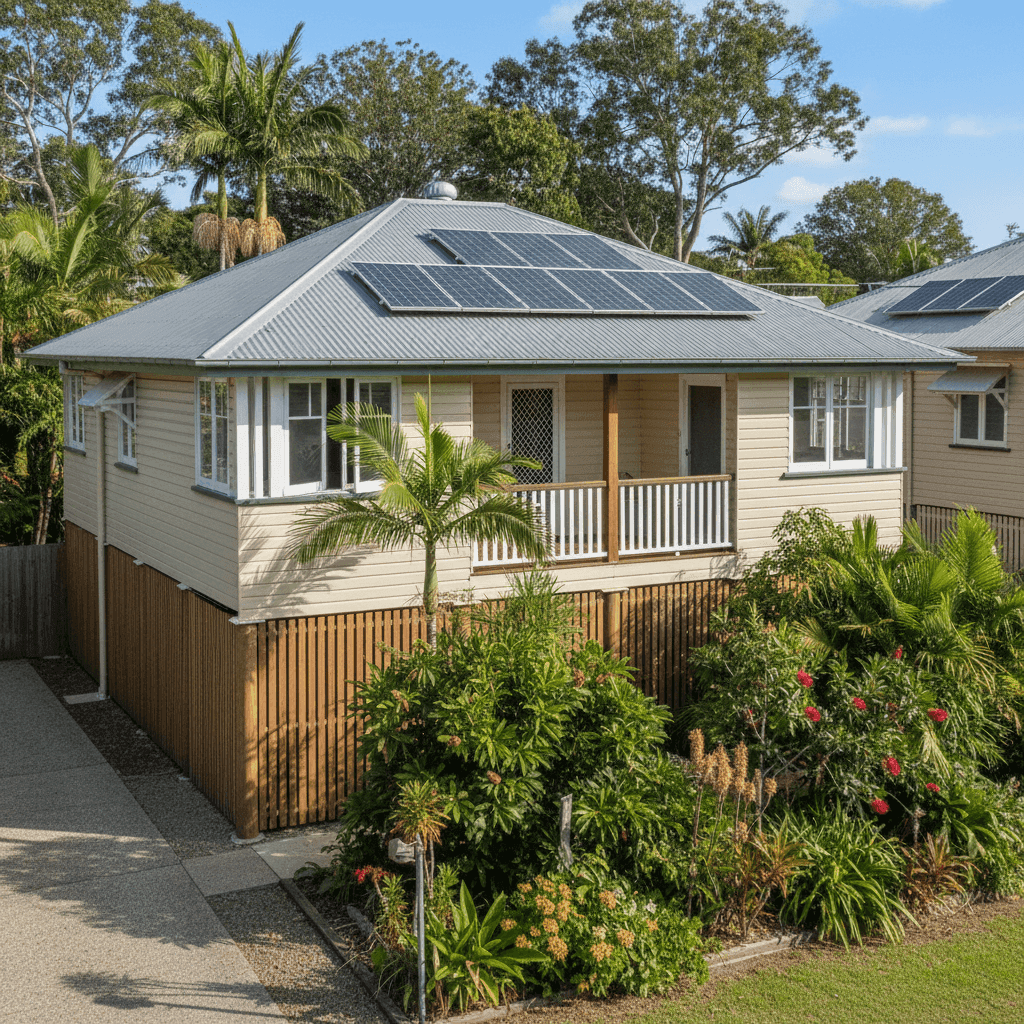
If you own a semi detached home in Vincent, QLD 4814, you're likely no stranger to the reality that home insurance in North Queensland can be a significant household expense. Vincent is a residential suburb in Townsville's inner west — and like much of the region, properties here face a unique combination of risk factors that insurers take very seriously. This article breaks down a real building insurance quote for a three-bedroom semi detached in Vincent, compares it against local, state, and national benchmarks, and offers practical guidance for homeowners looking to get the best value on their cover.
---
Is This Quote Fair?
The quote in question comes in at $4,461 per year (or $428 per month) for building-only cover on a 130 sqm semi detached home, with a sum insured of $552,800 and a $1,000 building excess.
Our price rating for this quote is EXPENSIVE — above average for the Vincent suburb. To put that in perspective:
- The suburb average for Vincent is $2,705/yr, and the median sits at $2,517/yr
- This quote is 65% above the suburb average and more than 77% above the suburb median
- Even the 75th percentile of Vincent quotes — meaning the more expensive end of the local market — sits at just $2,980/yr, still well below this premium
So on a suburb-by-suburb basis, this quote is clearly on the high side. That said, context matters enormously in North Queensland insurance, and there are legitimate property-specific reasons this premium is elevated — more on those shortly.
---
How Vincent Compares
To understand whether this quote is genuinely expensive or simply reflects the broader North Queensland market, it helps to zoom out. You can explore the full data on our Vincent suburb stats page.
| Benchmark | Annual Premium |
|---|---|
| This quote | $4,461 |
| Vincent suburb average | $2,705 |
| Vincent suburb median | $2,517 |
| QLD state average | $9,129 |
| QLD state median | $3,903 |
| Townsville LGA average | $7,340 |
| National average | $5,347 |
| National median | $2,764 |
A few things stand out here. While this quote is above the local Vincent suburb average, it sits well below the Townsville LGA average of $7,340 and significantly below the Queensland state average of $9,129. Compared to the broader QLD insurance market, this quote is actually more moderate than many North Queensland homeowners face.
Against national benchmarks, the picture is mixed: the quote exceeds the national average of $5,347... wait — actually at $4,461, it comes in below the national average, which is largely skewed upward by high-risk coastal and cyclone-prone areas (of which Townsville is one). The national median of $2,764 is lower, reflecting that the majority of Australian homes sit in lower-risk southern states.
The bottom line: this quote is expensive relative to the Vincent suburb sample, but it's not out of step with what Townsville homeowners broadly experience. The suburb sample of just 8 quotes is also relatively small, so local averages should be interpreted with some caution.
---
Property Features That Affect Your Premium
Several characteristics of this property directly influence the premium, and understanding them helps explain why the quote lands where it does.
Cyclone Risk Area
This is arguably the single biggest factor. Townsville and the surrounding region — including Vincent — sit within a designated cyclone risk zone. Insurers apply significant loadings to premiums in these areas to account for the heightened probability of wind, storm surge, and structural damage. This alone can double or triple a premium compared to equivalent properties in southern states.
Elevated Construction on Poles
The home is elevated by at least one metre on a pole (or stump) foundation — a classic Queenslander-style build. While elevated homes can perform well in flooding scenarios (water passes underneath rather than through the living space), they can also be more vulnerable to high wind events, as the underfloor area creates additional surface area for wind uplift. Insurers assess this carefully in cyclone zones.
Weatherboard Timber Walls
External weatherboard timber walls are considered a higher-risk construction material compared to brick or rendered masonry. Timber is more susceptible to fire, termite damage, and storm impact, all of which contribute to a higher premium loading.
Steel/Colorbond Roof
On the positive side, a Colorbond steel roof is generally regarded as cyclone-resilient when properly installed and maintained. It's a common and well-regarded roofing choice in North Queensland, and some insurers view it more favourably than older tile roofs that can become projectiles in high winds.
Solar Panels
The property has solar panels installed. These add to the insured replacement value of the building and can also be a source of claims if damaged by hail, wind, or fire. Their inclusion in the sum insured is appropriate but does contribute to the overall premium.
Ducted Climate Control
Ducted air conditioning systems are expensive to repair or replace and are factored into the building's sum insured. In a climate like Townsville's, these systems work hard year-round, increasing both their value and their exposure to mechanical or weather-related damage.
1975 Construction
A home built in 1975 predates many modern building codes, including updated cyclone-resistant construction standards introduced after Cyclone Tracy in 1974. Older homes may require more extensive repairs to bring them up to current code following a claim — a factor insurers account for in their pricing.
---
Tips for Homeowners in Vincent
1. Shop Around — Seriously
With a premium sitting above the local suburb average, this is a clear signal to compare. Insurers price risk very differently, and a quote from one provider can vary by hundreds — or even thousands — of dollars from another for the same property. Use CoverClub's free quote comparison tool to see multiple options side by side.
2. Review Your Sum Insured Carefully
At $552,800 for a 130 sqm semi detached, the sum insured is substantial. Make sure this figure reflects the actual cost to rebuild your home (not its market value), including demolition, debris removal, and current construction costs. Over-insuring pushes your premium up unnecessarily, while under-insuring can leave you exposed after a major claim.
3. Consider Cyclone Mitigation Upgrades
Some insurers offer premium discounts for homes that have undergone cyclone mitigation works — such as roof tie-down upgrades, shutters, or compliance with modern wind-resistance standards. If your home hasn't been assessed, it may be worth consulting a licensed builder or engineer to explore what's possible.
4. Ask About Excess Trade-offs
Your current building excess is $1,000. In many cases, opting for a higher voluntary excess (say, $2,500 or $5,000) can meaningfully reduce your annual premium. This strategy works best for homeowners who have the financial buffer to cover a larger out-of-pocket amount in the event of a claim.
---
Compare Your Options with CoverClub
Whether you're renewing your policy or shopping for cover for the first time, it pays to know where your premium sits relative to the market. CoverClub makes it easy to compare home insurance quotes across multiple providers — all in one place, with no obligation. Get a quote today and find out if you could be paying less for the same level of protection.