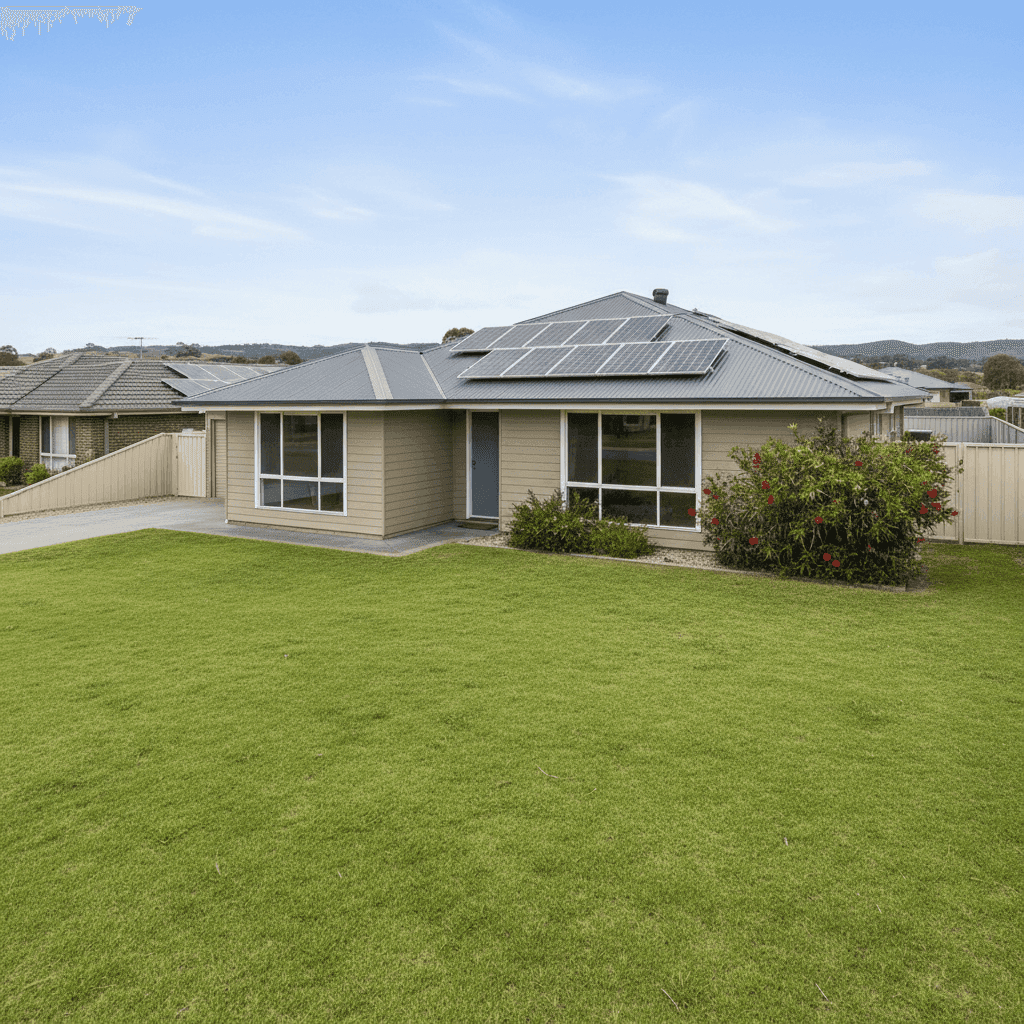
Vineyard is a quiet semi-rural suburb in Sydney's north-west, sitting within the City of Hawkesbury and bordering the rapidly expanding Blacktown corridor. It's the kind of area where established homes sit alongside hobby farms and newer estates — and that mix of property types means home insurance costs can vary quite a bit from one street to the next. This article breaks down a real home insurance quote for a three-bedroom, free-standing home in Vineyard, and puts the numbers into context against local, state, and national benchmarks.
---
Is This Quote Fair?
The quote in question comes in at $2,016 per year (or around $197 per month) for combined home and contents cover, with a building sum insured of $350,000 and contents valued at $50,000. Both the building and contents excess are set at $2,000.
Our pricing analysis rates this quote as CHEAP — below the suburb average — and the numbers back that up clearly. The average premium paid by homeowners in Vineyard is $2,868 per year, while the median sits at $2,803. That means this quote is coming in roughly $850 below the suburb average, or about 30% less than what most locals are paying.
Even compared to the 25th percentile of quotes in the area — meaning the cheapest quarter of premiums recorded — this quote at $2,016 still undercuts the $2,567 mark. That's a strong result by any measure.
Of course, every policy is different. A lower premium doesn't automatically mean better value — you need to weigh up what's actually covered, the excess structure, and any exclusions buried in the PDS. But on price alone, this quote is competitive.
---
How Vineyard Compares
To understand what this quote really means, it helps to zoom out and look at the broader picture. You can explore the full data on the Vineyard suburb insurance stats page, the NSW state overview, and national insurance benchmarks.
Here's a quick snapshot:
| Benchmark | Annual Premium |
|---|---|
| This quote | $2,016 |
| Vineyard suburb average | $2,868 |
| Vineyard suburb median | $2,803 |
| Vineyard 25th percentile | $2,567 |
| Vineyard 75th percentile | $3,221 |
| Penrith LGA average | $2,220 |
| NSW state average | $9,528 |
| NSW state median | $3,770 |
| National average | $5,347 |
| National median | $2,764 |
A few things stand out here. The NSW state average of $9,528 is dramatically higher than the median of $3,770 — a clear sign that a relatively small number of very expensive properties (think coastal estates, bushfire-prone areas, or high-value homes) are pulling the average upward. The median is a more reliable indicator of what a typical NSW homeowner pays, and at $3,770, this Vineyard quote still comes in well below that mark.
Nationally, the picture is similar — the average of $5,347 is skewed by high-risk and high-value properties, while the national median of $2,764 is closer to what most Australians actually pay. This quote sits just below that national median, which is a solid outcome.
The Penrith LGA average of $2,220 is the most geographically relevant comparison point, and this quote is only slightly below it — suggesting the pricing is broadly in line with the wider local government area.
---
Property Features That Affect Your Premium
Insurers don't just look at your postcode — they assess the specific characteristics of your home when calculating risk. Here's how the features of this property are likely influencing the premium:
Hardiplank / Hardiflex cladding is a fibre cement product that's popular in Australian homes, particularly those built or renovated from the 1960s through to the 1990s. It's generally viewed favourably by insurers because it's non-combustible and reasonably durable. Compared to weatherboard or timber cladding, it carries a lower fire risk, which can translate to a more competitive premium.
Steel / Colorbond roofing is another tick in the right column. Colorbond is widely regarded as one of the most resilient roofing materials available in Australia — it handles heat, rain, and hail well, and it's non-combustible. Insurers tend to price Colorbond roofs more favourably than terracotta tiles (which can crack in hailstorms) or older materials like fibrous cement sheeting.
Stump foundations are common in older Australian homes, particularly those built before the 1980s. While stumps can be associated with maintenance considerations (such as the need for periodic re-stumping), they don't typically attract a significant premium loading on their own. That said, insurers may factor in the age of the home — built in 1973 — when assessing the likelihood of claims related to structural wear.
Timber and laminate flooring can influence contents and building claims, particularly in the event of water damage. Timber floors can be costly to replace or repair, but this is generally already factored into the building sum insured rather than driving a premium increase.
Solar panels are worth noting. While solar systems add value to a property, they can also increase the cost of a building claim if damaged by hail, storm, or fire. Some insurers include solar panels automatically under building cover; others treat them as an optional extra. It's worth confirming with your insurer that the $350,000 building sum insured adequately accounts for the replacement cost of the solar system.
Ducted climate control is another feature that adds to the replacement value of the home. Ducted systems can be expensive to reinstall, so again, it's worth ensuring your sum insured reflects this.
---
Tips for Homeowners in Vineyard
1. Check that your sum insured keeps pace with construction costs Building costs across greater Sydney have risen significantly in recent years. A sum insured of $350,000 for a 130 sqm home works out to roughly $2,692 per square metre — which is within a reasonable range for a standard-quality build, but worth reviewing annually. Underinsurance is one of the most common and costly mistakes homeowners make.
2. Confirm solar panels are covered under your policy As mentioned above, solar panels aren't always automatically included in building cover. Check your Product Disclosure Statement to confirm they're listed, and that the sum insured is sufficient to replace the system if it's damaged or destroyed.
3. Consider whether your contents value is adequate $50,000 in contents cover is a modest figure for a three-bedroom, two-bathroom home. Take a room-by-room inventory — including furniture, appliances, clothing, electronics, and white goods — to make sure you're not underinsured on the contents side.
4. Review your excess settings A $2,000 excess on both building and contents is on the higher end. While a higher excess generally reduces your premium, it also means a larger out-of-pocket cost when you do need to make a claim. Make sure you're comfortable with that trade-off, particularly for smaller claims.
---
Compare Your Options with CoverClub
Whether you're renewing your existing policy or shopping around for the first time, it pays to compare. CoverClub makes it easy to see what different insurers are quoting for your specific property — so you can make an informed decision rather than just rolling over last year's policy. Get a home insurance quote today and find out if you're getting a fair deal.