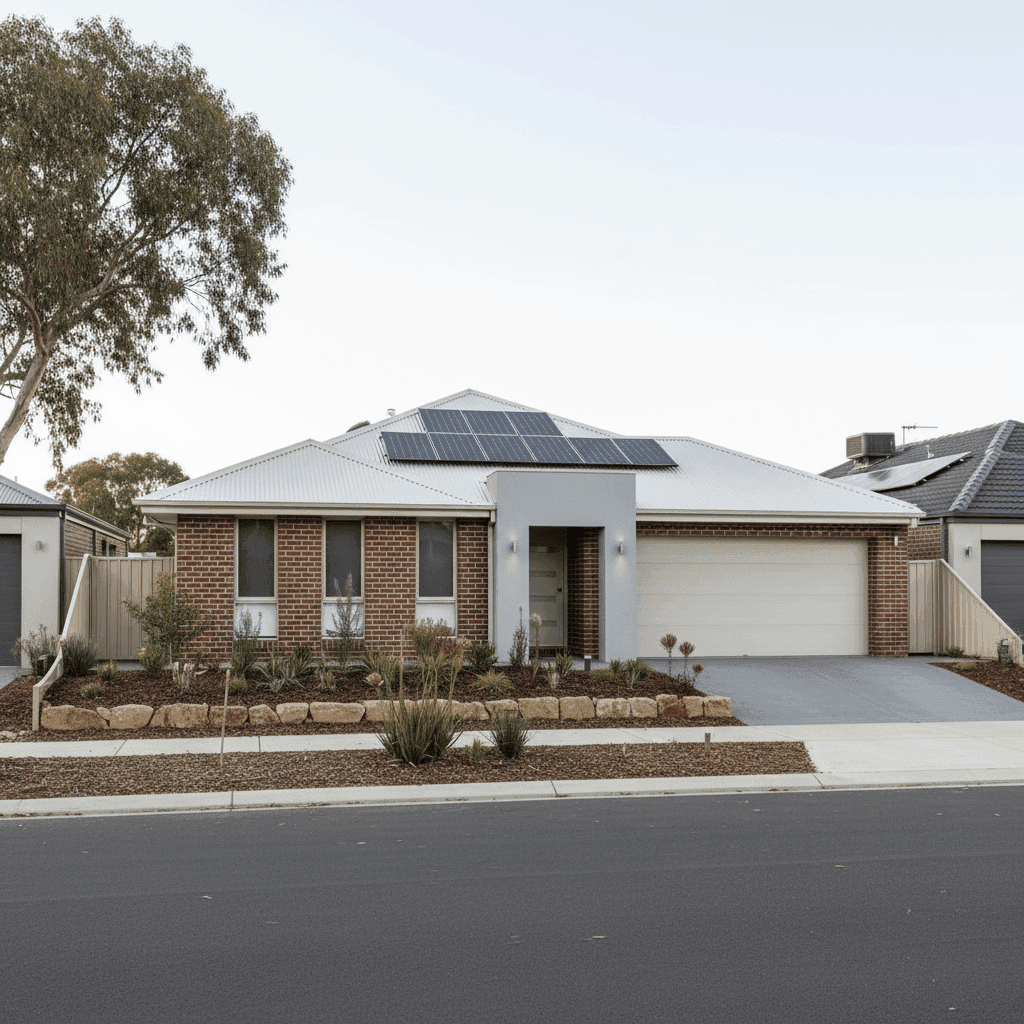
Viveash is a quiet, established suburb sitting in the Swan Valley corridor of Perth's eastern suburbs — and like most of metropolitan Western Australia, it offers a relatively affordable home insurance landscape compared to the rest of the country. This article takes a close look at a recent home and contents insurance quote for a three-bedroom, two-bathroom free-standing home in Viveash (postcode 6056), breaking down whether the price is competitive and what factors are likely driving the cost.
---
Is This Quote Fair?
The quote in question came in at $1,480 per year (or $142/month) for combined home and contents cover, with a building sum insured of $580,000 and contents valued at $50,000. Both the building and contents excess sit at $1,000.
Based on available market data for the suburb, this quote has been rated Expensive (Above Average). Here's what that means in context:
- The suburb average for Viveash is $1,400/yr
- The suburb median is $1,437/yr
- The 75th percentile sits at $1,466/yr
At $1,480, this quote lands above the 75th percentile for the suburb — meaning roughly three-quarters of comparable quotes in the area come in cheaper. That's a meaningful signal that there may be room to shop around and find a more competitive rate.
That said, it's worth keeping perspective. The gap between this quote and the suburb median is around $43 per year — not enormous in the grand scheme of things. Whether it's worth switching depends on the specific policy inclusions, insurer reputation, and how the excess and coverage limits compare.
---
How Viveash Compares
One of the most reassuring aspects of insuring a home in Viveash is just how affordable the suburb is relative to broader benchmarks. Check out the full suburb insurance stats for Viveash for the latest data.
| Benchmark | Average Premium |
|---|---|
| Viveash (suburb average) | $1,400/yr |
| Viveash (suburb median) | $1,437/yr |
| LGA: Kalamunda | $1,793/yr |
| Western Australia (state average) | $2,811/yr |
| Western Australia (state median) | $2,127/yr |
| National average | $5,347/yr |
| National median | $2,764/yr |
Compared to the WA state average of $2,811/yr, even this "expensive" quote represents a saving of nearly $1,330 per year. And against the national average of $5,347/yr, homeowners in Viveash are paying a fraction of what many Australians face — particularly those in high-risk coastal or cyclone-prone regions.
The LGA of Kalamunda averages $1,793/yr, which puts Viveash noticeably below the broader local government area average. This suggests Viveash specifically benefits from lower risk characteristics within the Kalamunda district.
It's also worth noting that the suburb sample size used in this comparison is nine quotes — a relatively small dataset. As more quotes are collected for the area, these benchmarks will become increasingly reliable.
---
Property Features That Affect Your Premium
Every property is different, and insurers weigh up a range of physical characteristics when calculating your premium. Here's how this particular home's features are likely influencing the cost:
🧱 Double Brick Construction
Double brick is one of the most favoured wall materials among Australian insurers. It's durable, fire-resistant, and holds up well against the elements. Homes with double brick exteriors typically attract lower premiums than those built with timber or lightweight cladding. This is a genuine advantage for this property.
🏠 Steel / Colorbond Roof
Colorbond steel roofing is extremely common in Western Australia and is viewed favourably by insurers. It's resistant to corrosion, handles heat well, and is low-maintenance. This should have a neutral to positive effect on the premium.
🏗️ Slab Foundation & Tile Flooring
A concrete slab foundation is a solid, stable base that reduces the risk of subsidence and structural movement. Combined with tile flooring — which is durable and easy to replace — these features present a lower claims risk profile to insurers.
☀️ Solar Panels
The property includes solar panels, which are typically covered under a building insurance policy as a fixed fixture. Insurers factor in the replacement cost of panels, which can be substantial. This may contribute modestly to a higher premium, particularly as the building sum insured of $580,000 needs to account for their value.
🆕 Brand New Construction (2025)
A newly built home is one of the best signals of reduced risk for an insurer. New builds comply with current building codes, use modern materials, and are far less likely to have hidden defects or ageing infrastructure. This should be working in the homeowner's favour in terms of premium pricing.
📋 Standard Fittings
The property features standard-quality fittings, which keeps the rebuild cost estimate more predictable and moderate. High-end or custom fittings can push up the sum insured and therefore the premium — standard fittings help keep things grounded.
---
Tips for Homeowners in Viveash
Whether you're happy with your current quote or looking to reduce your premium, here are some practical steps worth considering:
1. Shop the Market Annually
Insurance pricing can shift significantly from year to year. Even if you're satisfied with your current insurer, comparing quotes at renewal time is one of the simplest ways to ensure you're not overpaying. Given this quote sits above the suburb's 75th percentile, there's a reasonable chance a competing insurer could offer a better rate for equivalent cover.
2. Review Your Sum Insured Carefully
At $580,000 for a brand new double brick home, the building sum insured needs to reflect the true cost to rebuild — not the market value of the property. Use a building cost calculator to verify this figure. Over-insuring inflates your premium unnecessarily, while under-insuring can leave you exposed at claim time.
3. Consider a Higher Excess
Both the building and contents excess on this policy are set at $1,000. If you have the financial buffer to absorb a larger out-of-pocket cost in the event of a claim, opting for a higher excess (say, $2,000 or $2,500) can meaningfully reduce your annual premium. This trade-off suits homeowners who are unlikely to make small or frequent claims.
4. Bundle and Consolidate
Holding both home and contents cover with the same insurer — as this policy does — often attracts a multi-policy discount. If you also have car insurance or other policies with a different provider, it may be worth exploring whether consolidating with one insurer unlocks further savings.
---
Compare Your Options with CoverClub
Whether this quote is the right one for you depends on more than just the price — policy inclusions, claim handling reputation, and flexibility all matter. The best way to know if you're getting a fair deal is to compare. Get a home insurance quote through CoverClub and see how your options stack up side by side. It takes just a few minutes and could save you hundreds every year.