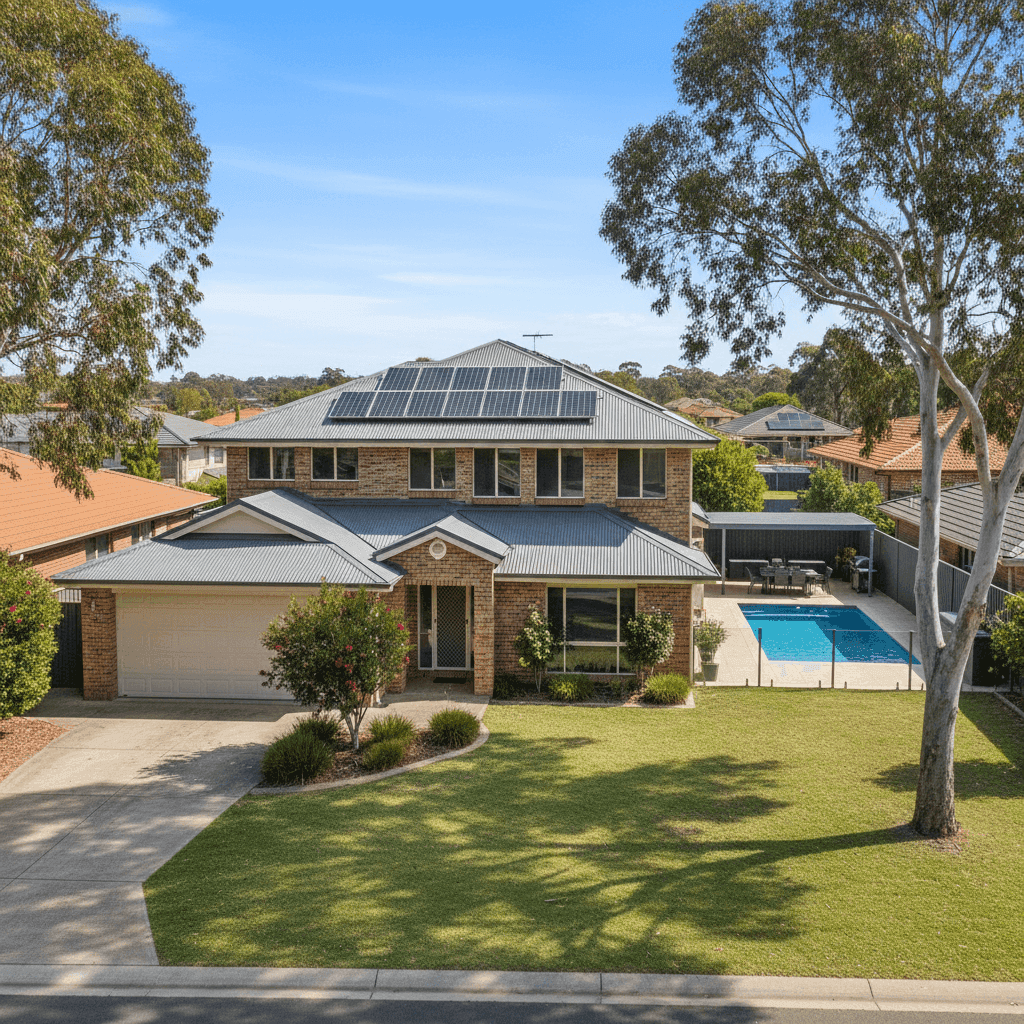
If you own a free standing home in Voyager Point, NSW 2172, you're likely no stranger to the question: am I paying too much for home insurance? This article breaks down a real home and contents insurance quote for a five-bedroom property in this leafy suburb of the Sutherland Shire — and puts it into context against local, state, and national benchmarks.
---
Is This Quote Fair?
The annual premium for this quote comes in at $1,194 per year (or roughly $121 per month), covering both building and contents. Our price rating for this quote is CHEAP — below average — and it's not hard to see why.
The building is insured for $200,000 and contents for $50,000, with a $5,000 excess applying to both. That high excess is a significant factor in keeping the premium low — the higher your excess, the less risk the insurer carries, and the less you pay upfront each year. It's worth asking yourself whether you could comfortably cover a $5,000 out-of-pocket cost in the event of a claim before deciding if this structure suits your situation.
That said, even accounting for the elevated excess, this premium sits well below what most Voyager Point homeowners are paying. By any measure — suburb, state, or national — this quote represents strong value.
---
How Voyager Point Compares
Here's where things get interesting. According to data from CoverClub's Voyager Point suburb stats, the average premium in the 2172 postcode is $3,045 per year, with a median of $3,154. Even at the cheapest end of the local market (25th percentile), homeowners are typically paying around $2,922 annually.
This quote at $1,194 is roughly 61% below the suburb average — a significant saving of over $1,800 per year compared to what neighbours might be paying.
Zooming out to the state level, NSW homeowners pay an average of $3,801 per year for home insurance — one of the highest averages in the country, driven by a mix of weather risks, high property values, and urban density. This quote is less than a third of that state average.
At the national level, the average sits at $2,965 per year (median: $2,716), meaning this quote is still less than half the national average.
One figure worth noting: the LGA average for Sutherland Shire is $23,423 per year. This unusually high figure is likely skewed by a small number of high-value or high-risk properties in the dataset, and shouldn't be taken as typical for most homeowners in the area — but it does illustrate the wide variance that can exist within a single council area.
| Benchmark | Annual Premium |
|---|---|
| This Quote | $1,194 |
| Voyager Point Suburb Average | $3,045 |
| Voyager Point Suburb Median | $3,154 |
| NSW Average | $3,801 |
| National Average | $2,965 |
---
Property Features That Affect Your Premium
Several characteristics of this property play a role in determining the insurance premium — both up and down.
Brick Veneer Walls & Colorbond Roof Brick veneer construction is widely regarded by insurers as a solid, low-risk building material. It's resistant to fire and doesn't rot or warp like timber. Paired with a steel Colorbond roof — durable, lightweight, and resistant to corrosion — this combination is generally viewed favourably by underwriters and can contribute to a more competitive premium.
Concrete Slab Foundation A slab foundation is standard for homes of this era and construction type. It reduces the risk of subsidence and pest-related damage compared to suspended timber floors, which can be another positive signal for insurers.
Built in 1995 At roughly 30 years old, this home sits in a comfortable middle ground. It's modern enough to meet contemporary building standards but old enough that some components (roofing, plumbing, electrical) may be approaching the end of their serviceable life. Insurers sometimes factor in the age of a property when assessing replacement cost risk.
Swimming Pool A pool adds liability exposure to a property — if someone is injured on your premises, your home insurance (particularly the liability component) may be called upon. Some insurers price this risk into the premium, so it's always worth confirming your policy explicitly covers pool-related liability.
Solar Panels Solar panels are increasingly common on Australian homes, but they do add complexity to a claim. Panels can be damaged by hail, storms, or falling debris, and their replacement cost can be significant. Make sure your building sum insured accounts for the full replacement value of your solar system.
Ducted Climate Control Ducted air conditioning is a significant fixed asset in any home. As part of the building sum insured, it's important this is factored into your replacement cost estimate. Underinsurance is a common issue in Australia — if your building sum insured doesn't reflect the true cost to rebuild (including systems like ducted HVAC), you may find yourself out of pocket after a major claim.
No Cyclone Risk Voyager Point is not in a cyclone risk zone, which is a meaningful factor in keeping premiums lower compared to properties in northern Queensland or WA coastal areas where cyclone loading can dramatically increase insurance costs.
---
Tips for Homeowners in Voyager Point
1. Review your sum insured regularly At $200,000, the building sum insured on this quote may be on the lower end for a 277 sqm, five-bedroom home — particularly given rising construction costs in NSW over recent years. Use a building cost calculator to check whether your sum insured would genuinely cover a full rebuild, including demolition, site preparation, and professional fees.
2. Understand the impact of your excess A $5,000 excess is high. While it brings the premium down considerably, it means you'd need to absorb the first $5,000 of any claim yourself. Consider whether a slightly higher premium with a lower excess (say $1,000–$2,500) might be better suited to your financial position.
3. Confirm pool and solar coverage Ask your insurer directly whether your pool fencing, pool equipment, and solar panel system are covered under your policy — and for how much. These are easy items to overlook but can represent tens of thousands of dollars in replacement costs.
4. Compare quotes annually Insurance loyalty rarely pays in Australia. Premiums can shift significantly year on year, and the market is competitive. Get a fresh quote at CoverClub before each renewal to make sure you're still getting a fair deal.
---
Compare Your Home Insurance Today
Whether you're renewing your policy or buying cover for the first time, it pays to shop around. CoverClub makes it easy to compare home and contents insurance quotes for properties across Voyager Point and greater NSW — so you can see exactly where your premium sits relative to the market. Start comparing now at CoverClub and make sure your home is protected at a price that makes sense.