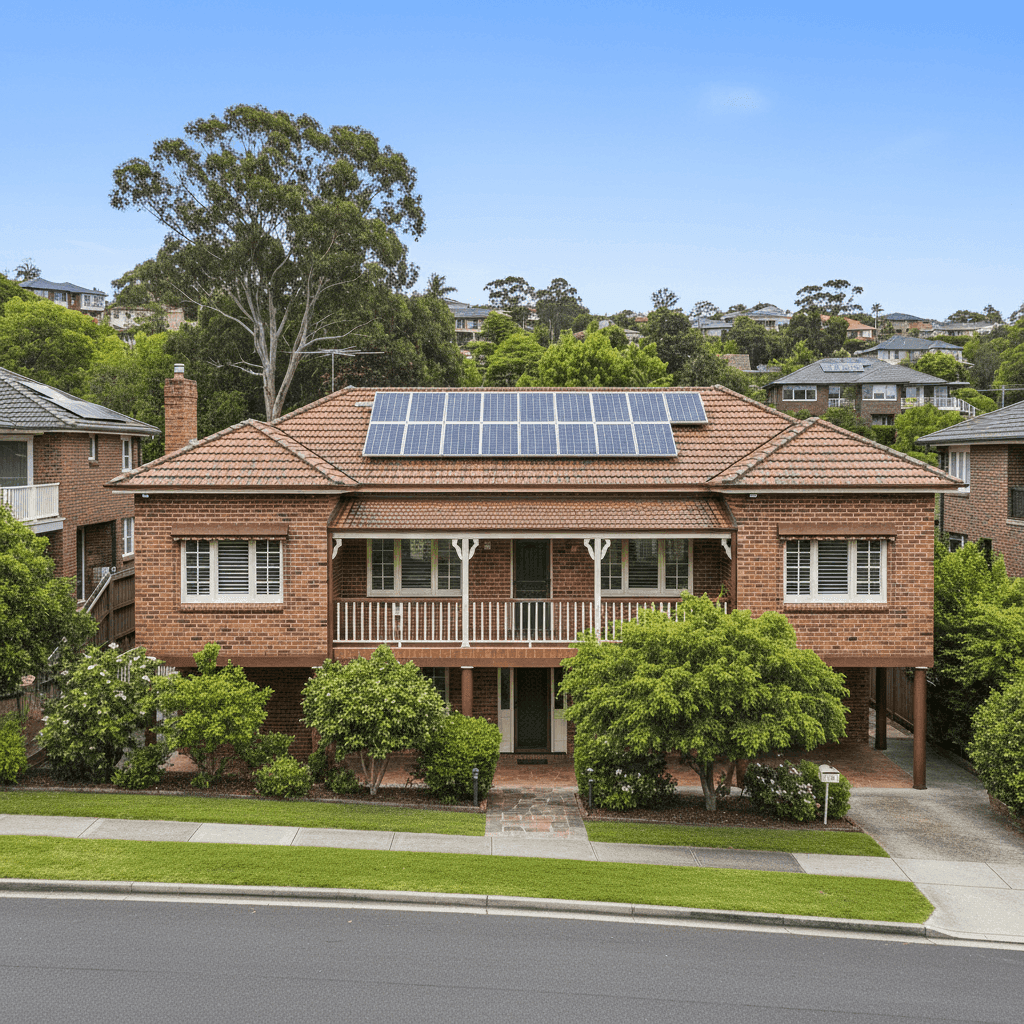
Wahroonga is one of Sydney's most sought-after Upper North Shore suburbs — a leafy, established neighbourhood known for its heritage character homes, tree-lined streets, and strong sense of community. For owners of a free standing home here, protecting that investment with the right insurance cover is essential. This article breaks down a real home and contents insurance quote for a four-bedroom, two-bathroom property in Wahroonga (NSW 2076), examines whether the premium stacks up against local and national benchmarks, and offers practical advice for getting better value on your policy.
---
Is This Quote Fair?
The quote in question comes in at $7,050 per year (or $676/month) for combined home and contents cover, with a building sum insured of $1,208,000 and contents valued at $201,000. The building excess is set at $2,000 and the contents excess at $1,000.
Our price rating for this quote is Expensive — above average for the Wahroonga area.
To put that in context: the suburb average premium sits at $4,640/yr, and the median is even lower at $3,919/yr. That means this quote is roughly 52% above the suburb average and nearly 80% above the suburb median. Even compared to the 75th percentile of local quotes ($5,746/yr), this premium is noticeably higher.
That said, there are legitimate reasons a quote can sit above the pack. A high building sum insured of $1,208,000 is a significant factor — rebuilding a quality four-bedroom brick home in Sydney's upper north shore is genuinely expensive, and insurers price accordingly. The property's age (built in 1970), its stump foundation, and its elevated position all introduce variables that underwriters treat with caution. We'll explore those factors in more detail below.
The bottom line: while the premium isn't outrageous given the property's characteristics, there is meaningful room to explore competing offers.
---
How Wahroonga Compares
Understanding where your suburb sits in the broader insurance landscape helps put any individual quote into perspective. Here's how Wahroonga's insurance premiums compare across different benchmarks:
| Benchmark | Premium |
|---|---|
| This Quote | $7,050/yr |
| Wahroonga Suburb Average | $4,640/yr |
| Wahroonga Suburb Median | $3,919/yr |
| Wahroonga 25th Percentile | $3,481/yr |
| Wahroonga 75th Percentile | $5,746/yr |
| Hornsby LGA Average | $3,958/yr |
| NSW State Average | $9,528/yr |
| NSW State Median | $3,770/yr |
| National Average | $5,347/yr |
| National Median | $2,764/yr |
A few things stand out here. First, NSW's state average of $9,528/yr is dramatically higher than its median of $3,770/yr — a classic sign that a small number of very high-value or high-risk properties are pulling the average upward. This quote, at $7,050/yr, actually sits well below the NSW state average, which provides some reassurance that it's not wildly out of line for the broader state context.
Compared to the Hornsby LGA average of $3,958/yr, however, this quote is nearly double. It's worth noting that LGA-wide averages blend a wide variety of property types, sizes, and values — so a high-sum-insured property like this one will naturally attract a higher premium than the typical home in the area.
The national median of $2,764/yr serves as a useful anchor: it reflects the "typical" Australian home insurance cost, and this quote is more than 2.5 times that figure. Again, much of that gap is attributable to the high building sum insured and the premium Sydney real estate market, rather than any obvious red flag in the pricing.
---
Property Features That Affect Your Premium
Several characteristics of this particular property have a direct bearing on the premium quoted:
Brick Veneer Construction (1970) Brick veneer is generally considered a moderate-risk construction type — more resilient than weatherboard but not as robust as full double brick. Properties built in 1970 may also have older wiring, plumbing, and structural elements that increase the likelihood of a claim, particularly for water damage or electrical faults.
Stump Foundation A home on stumps (also called a raised or elevated foundation) introduces specific risks, including subfloor moisture, pest ingress, and structural movement over time. Insurers typically factor this in when assessing the likelihood and cost of structural claims.
Elevated by at Least 1 Metre While elevation can offer some protection against surface-level flooding, it also increases the complexity and cost of repairs following storm or wind events. The underfloor space needs to be maintained and can be a source of claims.
Timber and Laminate Flooring Timber floors, while beautiful, are more susceptible to water damage than tiles or concrete. A burst pipe or storm ingress can result in costly floor replacements — something insurers price into the premium for homes with this flooring type.
Solar Panels Solar panels are increasingly common and most insurers cover them under building insurance as a fixed fixture. However, they add to the overall replacement cost of the property, which is reflected in the building sum insured.
Ducted Climate Control Ducted systems are expensive to repair or replace and are typically covered under building insurance. Their inclusion contributes to a higher sum insured and, consequently, a higher premium.
No Cyclone Risk Wahroonga is not in a designated cyclone risk zone, which removes one of the more significant premium loading factors seen in northern parts of Australia. This is a positive for the property's risk profile.
---
Tips for Homeowners in Wahroonga
1. Shop around — seriously With this quote sitting above the suburb average, comparing offers from multiple insurers is the single most effective action you can take. Premiums for the same property can vary by hundreds or even thousands of dollars between providers. Use a comparison tool like CoverClub to see a range of quotes side by side.
2. Review your building sum insured carefully A sum insured of $1,208,000 is substantial. Make sure this figure reflects the actual cost to rebuild — not the market value of the property, which includes land. Overinsuring inflates your premium without increasing your protection. Consider using a professional building cost estimator or asking your insurer to walk you through their calculation.
3. Consider adjusting your excess This policy carries a $2,000 building excess and a $1,000 contents excess. Opting for a higher excess (where you're financially comfortable to do so) can meaningfully reduce your annual premium. If you rarely make small claims, a higher excess is often a smart trade-off.
4. Maintain your home proactively For a 1970s home on stumps, regular maintenance is both a safety measure and an insurance strategy. Insurers can and do decline claims where damage is attributable to a lack of upkeep — things like deteriorating stumps, uncleared gutters, or ageing roof tiles. Keeping records of maintenance work also strengthens your position if you ever need to make a claim.
---
Compare Your Options with CoverClub
Whether you're reviewing an existing policy or shopping for cover on a new property, it pays to see what the market has to offer. CoverClub makes it easy to compare home and contents insurance quotes for properties across Wahroonga and the wider Hornsby area. Get a quote today and find out whether you could be paying less for the same level of protection — or getting better cover for what you're already spending.