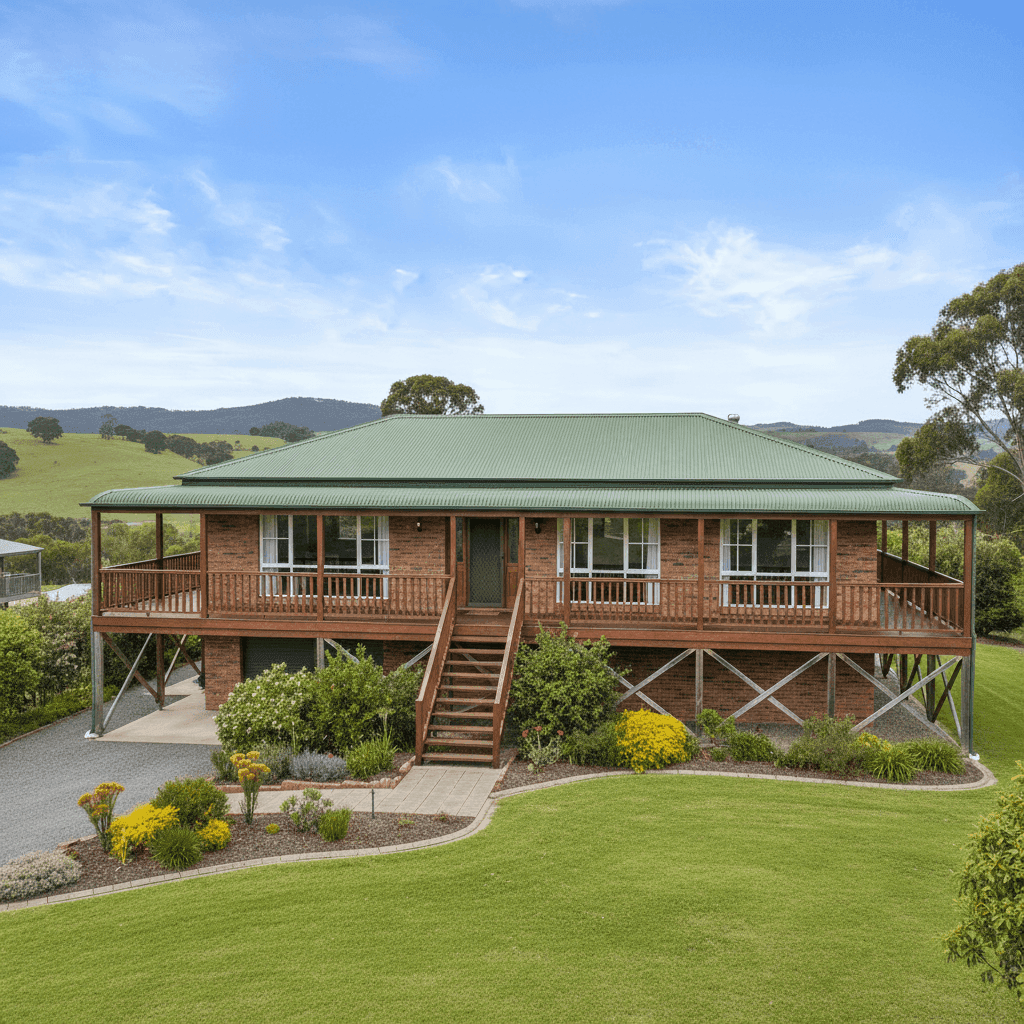
If you own a free standing home in Walcha, NSW 2354, you've probably wondered whether you're paying too much — or too little — for your building insurance. Walcha is a quiet rural town on the New England Tablelands, and like many regional NSW properties, the cost of insuring a home here can vary dramatically depending on a range of factors. This article breaks down a real building-only insurance quote for a 4-bedroom brick veneer home in Walcha, and puts it into context against local, state, and national benchmarks.
---
Is This Quote Fair?
The quote in question comes in at $2,039 per year (or $199/month) for building-only cover on a 4-bedroom, 1-bathroom free standing home, with a sum insured of $567,000 and a $1,000 building excess.
Our price rating for this quote? Cheap — below average. That's genuinely good news for the homeowner.
To put it plainly: this premium sits well below what most comparable properties in the area are paying. When you consider that the suburb average in Walcha sits at $6,123 per year, this quote represents a saving of over $4,000 annually compared to the average local premium. Even against the suburb median of $3,842/yr, this quote is nearly half the price.
For a homeowner on a tight budget — or anyone simply trying to get value for money — a below-average premium on a well-covered policy is exactly what you want to see.
---
How Walcha Compares
Understanding where your suburb sits in the broader insurance landscape helps put your premium in perspective. Here's how Walcha stacks up:
| Benchmark | Premium |
|---|---|
| This quote | $2,039/yr |
| Walcha suburb average | $6,123/yr |
| Walcha suburb median | $3,842/yr |
| Walcha 25th percentile | $3,561/yr |
| Walcha 75th percentile | $5,527/yr |
| NSW average | $9,528/yr |
| NSW median | $3,770/yr |
| National average | $5,347/yr |
| National median | $2,764/yr |
A few things stand out here. First, the NSW state average of $9,528/yr is strikingly high — a reflection of the elevated risk profiles found across parts of coastal and flood-prone New South Wales. The median tells a more grounded story at $3,770/yr, suggesting a skew caused by high-risk outliers pulling the average up.
At the national level, the average sits at $5,347/yr with a median of $2,764/yr. This quote, at $2,039/yr, actually comes in below even the national median — a strong result for any homeowner.
It's worth noting that the Walcha suburb data is based on a sample of 11 quotes, so while directionally useful, the figures have a wider margin of variability than you'd see in a larger metropolitan sample. That said, the consistent picture across all benchmarks is clear: this is a competitively priced policy.
---
Property Features That Affect Your Premium
Insurance pricing isn't arbitrary — every feature of your home feeds into the risk calculation. Here's how this particular property's characteristics likely influence its premium:
Brick Veneer Walls Brick veneer is a popular and well-regarded wall construction in Australia. It offers solid fire resistance and durability, which insurers generally view favourably. Compared to timber-framed or weatherboard homes, brick veneer properties often attract lower premiums due to reduced susceptibility to fire spread.
Steel/Colorbond Roof A steel Colorbond roof is another tick in the insurer's column. It's highly durable, resistant to fire, and performs well in high-wind conditions. Unlike terracotta or concrete tiles, Colorbond doesn't crack or dislodge easily, reducing the likelihood of storm damage claims.
Elevated Foundation (At Least 1m) This is a notable feature. An elevated home — raised at least one metre off the ground — provides meaningful flood protection. In regional NSW, where heavy rainfall events and localised flooding can occur, this kind of elevation can significantly reduce flood-related risk. It's likely one of the key contributors to this property's below-average premium.
Slab Foundation Concrete slab foundations are sturdy and low-maintenance, though they don't offer the same flood mitigation benefit as an elevated subfloor. In this case, the overall elevation of the home compensates well.
1990 Construction A home built in 1990 is neither brand new nor particularly aged. It sits in a comfortable middle ground — past the era of some older building practices but potentially approaching the age where certain components (roofing, plumbing, electrical) may require attention. Keeping up with maintenance is important to avoid claim complications.
Ducted Climate Control The presence of ducted climate control adds to the replacement value of the home, which is reflected in the $567,000 sum insured. It's a meaningful fixture that would be costly to replace and is appropriately accounted for in the building sum insured.
No Pool, No Solar Panels The absence of a pool and solar panels simplifies the risk profile. Both can add complexity and cost to a policy — pools introduce liability considerations, while solar panels add to replacement costs and can present electrical risk. Neither applies here, which keeps things straightforward.
---
Tips for Homeowners in Walcha
Whether you're reviewing an existing policy or shopping around for the first time, here are some practical steps to make sure you're getting the best outcome.
1. Don't Underinsure Your Building With a sum insured of $567,000 on a 130 sqm home, this property appears reasonably covered. However, building costs in regional NSW have risen sharply in recent years. It's worth using a building cost estimator annually to make sure your sum insured keeps pace with actual rebuild costs — not just market value.
2. Review Your Excess Strategically This policy carries a $1,000 building excess. A higher excess generally lowers your premium, while a lower excess increases it. If you have the financial buffer to absorb a larger out-of-pocket cost in a claim, opting for a higher excess could shave meaningful dollars off your annual premium.
3. Maintain the Property's Elevation Advantage If your home is elevated, make sure that advantage is preserved. Avoid storing items underneath the home that could obstruct water flow during a flood event, and ensure any subfloor access points are well-sealed. Insurers may also want evidence that the elevation is structural and permanent.
4. Shop Around at Renewal Time Insurance loyalty rarely pays off. Premiums can shift significantly year to year, and insurers don't always pass on their best pricing to existing customers. Use a comparison platform like CoverClub to benchmark your renewal quote against the market before you auto-renew.
---
Ready to Compare Your Options?
Whether you're a Walcha homeowner looking to benchmark your current policy or you're buying a property and need cover from day one, comparing quotes is the smartest first step. CoverClub makes it easy to see what the market is offering — so you're never paying more than you need to.
Get a home insurance quote today and see how your premium stacks up against the suburb, state, and national averages.