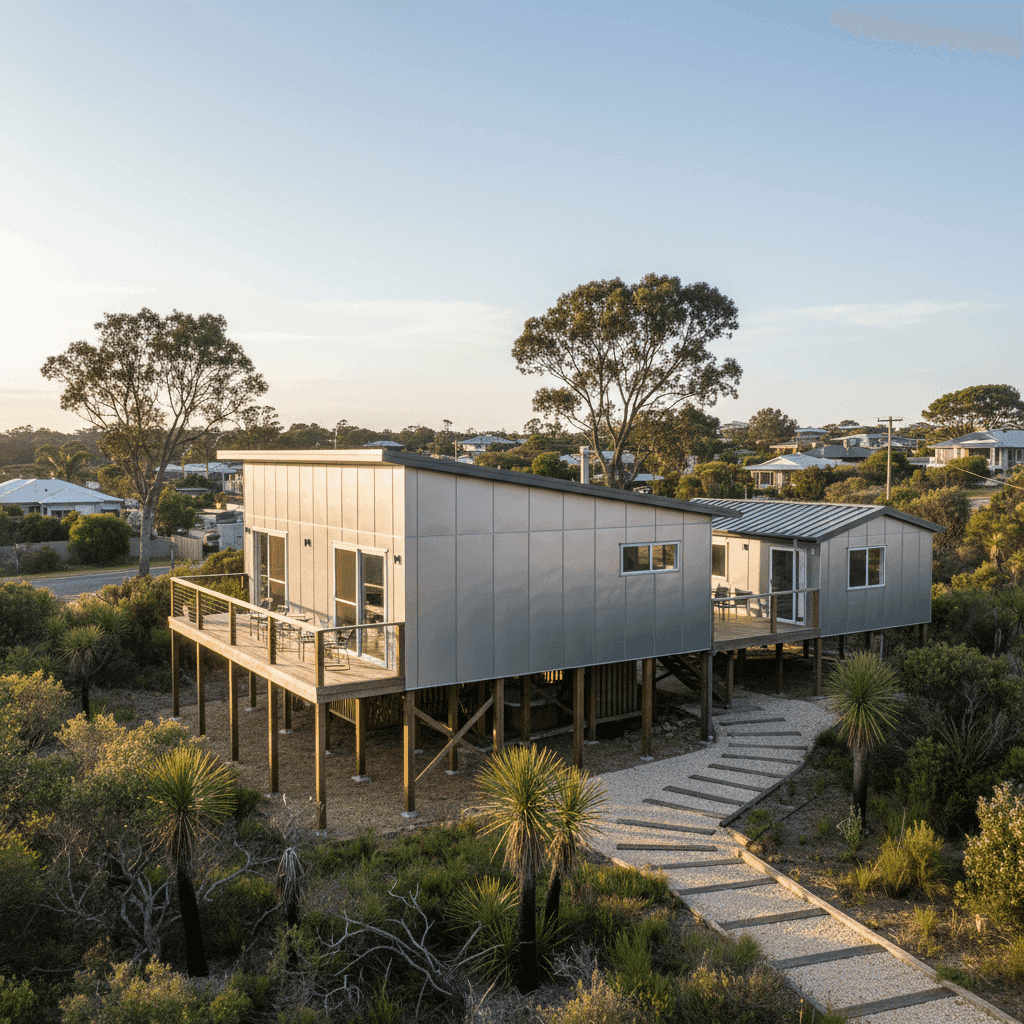
If you own a free standing home in Wallagoot, NSW 2550, you're likely no stranger to the charm — and the insurance complexities — that come with living on the New South Wales South Coast. This article breaks down a real home and contents insurance quote for a 2-bedroom, 2-bathroom property in the area, examines how the premium stacks up against local and national benchmarks, and offers practical guidance for homeowners looking to get better value on their cover.
---
Is This Quote Fair?
The quote in question comes in at $5,461 per year (or $523/month) for a combined home and contents policy, covering a building sum insured of $1,067,000 and $120,000 in contents. Both the building and contents excess are set at $5,000.
Based on our pricing analysis, this quote is rated Expensive — above average for the area. To put that in perspective:
- The suburb average for Wallagoot is $4,420/yr, meaning this quote is roughly $1,041 (24%) above what most homeowners in the postcode are paying.
- The suburb median sits at $4,419/yr — virtually identical to the average — suggesting a fairly consistent pricing band locally, with this quote sitting well above it.
- The 75th percentile in the suburb is $4,596/yr, so this premium exceeds even the most expensive quarter of local quotes by nearly $900.
That said, context matters. Several features of this property — discussed below — justify a higher-than-average premium to some degree. The question is whether the margin above the suburb benchmark is proportionate to the risk profile.
---
How Wallagoot Compares
Understanding where Wallagoot sits in the broader insurance landscape helps frame whether this quote is a concern or simply a reflection of the local market. Here's how the numbers break down:
| Benchmark | Average Premium | Median Premium |
|---|---|---|
| Wallagoot (suburb) | $4,420/yr | $4,419/yr |
| NSW (state) | $9,528/yr | $3,770/yr |
| National | $5,347/yr | $2,764/yr |
| Snowy Monaro LGA | $2,614/yr | — |
A few things stand out here. The NSW state average of $9,528/yr is dramatically higher than the median of $3,770/yr — a classic sign that a small number of very high-risk or high-value properties are pulling the average upward. This is common in a state that includes flood-prone, bushfire-affected, and coastal cyclone-adjacent zones.
Wallagoot's suburb average of $4,420/yr sits comfortably above the national median ($2,764/yr) but below the national average ($5,347/yr). Interestingly, the quote being analysed here ($5,461/yr) nudges just above the national average, which is worth noting for a property that isn't in a cyclone zone and sits in a relatively modest regional area.
The Snowy Monaro LGA average of $2,614/yr is notably lower, suggesting that properties elsewhere in the same local government area attract significantly cheaper premiums — likely due to differences in property values, construction types, and coastal exposure.
You can explore more local data on the Wallagoot suburb stats page, or broaden your view with NSW state insurance statistics and national home insurance benchmarks.
---
Property Features That Affect Your Premium
This particular property has several characteristics that insurers weigh carefully when calculating risk. Here's how each one likely influences the premium:
High building sum insured ($1,067,000) This is arguably the single biggest driver of the premium. A sum insured of over $1 million is substantial for a 105 sqm, 2-bedroom home — though it may reflect elevated construction costs for the specific materials and finishes involved, as well as the granny flat on the property. Insurers price proportionally to replacement cost, so a high sum insured will always push premiums upward.
Pole/stump foundation Homes built on poles are common in coastal and semi-rural NSW, but they carry additional underwriting considerations. Elevated structures can be more susceptible to wind damage, and the subfloor space introduces additional complexity in assessing replacement costs.
Aluminium cladding and Colorbond roof Both are considered relatively low-risk materials by insurers. Aluminium is non-combustible and resistant to rot, while Colorbond steel is durable and well-regarded in the Australian market. These features may actually work in the homeowner's favour and help moderate what could otherwise be a higher premium.
Timber/laminate flooring Timber floors — particularly in an elevated home — can be more vulnerable to moisture and impact damage. This is a minor risk factor but one insurers do consider, especially in coastal environments.
Above-average fittings quality Higher-quality fixtures and fittings mean higher replacement costs in the event of a claim. This directly increases the sum insured required and, by extension, the premium.
Granny flat The presence of a secondary dwelling on the property adds to the overall replacement cost and introduces additional liability and contents considerations. Not all policies cover granny flats comprehensively, so it's worth confirming exactly what's included.
Ducted climate control A ducted system is a significant fixed asset that adds to the building's replacement value. It's a relatively common feature in modern homes but does contribute to a higher sum insured.
---
Tips for Homeowners in Wallagoot
1. Review your sum insured carefully At $1,067,000 for a 105 sqm home, the building sum insured is high. While it's critical not to be underinsured — particularly with a granny flat and above-average fittings — it's equally worth ensuring the figure accurately reflects your actual rebuild cost. Consider getting an independent building valuation to confirm the figure is appropriate, not just a default estimate.
2. Compare multiple quotes before renewing With only 5 quotes in the local sample, the Wallagoot insurance market is relatively thin. That means a single insurer's pricing methodology can significantly skew what looks "normal." Use a comparison service like CoverClub to ensure you're seeing a broad cross-section of the market.
3. Consider your excess settings Both the building and contents excess on this policy are set at $5,000 — which is on the higher end. A higher excess typically reduces your premium, so if these excesses were chosen to bring the cost down, it's worth modelling what the premium would look like at a lower excess level to understand the true cost-benefit trade-off.
4. Confirm granny flat coverage Not all standard home insurance policies automatically cover a granny flat as part of the main dwelling. Check your Product Disclosure Statement (PDS) carefully to confirm the granny flat is included in the building sum insured and that any contents within it are also covered under your policy.
---
Start Comparing Today
Whether you're renewing your existing policy or shopping around for the first time, getting multiple quotes is the single most effective way to ensure you're not overpaying. CoverClub makes it easy to compare home and contents insurance options tailored to your property and location.