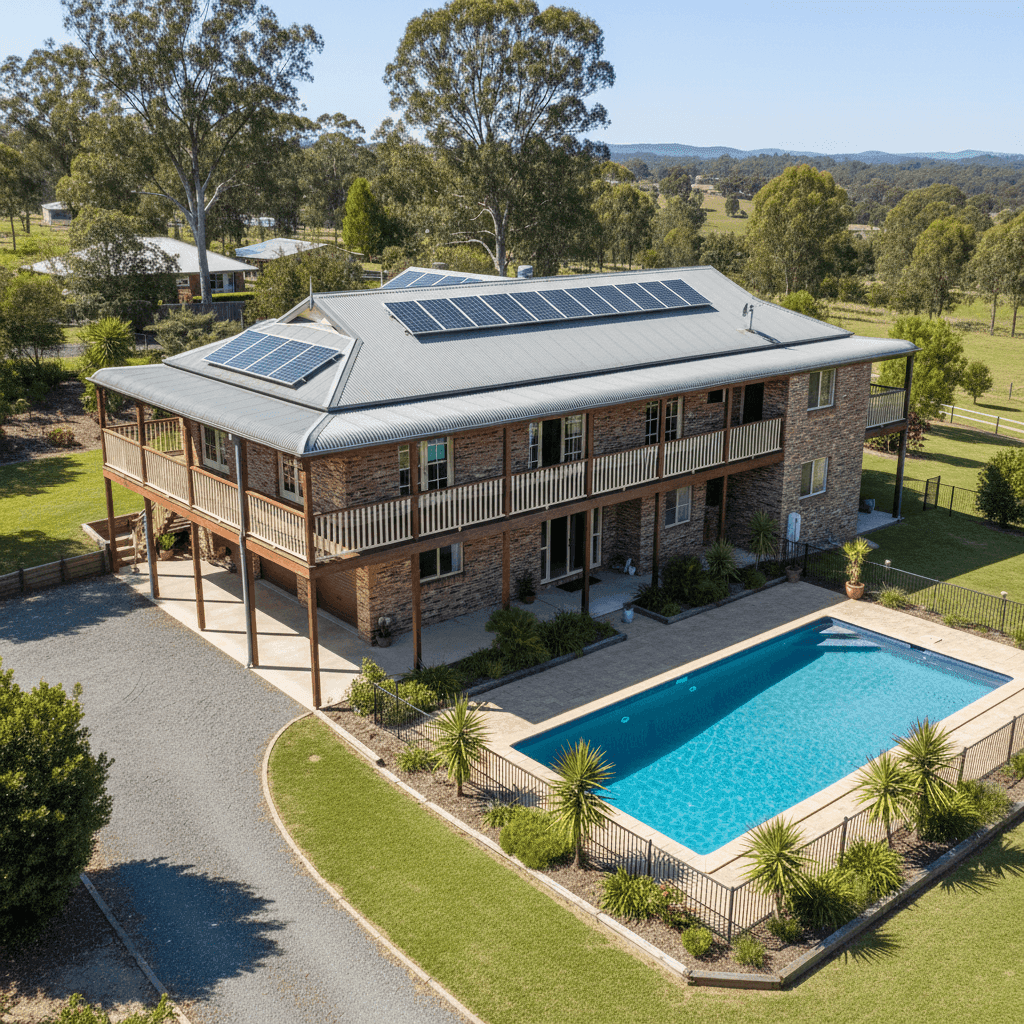
If you own a large free standing home in Wallalong, NSW 2320, you already know that finding the right home insurance isn't as simple as grabbing the first quote that lands in your inbox. Wallalong is a semi-rural locality in the Hunter Valley region, and the unique mix of property styles, land characteristics, and local risk factors means premiums can vary enormously from one household to the next. This article breaks down a real home and contents insurance quote for a five-bedroom property in the area, puts the numbers in context, and gives you practical steps to make sure you're not overpaying.
---
Is This Quote Fair?
The quote in question comes in at $6,348 per year (or $601 per month) for combined home and contents cover — insuring a building sum of $1,330,000 and contents valued at $215,000. Our price rating for this quote is Expensive (Above Average).
To understand why, it helps to look at what's being covered. This is a substantial 420 sqm home with top-of-the-range fittings, a swimming pool, solar panels, and ducted climate control — all of which add meaningful value to both the building and contents sums insured. The building excess sits at $2,000 and the contents excess at $1,000, which are fairly standard settings for a policy of this size.
That said, "expensive" is a relative term. The premium is above the suburb average, but — as we'll explore below — it's not out of step with what you'd expect given the property's size, features, and replacement value. The real question is whether the same level of cover could be obtained for less elsewhere.
---
How Wallalong Compares
Here's where the numbers get interesting. Based on data from CoverClub's Wallalong suburb stats, the local benchmarks look like this:
| Benchmark | Premium |
|---|---|
| Wallalong suburb average | $2,618/yr |
| Wallalong suburb median | $2,247/yr |
| Wallalong 25th percentile | $2,066/yr |
| Wallalong 75th percentile | $2,715/yr |
| LGA (Dungog) average | $4,832/yr |
At $6,348, this quote sits well above the suburb's 75th percentile of $2,715 — but it's important to note that the suburb sample size is just 10 quotes, which means the local data reflects a relatively modest range of properties. A 420 sqm home with premium finishes and a $1.33 million building sum is almost certainly at the upper end of what's typically quoted in this postcode.
Zooming out to NSW state-level data, the average premium is $9,528/yr and the median sits at $3,770/yr. That means this quote is actually below the NSW average — a useful counterpoint to the "expensive" rating when viewed purely in local terms.
At the national level, the average is $5,347/yr and the median is $2,764/yr, putting this quote above the national average but below the NSW average. The Dungog LGA average of $4,832/yr is also lower than this quote, though again, property size and features play a significant role.
The takeaway: This premium is high relative to the Wallalong suburb average, but the property being insured is considerably larger and better-appointed than a typical home in the area. The quote is below the NSW state average, which provides some reassurance that it's not wildly out of range.
---
Property Features That Affect Your Premium
Several characteristics of this property have a direct bearing on the premium charged. Understanding them helps you have a more informed conversation with insurers.
Size and Replacement Value
At 420 sqm with a $1,330,000 building sum insured, this is a large home with a high rebuild cost. Insurers price building cover primarily on replacement value, so a home of this scale will always attract a higher base premium than a smaller dwelling.
Brick Veneer Walls and Colorbond Roof
Brick veneer construction is generally viewed favourably by insurers — it's durable, fire-resistant, and widely used across Australia. The steel/Colorbond roof is similarly well-regarded for its longevity and resistance to weather. These construction types typically attract standard or slightly reduced rates compared to, say, weatherboard or fibrous cement.
Elevated Foundation (Stumps)
The property is elevated by at least one metre on stumps, which is common in the Hunter Valley and broader NSW regions. Elevation can work in your favour for flood risk (water is less likely to enter the home), but it also introduces specific risks around subfloor ventilation, pest management, and structural movement that some insurers factor into their pricing.
Swimming Pool
A pool adds to both the replacement value of the property and the liability considerations for an insurer. Pool equipment, fencing compliance, and the cost of reinstatement following a claimable event all contribute to a slightly higher premium.
Solar Panels
Solar panels are now a standard feature on many Australian homes, but they do add to the insured value of the building. It's worth confirming with your insurer that your panels and associated inverter equipment are explicitly covered under the building sum — not all policies include them by default.
Top-of-the-Range Fittings
Premium kitchen appliances, high-end bathroom fixtures, and quality flooring (timber/laminate in this case) all push up the cost of reinstatement. Insurers assess fittings quality when calculating rebuild costs, and "top of the range" fittings meaningfully increase the sum required to restore the home to its original standard.
Ducted Climate Control
Ducted air conditioning systems are expensive to replace and are typically included in the building sum insured. A full ducted system in a 420 sqm home could represent a significant portion of any claim involving the HVAC infrastructure.
---
Tips for Homeowners in Wallalong
1. Review your sum insured annually Building costs in regional NSW have risen sharply over the past few years. If your sum insured hasn't kept pace with inflation and local construction costs, you could be underinsured — meaning you'd receive less than the full cost to rebuild in the event of a total loss. Use a building cost calculator or speak with a quantity surveyor to validate your figure.
2. Consider a higher excess to reduce your premium The current building excess on this policy is $2,000. Opting for a higher voluntary excess — say, $3,000 or $5,000 — can meaningfully reduce your annual premium. This strategy works best if you have sufficient savings to cover the excess comfortably in the event of a claim.
3. Confirm solar panels and pool equipment are explicitly covered Don't assume these are automatically included. Ask your insurer to confirm in writing that solar panels, the inverter, pool pumps, and filtration equipment are covered under your building policy — and check the sub-limits that apply.
4. Compare at least three quotes before renewing Insurers price risk differently, and the gap between the cheapest and most expensive quote for the same property can be substantial. Even if you're happy with your current insurer, running a comparison at renewal time is one of the simplest ways to avoid paying more than you need to.
---
Ready to Compare?
Whether you're reviewing an existing policy or shopping for cover on a new purchase, comparing quotes side by side is the fastest way to find value. Get a home insurance quote at CoverClub and see how different insurers price your specific property — it takes just a few minutes and could save you hundreds of dollars a year.