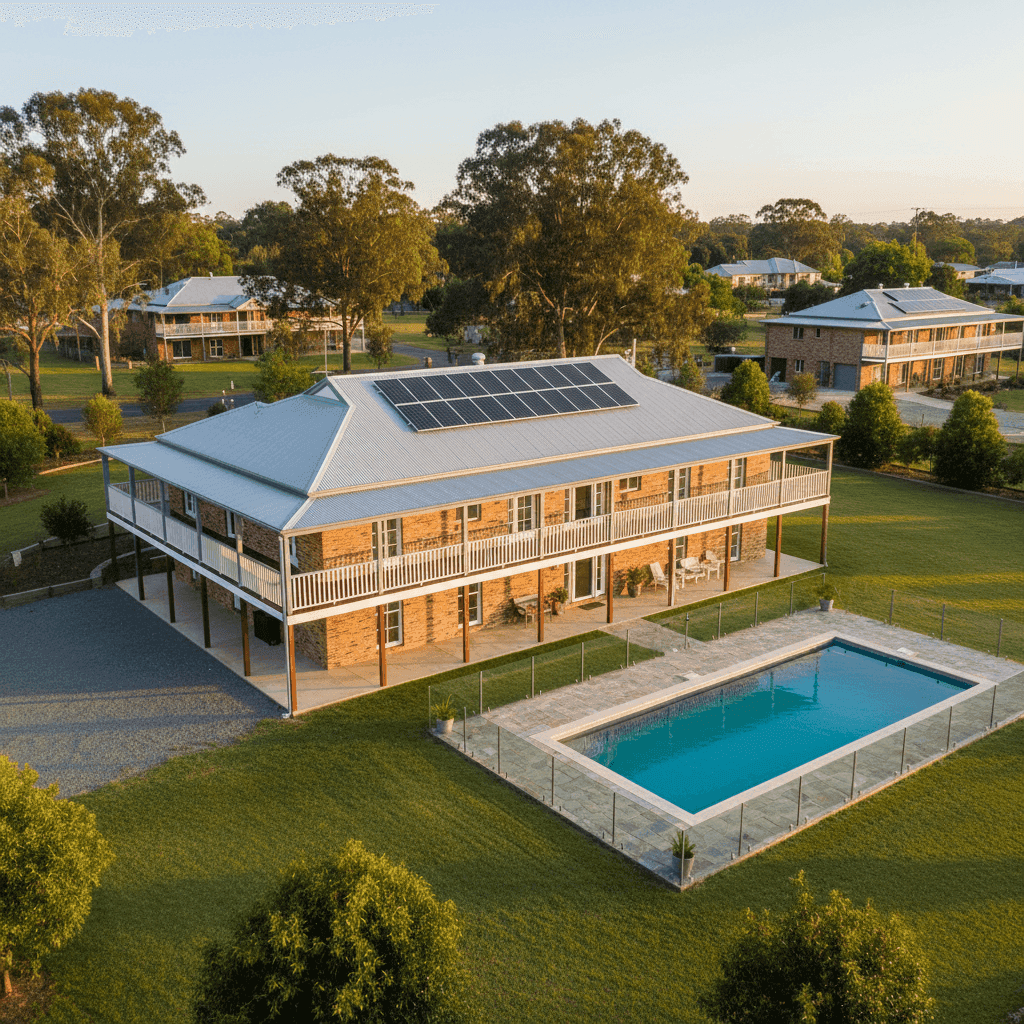
Wallalong is a quiet semi-rural locality in the Hunter Valley region of New South Wales, sitting within the Dungog Local Government Area. It's the kind of place where large family homes on generous blocks are the norm — and that's exactly what this analysis covers. We're looking at a home and contents insurance quote for a substantial five-bedroom, two-bathroom free-standing home, built in 2001, with a building sum insured of $1,293,000 and contents covered to $209,000. The annual premium on this quote comes in at $6,139 (or $581/month), and our pricing analysis rates it as Expensive — above average for the area.
Let's unpack what's driving that figure and whether it stacks up.
---
Is This Quote Fair?
The short answer: it's on the high side relative to the immediate suburb, but context matters enormously here.
At $6,139 per year, this premium sits well above the Wallalong suburb average of $2,618/yr and the median of $2,247/yr. Even the 75th percentile for the suburb — meaning 75% of quotes are cheaper — comes in at just $2,715/yr. On that basis alone, this quote looks expensive.
However, it's critical to factor in what's actually being insured. A 420 sqm home with a $1,293,000 building sum insured is a significantly larger and more valuable asset than a typical Wallalong property. Top-of-the-range fittings, a swimming pool, solar panels, ducted climate control, and a stump foundation all add complexity and replacement cost. When you're insuring a premium home, you should expect a premium price — the question is whether the premium is proportionate.
Compared to the NSW state average of $9,528/yr (though the median is a more representative $3,770/yr), this quote is actually below the state average. Against the national average of $5,347/yr and national median of $2,764/yr, it sits above both. For a property of this calibre, that's not an unreasonable position to be in — but it does suggest there may be room to shop around.
---
How Wallalong Compares
Here's a quick snapshot of how premiums in Wallalong measure up against broader benchmarks:
| Benchmark | Premium |
|---|---|
| This Quote | $6,139/yr |
| Wallalong Suburb Average | $2,618/yr |
| Wallalong Suburb Median | $2,247/yr |
| Dungog LGA Average | $4,832/yr |
| NSW State Median | $3,770/yr |
| National Median | $2,764/yr |
It's worth noting that the Wallalong suburb sample used for comparison contains just 10 quotes, which means the local averages may not fully capture the range of property types in the area. A five-bedroom, 420 sqm home with a $1.29M building sum insured is likely at the upper end of what's being quoted locally.
The Dungog LGA average of $4,832/yr is a more meaningful reference point for a property of this size and value — and this quote sits only modestly above that figure. Across all properties nationally, the spread is wide, and larger homes consistently attract higher premiums.
---
Property Features That Affect Your Premium
Several characteristics of this property have a meaningful influence on the insurance premium — some pushing it higher, others potentially offering a degree of resilience.
Brick veneer construction is generally viewed favourably by insurers. It's durable, fire-resistant, and widely understood by assessors, which can help moderate premiums compared to more unusual materials.
Steel/Colorbond roofing is another positive signal. Colorbond is lightweight, resistant to corrosion and ember attack, and performs well in storms — all factors that reduce claims risk.
Stump foundation (elevated by at least 1 metre) is a double-edged sword. On one hand, elevation reduces flood risk by keeping the structure above ground-level water. On the other, stumped homes can be more vulnerable to wind uplift and may have higher repair costs due to the need for subfloor access. Insurers weigh these trade-offs differently.
Timber and laminate flooring can be more susceptible to water damage than tiles, which may factor into contents and building assessments.
Top-of-the-range fittings are one of the most significant premium drivers here. High-end kitchens, bathrooms, and fixtures cost significantly more to repair or replace, and that's reflected directly in both the building sum insured and the premium.
The swimming pool adds liability exposure and increases the overall replacement cost of the property, contributing to a higher premium.
Solar panels are an increasingly common feature that insurers are still calibrating their pricing around. Panels can be damaged by hail or storms, and their replacement cost needs to be factored into the building sum insured.
Ducted climate control is another high-value system that adds to the overall replacement cost of the home.
---
Tips for Homeowners in Wallalong
1. Review your building sum insured regularly With a sum insured of $1,293,000, it's essential to ensure this figure accurately reflects current rebuilding costs — not market value. Construction costs have risen sharply in recent years, and being underinsured on a premium home can leave you significantly out of pocket after a major claim. Use a quantity surveyor or your insurer's building cost calculator to validate the figure annually.
2. Check what's included for your pool and solar panels Not all policies automatically cover swimming pools or solar panel systems under the standard building definition. Read the Product Disclosure Statement carefully to confirm these are included — and at full replacement value. Some insurers treat solar panels as a separate item with sub-limits.
3. Compare quotes before renewal Given this quote is rated as expensive relative to local benchmarks, it's well worth getting comparison quotes through CoverClub before accepting renewal. Premiums for the same property can vary by hundreds — or even thousands — of dollars between insurers, particularly for larger, higher-value homes.
4. Consider your excess strategically Both the building and contents excess on this policy sit at $2,000. Opting for a higher voluntary excess can reduce your annual premium, which may make sense if you have the financial buffer to cover a larger out-of-pocket cost in the event of a claim. Run the numbers to see if the premium saving justifies the increased excess.
---
Find a Better Deal on CoverClub
Whether you're renewing or insuring for the first time, it pays to compare. CoverClub makes it easy to see how your home insurance quote stacks up against real data from properties in your suburb, your LGA, and across Australia. Start a quote today and find out if you're getting fair value — or paying more than you need to.