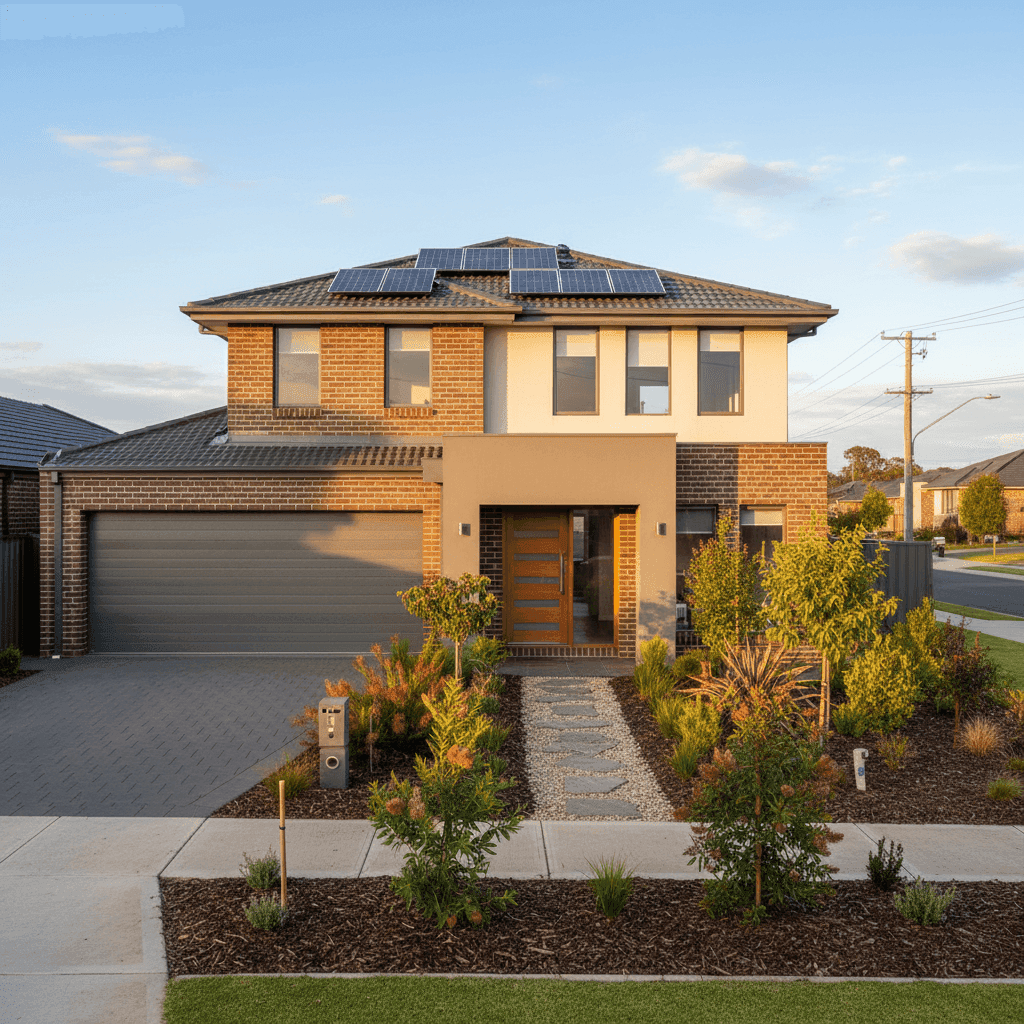
If you own a free standing home in Wallan, VIC 3756, you've probably noticed that home insurance premiums can vary wildly depending on who you ask. Wallan is a fast-growing outer-northern suburb of Melbourne, sitting within the Macedon Ranges region — an area that blends suburban convenience with semi-rural character. With that lifestyle comes a unique set of risk factors that insurers weigh carefully when pricing your policy.
This article breaks down a real home and contents insurance quote for a four-bedroom, three-bathroom free standing home in Wallan, compares it against local, state, and national benchmarks, and offers practical tips to help you get better value on your cover.
---
Is This Quote Fair?
The quote in question comes in at $4,184 per year (or $401/month) for combined home and contents cover, with a building sum insured of $1,310,000 and contents valued at $79,000. Both the building and contents excess are set at $500.
Our price rating for this quote is Expensive — Above Average.
To put that in context: the suburb average premium in Wallan is just $1,433/year, and the median sits at $1,348/year. Even at the 75th percentile — meaning 75% of Wallan quotes are cheaper — the figure is only $1,806/year. This quote sits well above all of those benchmarks.
That said, it's important to understand why before drawing conclusions. The building sum insured of $1.31 million is substantially higher than what a typical Wallan property might be insured for. A larger sum insured directly drives up the premium, as the insurer is taking on greater financial exposure. The property is also 244 sqm, features above-average fittings, and includes solar panels and ducted climate control — all of which add to replacement cost and, by extension, the insured amount.
In short: the premium is high relative to the suburb average, but the property being insured is also likely more valuable and more expensive to rebuild than the typical home in the area.
---
How Wallan Compares
Understanding where Wallan sits in the broader insurance landscape helps put any individual quote into perspective.
| Benchmark | Average Premium | Median Premium |
|---|---|---|
| Wallan (3756) | $1,433/yr | $1,348/yr |
| LGA (Macedon Ranges) | $2,890/yr | — |
| Victoria | $3,000/yr | $2,718/yr |
| National | $5,347/yr | $2,764/yr |
A few things stand out here. Wallan's suburb-level averages are notably lower than both the Victorian state average and the LGA (Macedon Ranges) average of $2,890/year. This suggests that, as a suburb, Wallan is generally considered a relatively lower-risk postcode by insurers — likely due to its newer housing stock, lower flood or bushfire risk classification for many properties, and its distance from high-value coastal or alpine zones.
The national average of $5,347/year is heavily skewed by high-premium regions in Queensland, Western Australia, and Northern Australia, where cyclone, flood, and storm surge risks push premiums significantly higher. The national median of $2,764/year is a more realistic comparison point for most Australian homeowners.
At $4,184/year, this quote is above the Victorian average but below the national average — placing it in a range that's broadly consistent with a high-value Victorian property with a generous sum insured.
---
Property Features That Affect Your Premium
Several characteristics of this property influence how insurers price the risk:
Brick veneer construction and tiled roof Brick veneer walls paired with a tiled roof are among the most common and insurer-friendly combinations in Victoria. Both materials are considered durable and relatively resistant to fire and storm damage, which generally works in your favour when it comes to pricing.
Slab foundation A concrete slab foundation is standard for homes built in this era and is generally viewed neutrally by insurers. It doesn't carry the subsidence or moisture concerns sometimes associated with older pier-and-beam foundations.
Built in 2005 At roughly 20 years old, this home is relatively modern. Newer builds tend to comply with more recent building codes, which can mean better structural integrity and lower risk of certain types of damage. Insurers often view homes in this age bracket more favourably than older properties.
Above-average fittings This is one of the more significant premium drivers. Above-average fittings — think stone benchtops, quality cabinetry, premium flooring, and high-end fixtures — cost significantly more to repair or replace. This feeds directly into a higher sum insured and, consequently, a higher premium.
Solar panels and ducted climate control Both of these features add to the replacement value of the home. Solar panels in particular can be costly to replace following storm or hail damage, and insurers factor this into their risk assessment.
Timber and laminate flooring While attractive, timber and laminate floors can be more susceptible to water damage than tiles. This is a minor factor but worth noting when reviewing your policy's water damage provisions.
No pool, no cyclone risk The absence of a pool removes a common liability concern, and Wallan's location outside cyclone risk zones means no loading for wind or storm damage beyond standard Victorian weather events.
---
Tips for Homeowners in Wallan
1. Review your sum insured carefully The building sum insured of $1.31 million is the single biggest driver of this premium. Make sure your sum insured reflects the actual cost to rebuild your home — not its market value. Use a building cost calculator or get a quantity surveyor's assessment to ensure you're not over-insured. Even a modest reduction in sum insured, if justified, can meaningfully lower your annual premium.
2. Compare quotes across multiple insurers The suburb data for Wallan shows a wide spread between the 25th percentile ($926/year) and the 75th percentile ($1,806/year). That's a significant range, and it reflects just how differently insurers price the same property. Shopping around is one of the most effective ways to reduce your premium without reducing your cover.
3. Consider your excess level Both the building and contents excess on this policy are set at $500 — a relatively low figure. Opting for a higher excess (say, $1,000 or $2,000) can reduce your annual premium noticeably. Just make sure you're comfortable covering that amount out of pocket in the event of a claim.
4. Bundle your cover strategically This policy already combines home and contents, which often attracts a discount compared to purchasing them separately. If you have other insurance products — such as car insurance — check whether your insurer offers a multi-policy discount, or whether a different provider can offer better bundled pricing.
---
Ready to Find a Better Deal?
Whether this quote feels right for your situation or you suspect you could be paying less, the best move is to compare. At CoverClub, we make it easy to see how your current premium stacks up and find competitive quotes tailored to your property. Get a home insurance quote today and see what Wallan homeowners are actually paying — you might be surprised by the difference.