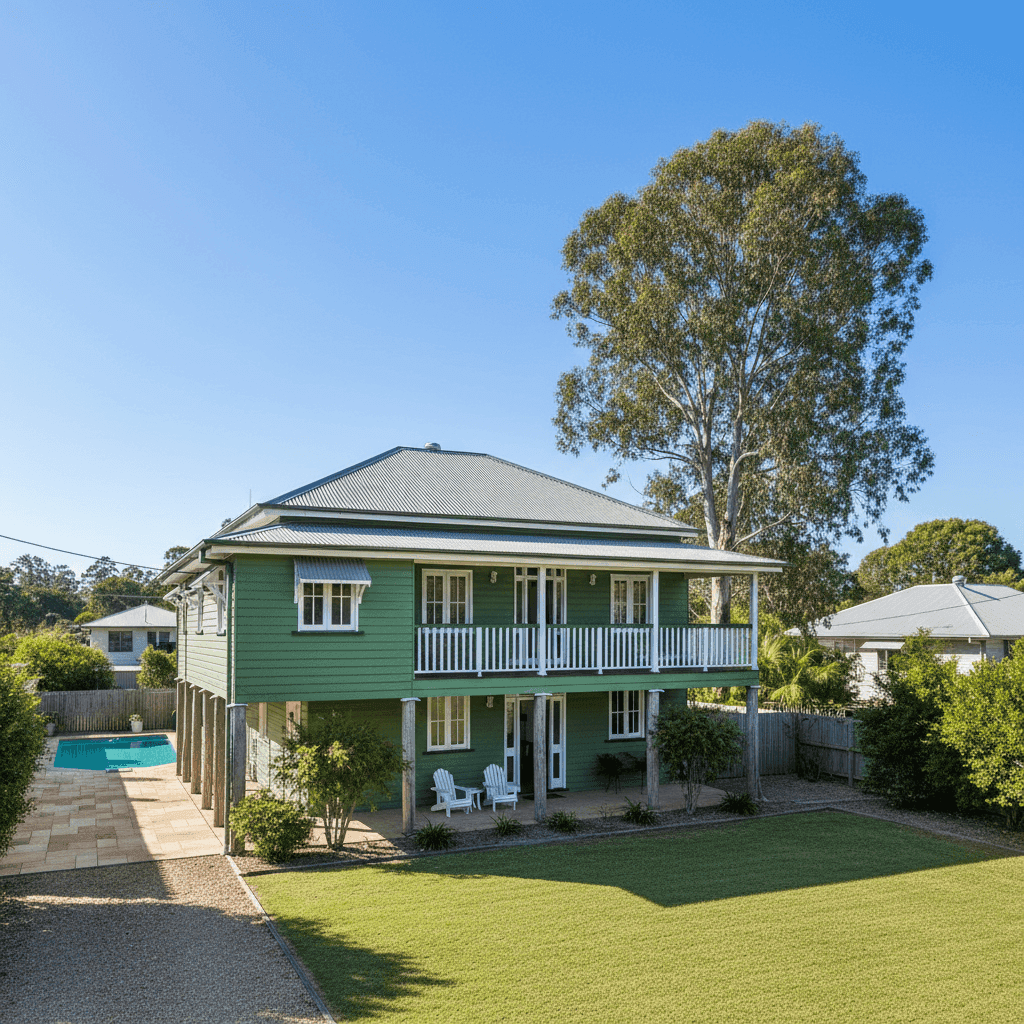
If you own a free standing home in Wallaville, QLD 4671, you've probably noticed that getting the right home and contents insurance can feel like navigating a maze. Premiums vary enormously depending on where you live, what your home is built from, and how it sits on the land. To help cut through the noise, we've taken a close look at a real insurance quote for a three-bedroom, two-bathroom weatherboard home in Wallaville — and compared it against local, state, and national benchmarks so you know exactly where you stand.
---
Is This Quote Fair?
The annual premium for this property came in at $2,345 per year (or $229/month), covering both building (sum insured: $680,000) and contents ($50,000), each with a $1,000 excess. Our price rating for this quote is FAIR — around average.
That "fair" rating isn't a bad thing. It means the premium sits comfortably within the normal range for the area — not suspiciously cheap (which can signal underinsurance or stripped-back cover), and not inflated beyond what the risk profile warrants. For a 1953-built weatherboard home on stumps in regional Queensland, a sub-$2,400 annual premium for combined home and contents cover represents reasonable value.
That said, "fair" also means there's likely room to do better. Depending on the insurer, the specific inclusions, and how aggressively you compare the market, you may be able to find equivalent cover for less — or get meaningfully better cover for a similar price.
---
How Wallaville Compares
Context is everything when it comes to insurance pricing. Here's how this quote stacks up against Wallaville suburb averages, Queensland state figures, and national benchmarks:
| Benchmark | Premium |
|---|---|
| This quote | $2,345/yr |
| Wallaville suburb average | $3,016/yr |
| Wallaville suburb median | $2,804/yr |
| Wallaville 25th percentile | $2,313/yr |
| Wallaville 75th percentile | $3,081/yr |
| North Burnett LGA average | $3,499/yr |
| QLD state average | $9,129/yr |
| QLD state median | $3,903/yr |
| National average | $5,347/yr |
| National median | $2,764/yr |
A few things stand out immediately. This quote of $2,345 sits below the Wallaville suburb average ($3,016) and median ($2,804), placing it close to the 25th percentile for the area — meaning it's cheaper than roughly three-quarters of quotes seen in the suburb. That's an encouraging position.
The contrast with Queensland state figures is striking. The QLD average premium of $9,129 is nearly four times this quote, though that average is heavily skewed by high-risk coastal and cyclone-prone regions in Far North Queensland. The state median of $3,903 is a more useful comparison point, and this quote still comes in well below it.
Against national figures, the story is similarly positive. The national average of $5,347 reflects the drag of expensive markets in flood plains, cyclone zones, and high-density urban areas. The national median of $2,764 is the most relevant national yardstick, and at $2,345, this Wallaville quote sits comfortably beneath it.
The North Burnett LGA average of $3,499 is also worth noting — this quote is around $1,150 per year cheaper than the typical premium across the broader local government area, which is a meaningful saving.
---
Property Features That Affect Your Premium
Several characteristics of this property directly influence what insurers charge. Understanding them helps you anticipate why your premium lands where it does.
Weatherboard timber construction is one of the most significant factors. Timber-framed, weatherboard-clad homes are more susceptible to fire, termite damage, and general wear than brick or rendered masonry homes. Insurers typically apply a loading for this construction type, which is reflected in premiums across the region.
Age of construction (1953) adds another layer of complexity. Homes built in the early 1950s may have older electrical wiring, plumbing, and structural elements that don't meet modern building codes. Insurers factor in the higher likelihood of maintenance-related claims. Importantly, this also makes it critical that your sum insured accurately reflects the full cost to rebuild — not just the market value of the property. At $680,000, the building sum insured should be reviewed periodically to account for rising construction costs.
Elevated on stumps is a double-edged characteristic. On the positive side, elevation of at least one metre provides meaningful protection against surface water flooding — a genuine risk in parts of regional Queensland. On the other hand, stump foundations can be a concern for insurers due to potential structural movement, pest access, and the cost of subfloor repairs. Overall, the elevation benefit in a flood-risk context often outweighs the negatives.
Steel/Colorbond roofing is generally viewed favourably by insurers. It's durable, low-maintenance, and performs well in storms compared to older corrugated iron or tile alternatives. This may be a mild positive factor in the premium calculation.
A swimming pool adds a modest liability and replacement cost component to the policy. Pools require additional cover considerations — particularly for accidental damage and public liability if someone is injured. It's worth confirming your policy explicitly covers pool-related risks.
Ducted climate control increases the contents and fixtures value of the home, and its replacement cost is factored into the building sum insured. Ensure your coverage accounts for the full cost of replacing a ducted system, which can run into the tens of thousands of dollars.
Notably, this property is not in a cyclone risk area, which is a significant premium advantage in Queensland. Cyclone-prone postcodes — particularly in Far North QLD — can attract enormous loadings, so Wallaville's inland location is a meaningful cost saver.
---
Tips for Homeowners in Wallaville
1. Review your sum insured annually. Construction costs in regional Queensland have risen sharply in recent years. A rebuild cost estimate from a few years ago may no longer be adequate. Use a building cost calculator or engage a quantity surveyor to ensure your $680,000 sum insured still reflects the true cost to rebuild your home from scratch — not just its market value.
2. Ask about timber home discounts and security upgrades. Some insurers offer reduced premiums for weatherboard homes that have had electrical rewiring, subfloor pest inspections, or upgraded smoke alarm systems. Given the age of this property, documenting recent maintenance and upgrades can work in your favour at renewal time.
3. Compare quotes before auto-renewing. This quote is already below the suburb median, but the market is competitive. Insurers adjust their pricing models regularly, and the best deal at last year's renewal may not be the best deal today. Use a comparison tool like CoverClub to benchmark your renewal quote before accepting it.
4. Check your pool and climate control are explicitly covered. Not all standard policies automatically include full replacement cover for in-ground pools or ducted HVAC systems. Review your Product Disclosure Statement (PDS) carefully, and ask your insurer to confirm these items are included in your building sum insured.
---
Ready to Compare?
Whether you're renewing your existing policy or shopping for the first time, it pays to see what the full market has to offer. At CoverClub, you can quickly compare home and contents insurance quotes for your Wallaville property — and make sure you're getting the right cover at a competitive price. Get a quote today and see how your current premium stacks up.