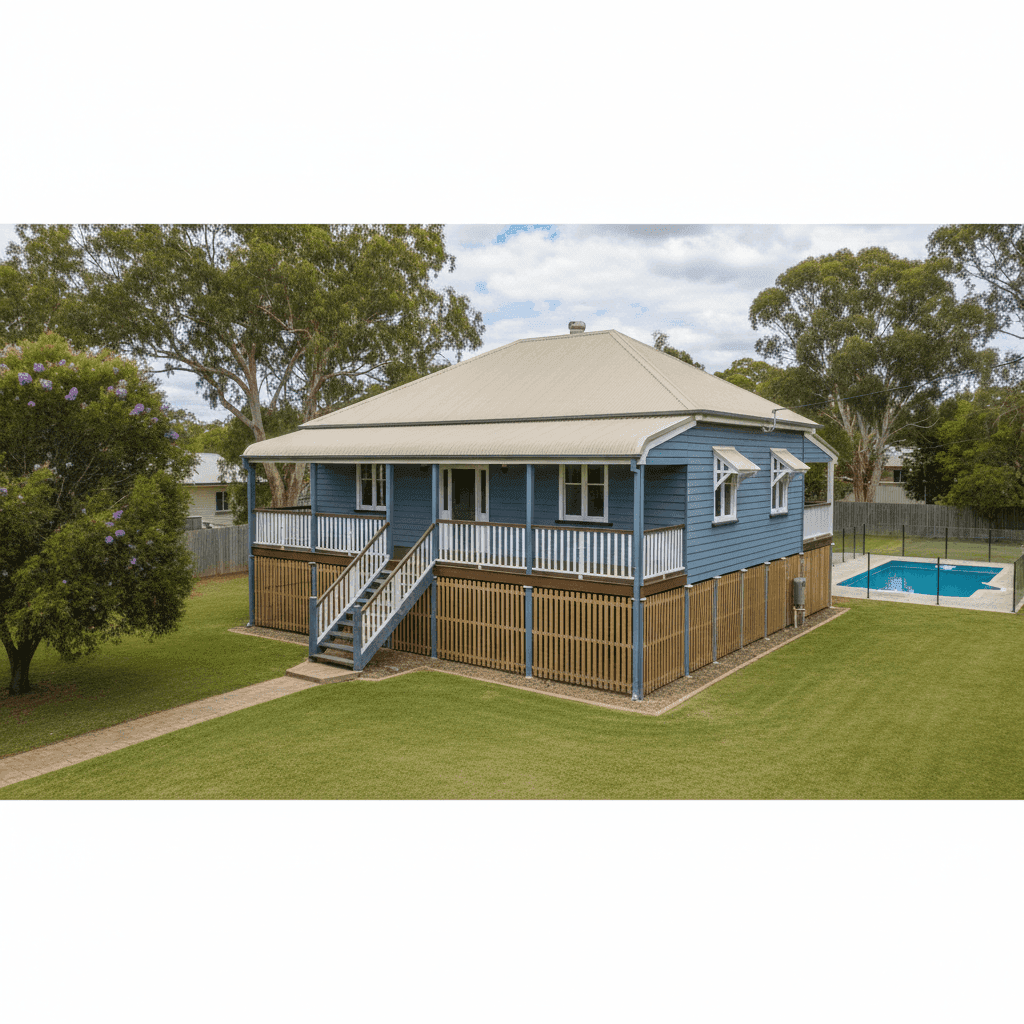
Wallaville is a quiet rural locality in Queensland's North Burnett region, and like many country towns across the state, the cost of insuring a home here can vary considerably depending on your property's characteristics. This article breaks down a real home and contents insurance quote for a 3-bedroom, 2-bathroom free-standing home in Wallaville (QLD 4671) — and puts that figure into context against local, state, and national benchmarks.
---
Is This Quote Fair?
The annual premium for this property came in at $2,335 per year (or $228/month), covering both building (sum insured: $680,000) and contents ($50,000), each with a $1,000 excess. Our price rating for this quote is FAIR — Around Average.
That rating holds up well when you look at the numbers. The suburb average for Wallaville sits at $3,016/yr, and the median is $2,804/yr. This quote lands below both of those figures, and it also falls just above the 25th percentile of $2,313/yr — meaning it's on the more competitive end of what Wallaville homeowners are typically paying.
In short: this isn't a bargain-basement price, but it's a genuinely reasonable outcome for a property with this profile. Homeowners paying closer to the suburb average of $3,016 may well be leaving money on the table.
---
How Wallaville Compares
To understand whether $2,335 is truly competitive, it helps to zoom out and look at the broader picture.
| Benchmark | Premium |
|---|---|
| This quote | $2,335/yr |
| Wallaville suburb average | $3,016/yr |
| Wallaville suburb median | $2,804/yr |
| LGA average (North Burnett) | $3,499/yr |
| QLD state average | $9,129/yr |
| QLD state median | $3,903/yr |
| National average | $5,347/yr |
| National median | $2,764/yr |
The contrast with Queensland's state average of $9,129/yr is striking — though it's worth noting that figure is heavily skewed by high-risk coastal and cyclone-prone areas across the state. The state median of $3,903/yr is a more representative figure, and this quote still comes in well below it.
Compared to the national average of $5,347/yr, this quote looks even more favourable. The national median of $2,764/yr is the closest benchmark to this quote, suggesting Wallaville homeowners — at least those with this type of property — are broadly in line with what Australians pay across the country.
You can explore more localised data on the Wallaville suburb stats page or browse Queensland-wide insurance trends for additional context. Note that the suburb sample size here is 17 quotes, so while directionally useful, averages may shift as more data comes in.
---
Property Features That Affect Your Premium
Several characteristics of this property have a meaningful influence on what insurers charge — for better and for worse.
Weatherboard Timber Construction
Weatherboard wood external walls are one of the most significant rating factors for this home. Timber-clad homes are generally considered higher risk by insurers due to their susceptibility to fire and the higher cost of repair or replacement compared to brick veneer. This typically pushes premiums up relative to masonry-constructed homes.
Age of the Home (Built 1953)
A home built in 1953 is over 70 years old, which raises questions for insurers around ageing infrastructure — wiring, plumbing, and structural integrity. Older homes can attract higher premiums, though well-maintained properties may still receive competitive rates.
Elevated on Stumps
The home is elevated by at least one metre on stumps — a classic Queenslander design feature. Elevation can actually work in a homeowner's favour in flood-prone areas, as it reduces the risk of inundation. It also allows for improved airflow and can reduce moisture-related damage. However, the stumped subfloor structure itself is an additional maintenance consideration insurers factor in.
Steel/Colorbond Roof
Colorbond roofing is generally viewed positively by insurers. It's durable, low-maintenance, resistant to fire and pests, and performs well in high-wind conditions — all factors that can help moderate your premium.
Swimming Pool
The presence of a pool adds to the replacement cost of the property and introduces additional liability considerations, which can nudge premiums upward slightly.
Ducted Climate Control
Ducted air conditioning systems add to the insured value of the home and, if included in the building sum insured, can contribute to a higher premium. It's worth confirming with your insurer whether this is captured correctly in your sum insured figure.
Timber/Laminate Flooring
Timber and laminate floors are costlier to repair or replace than carpet, which is factored into building replacement cost estimates. Ensuring your sum insured accurately reflects this is important to avoid being underinsured.
---
Tips for Homeowners in Wallaville
1. Review Your Sum Insured Regularly
At $680,000, the building sum insured needs to reflect the true cost of rebuilding — not the market value of the land and home combined. Construction costs have risen sharply in regional Queensland in recent years. Use a building cost calculator or speak to a quantity surveyor to make sure you're adequately covered.
2. Maintain Your Stumps and Subfloor
Insurers look favourably on well-maintained properties. Regularly inspecting and treating timber stumps for rot, termites, and movement can reduce the likelihood of a claim — and demonstrates to insurers that the property is well cared for. Some insurers may ask for evidence of maintenance for older homes.
3. Shop Around — Even If Your Current Rate Seems Reasonable
This quote is below the Wallaville suburb average, but that doesn't mean it's the best available. Premiums can vary significantly between insurers for the same property. Comparing multiple quotes annually is one of the simplest ways to avoid paying more than you need to.
4. Check What's Included in Your Contents Cover
With $50,000 in contents cover, it's worth doing a proper stocktake of your belongings. Many homeowners underestimate the replacement value of furniture, appliances, clothing, and personal items. At the same time, if your contents are more modest, you may be able to reduce this figure and lower your premium.
---
Compare Your Home Insurance Quote Today
Whether you're a first-time buyer or a long-time Wallaville local, it pays to know what the market looks like before you renew. CoverClub makes it easy to compare home and contents insurance quotes side by side, so you can see exactly where your premium sits relative to your neighbours.
Get a home insurance quote at CoverClub and find out if you're getting a fair deal — or if there's a better option waiting for you.