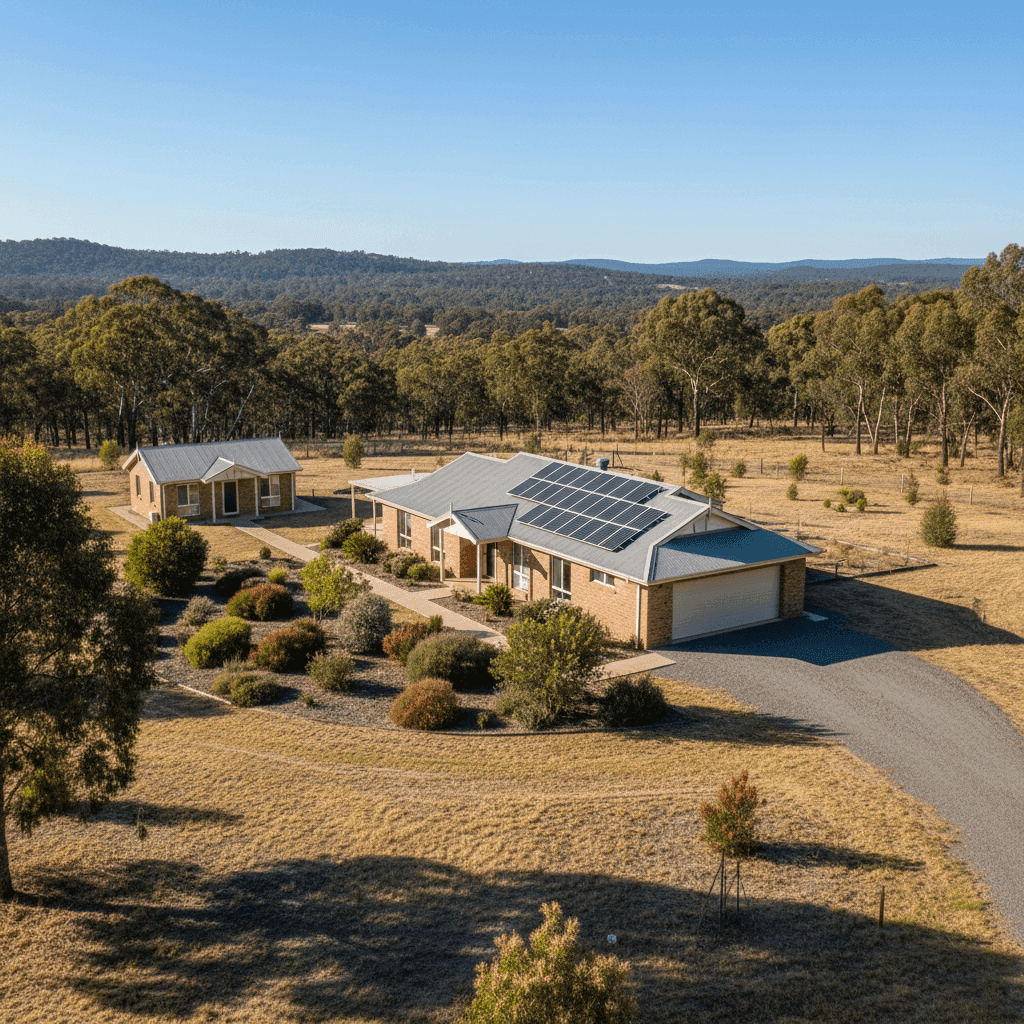
Wamboin is a semi-rural locality nestled in the Snowy Monaro Regional Council area, just east of Canberra in New South Wales. Known for its acreage properties, quiet bushland surroundings, and relaxed lifestyle, it attracts homeowners who want space without sacrificing proximity to the capital. For a substantial six-bedroom free standing home in this area, understanding what you should be paying for home and contents insurance — and whether a quote represents genuine value — is well worth your time.
This article breaks down a recent home and contents insurance quote for a property in Wamboin (postcode 2620), covering $1,050,000 in building sum insured and $200,000 in contents, at an annual premium of $3,490 (or $358/month). Let's see how it stacks up.
---
Is This Quote Fair?
In short: yes — and then some. This quote has been rated Cheap (Below Average), meaning it sits comfortably below what most comparable properties in the area are paying.
The building excess is set at $3,000 and the contents excess at $1,000, which are on the higher side and do contribute to bringing the premium down. That's a trade-off worth being aware of — a higher excess means more out of pocket if you need to make a claim. That said, for homeowners who are financially comfortable absorbing a moderate claim cost themselves, a higher excess in exchange for a lower annual premium is often a smart strategy.
At $3,490 per year, this quote is well below the suburb average of $6,189 and the suburb median of $6,738. Even against the national average of $5,347, this quote looks favourable. For a home of this size — 420 sqm, six bedrooms, three bathrooms — that's a competitive result.
---
How Wamboin Compares
Understanding how your premium fits into the broader market is key to knowing whether you're getting a fair deal. Here's how the numbers break down:
| Benchmark | Premium |
|---|---|
| This Quote | $3,490/yr |
| Wamboin Suburb Average | $6,189/yr |
| Wamboin Suburb Median | $6,738/yr |
| Wamboin 25th Percentile | $4,943/yr |
| NSW State Average | $9,528/yr |
| NSW State Median | $3,770/yr |
| National Average | $5,347/yr |
| National Median | $2,764/yr |
| Snowy Monaro LGA Average | $2,328/yr |
A few things stand out here. First, the NSW state average of $9,528 is unusually high relative to the state median of $3,770 — a sign that a small number of very expensive properties (likely in flood- or bushfire-prone areas, or with very high sum insured values) are pulling the average upward. The median is generally a more reliable benchmark for typical homeowners.
This quote sits above the Snowy Monaro LGA average of $2,328, which makes sense given the significantly higher sum insured ($1,050,000 building + $200,000 contents) and the size of the property. It also sits above the national median of $2,764, but below both the suburb and national averages — landing it in genuinely competitive territory.
You can explore more local data on the Wamboin insurance stats page, or compare it to broader NSW home insurance benchmarks and national figures.
---
Property Features That Affect Your Premium
Several characteristics of this property influence how insurers assess and price the risk:
Brick Veneer Walls & Colorbond Roof Brick veneer is one of the most common and well-regarded construction types in Australia. It's durable, fire-resistant, and relatively straightforward for insurers to assess. Combined with a steel Colorbond roof — which is lightweight, long-lasting, and performs well in both heat and moderate weather events — this construction profile is generally viewed favourably by underwriters.
Slab Foundation A concrete slab foundation is considered low-risk from an insurance perspective. It's structurally stable, less susceptible to subsidence, and doesn't carry the pest or moisture risks associated with raised timber floors.
Solar Panels The property includes solar panels, which are increasingly common in regional NSW. Most home insurance policies cover solar panels as part of the building, but it's worth confirming this with your insurer — particularly whether they're covered for accidental damage or only storm and fire events.
Ducted Climate Control Ducted air conditioning systems are a significant fixed asset and are typically covered under the building sum insured. Given the size of this home, a ducted system is a meaningful inclusion and one that insurers will factor into the overall replacement cost.
Granny Flat The presence of a granny flat adds both value and complexity to the property's risk profile. It increases the total insurable area and may affect the building sum insured requirements. Homeowners should confirm with their insurer that the granny flat is explicitly included in the building coverage — some policies may require it to be listed separately.
Tile Flooring & Standard Fittings Tile flooring is durable and cost-effective to replace, which helps keep the building sum insured from ballooning. Standard-quality fittings similarly keep replacement cost estimates grounded, contributing to a more moderate premium.
No Pool, No Cyclone Risk The absence of a swimming pool removes a common liability consideration. And as Wamboin is not in a designated cyclone risk zone, that's one less rating factor pushing the premium upward.
---
Tips for Homeowners in Wamboin
1. Review your building sum insured regularly With a property of this size — 420 sqm, plus a granny flat — construction costs can shift significantly over time. The cost to rebuild a home in regional NSW has risen sharply in recent years due to labour and materials inflation. Make sure your sum insured reflects today's rebuild cost, not what you paid for the property.
2. Confirm your granny flat is covered Don't assume the granny flat is automatically included in your policy. Ask your insurer directly and get written confirmation. If it's used as a rental, there may be additional landlord liability considerations to factor in.
3. Check your solar panel coverage Solar panels are a meaningful investment. Verify whether your policy covers them for accidental damage, theft, and storm damage — and whether there's a sub-limit that might leave you underinsured if the system needs full replacement.
4. Consider whether your excess level suits your situation This quote carries a $3,000 building excess and $1,000 contents excess. If you'd prefer more financial certainty in a claim scenario, it may be worth requesting a quote with a lower excess to see how much the premium changes. The right balance depends on your savings buffer and risk appetite.
---
Compare Quotes and Find Better Value
Whether this quote is the right fit for your circumstances depends on your full coverage needs, your insurer's policy terms, and how the excess structure works for you. The best way to know you're getting genuine value is to compare.
Get a home insurance quote at CoverClub and see how your property stacks up against the market — it only takes a few minutes and could save you hundreds of dollars a year.