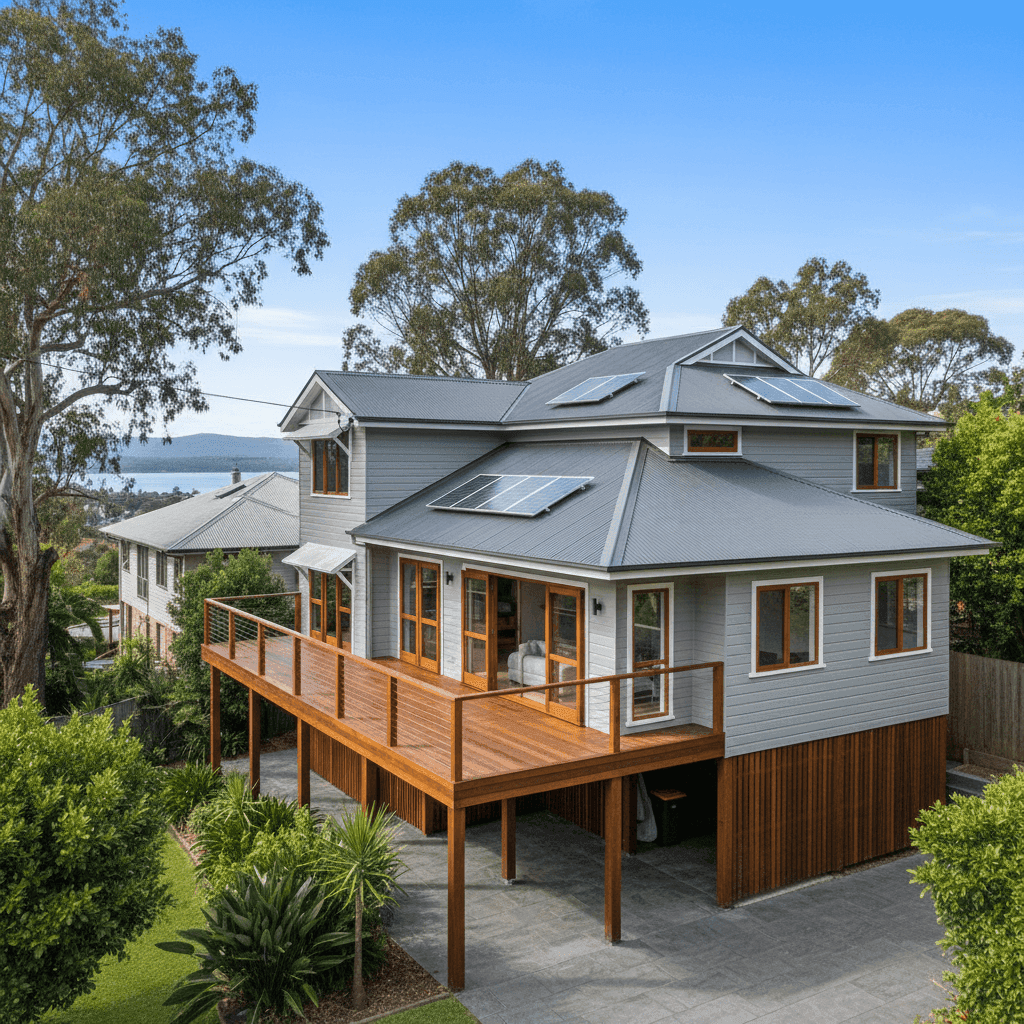
Wangi Wangi is a relaxed lakeside suburb on the western shores of Lake Macquarie — one of the most picturesque corners of the NSW Central Coast region. It's the kind of place where older character homes sit comfortably alongside renovated properties, many of them elevated to capture the views and manage the undulating terrain. If you own a free standing home here, you're likely no stranger to the question: am I paying too much for home insurance?
This article breaks down a real home and contents insurance quote for a 4-bedroom, 3-bathroom free standing home in Wangi Wangi (postcode 2267), and puts it into context using suburb, state, and national benchmarks.
---
Is This Quote Fair?
The quoted annual premium of $4,243 (or $423/month) covers both building and contents, with a building sum insured of $900,000 and contents valued at $200,000. The building excess sits at $3,000, while the contents excess is $1,000.
Our price rating for this quote is Fair — Around Average, and the data backs that up.
Compared to the suburb average of $4,656/yr for Wangi Wangi, this quote comes in roughly 9% below what many local homeowners are paying. That's a meaningful saving without having to sacrifice coverage. At the same time, it sits above the suburb median of $3,638/yr — meaning roughly half of quotes in the area are cheaper, and half are more expensive.
The key takeaway? This quote is neither a bargain nor a red flag. It lands squarely in the middle of the local market, which is exactly what "Fair" means in practice.
---
How Wangi Wangi Compares
To understand what you're really paying, it helps to zoom out.
| Benchmark | Premium |
|---|---|
| This quote | $4,243/yr |
| Wangi Wangi suburb average | $4,656/yr |
| Wangi Wangi suburb median | $3,638/yr |
| Lake Macquarie LGA average | $3,593/yr |
| NSW state average | $3,801/yr |
| NSW state median | $3,410/yr |
| National average | $2,965/yr |
| National median | $2,716/yr |
A few things stand out here. First, Wangi Wangi premiums are notably higher than both the NSW state average and the national average. The suburb average of $4,656/yr is around 57% higher than the national median of $2,716/yr — a significant gap that reflects the elevated risk profile of lakeside and coastal NSW properties.
Second, there's considerable spread within the suburb itself. The 25th percentile sits at $2,896/yr, while the 75th percentile reaches $7,076/yr — a range of over $4,000. This tells us that property-specific factors (construction type, elevation, sum insured, and more) play a huge role in what you'll ultimately pay. With only 43 quotes in the sample, individual property characteristics carry a lot of weight.
The Lake Macquarie LGA average of $3,593/yr is actually lower than the Wangi Wangi suburb average, suggesting that this particular pocket of the lake may attract slightly higher premiums than the broader LGA — possibly due to localised flood or storm risk near the waterfront.
---
Property Features That Affect Your Premium
This isn't a cookie-cutter property, and insurers price it accordingly. Several features of this home have a direct bearing on the premium.
Hardiplank/Hardiflex external walls are generally viewed favourably by insurers. This fibre cement cladding is resistant to fire, rot, and moisture — a meaningful advantage in a lakeside environment where humidity can be a factor. It performs better than timber weatherboard in many risk assessments.
Steel/Colorbond roofing is another positive. Colorbond is durable, low-maintenance, and holds up well in storms — an important consideration for a property in coastal NSW. It's typically rated better than terracotta or concrete tiles for wind resistance.
Stump foundations (also known as stumped or raised foundations) are common in older NSW homes, particularly those built in the 1960s as this one was. Being elevated by at least 1 metre is a significant flood-risk mitigant — homes that sit high off the ground are far less likely to sustain inundation damage. This elevation factor likely works in favour of the premium here.
Timber and laminate flooring can be a double-edged sword. While stylish and common in older homes, timber floors may be more susceptible to water damage than tiles. Insurers may factor this into contents and building assessments.
Solar panels add replacement value to the building sum insured and can also introduce risk (e.g., electrical faults, storm damage to panels). Their presence is generally accounted for in the building valuation.
Above-average fittings quality is a key driver of the $900,000 building sum insured. Homes with quality fixtures, finishes, and appliances cost more to rebuild — and insurers price accordingly. Underinsuring a home with above-average fittings is a common and costly mistake.
Ducted climate control adds to the replacement cost of the building and is another feature that justifies a higher sum insured.
The home's 1966 construction year is worth noting. Older homes can carry higher rebuild costs due to non-standard materials and the difficulty of matching period details. They may also require more scrutiny around electrical wiring and plumbing during claims assessments.
---
Tips for Homeowners in Wangi Wangi
1. Review your building sum insured regularly With above-average fittings, solar panels, ducted air conditioning, and a 214 sqm floor plan, the cost to rebuild this home from scratch could easily exceed expectations — especially given recent increases in construction costs across NSW. Make sure your sum insured reflects current rebuild costs, not the original purchase price.
2. Ask about flood and storm surge definitions Living near Lake Macquarie means water-related risks are a genuine concern. Not all policies treat "flood," "storm surge," and "rainwater runoff" the same way. Read the Product Disclosure Statement carefully and confirm exactly what water damage scenarios are covered.
3. Consider your excess strategy This quote carries a $3,000 building excess — on the higher side. A higher excess typically reduces your premium, but it also means a larger out-of-pocket cost when you claim. If you're unlikely to make small claims, this trade-off can be worthwhile. If you'd struggle to cover $3,000 at short notice, it may be worth comparing policies with a lower excess.
4. Don't set and forget The wide premium range in Wangi Wangi (from under $2,900 to over $7,000) shows that the market here is competitive and varied. Shopping around at renewal time — rather than simply accepting your insurer's renewal offer — could save you hundreds of dollars a year without reducing your cover.
---
Compare Your Own Quote
Whether you're a Wangi Wangi local or just researching what home insurance should cost in this part of Lake Macquarie, the best way to know if you're getting a fair deal is to compare. CoverClub makes it easy to see real quotes side by side, so you can make a genuinely informed decision.
Get a home insurance quote at CoverClub and see how your property stacks up — it takes just a few minutes.