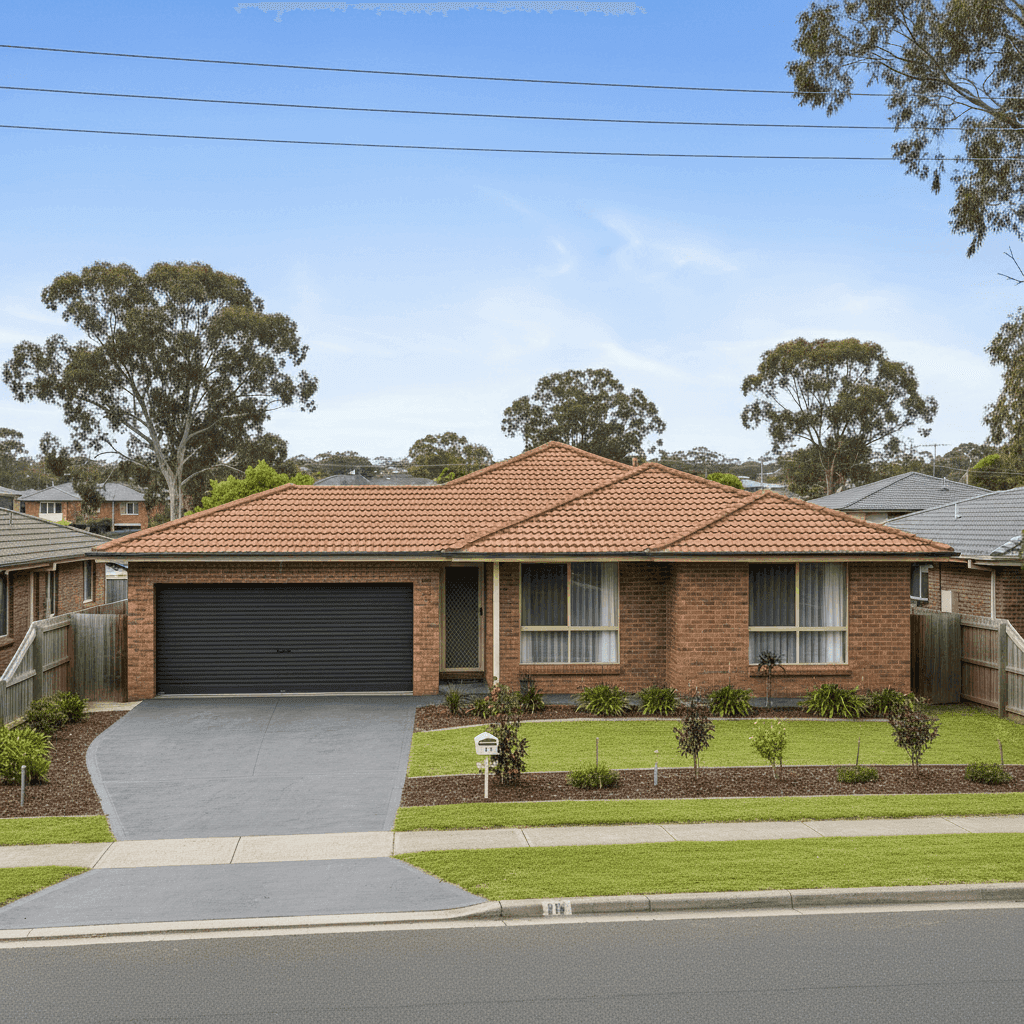
Wangi Wangi is a peaceful lakeside suburb on the western shores of Lake Macquarie in New South Wales — a popular spot for families and retirees alike who appreciate the relaxed lifestyle and natural surroundings. But like any homeowner in regional NSW, those with a free standing home here still need to navigate the often complex world of home and contents insurance. This article breaks down a real insurance quote for a four-bedroom brick veneer home in the area, benchmarks it against local, state, and national data, and offers practical guidance to help you make an informed decision.
---
Is This Quote Fair?
The quote in question comes in at $4,051 per year (or $381/month) for combined home and contents cover, with a building sum insured of $711,000 and contents valued at $110,000. Both the building and contents excess are set at $1,000.
Our analysis rates this quote as FAIR — Around Average, and the numbers back that up. It sits comfortably above the suburb's 25th percentile ($2,896/yr) and below the 75th percentile ($7,076/yr), placing it squarely in the middle range of what Wangi Wangi homeowners are paying. It's also slightly below the suburb average of $4,656/yr, which is a modest but meaningful saving compared to what many locals are quoted.
That said, "fair" doesn't necessarily mean "the best available." Insurance premiums can vary significantly between providers for the same property, and there's always room to shop around — especially when the spread between the 25th and 75th percentile in this suburb is so wide (nearly $4,200).
---
How Wangi Wangi Compares
To put this quote in proper context, it helps to zoom out and look at the broader pricing landscape. Based on 43 quotes collected for the Wangi Wangi area, here's how the numbers stack up:
| Benchmark | Annual Premium |
|---|---|
| This Quote | $4,051 |
| Suburb Average (Wangi Wangi) | $4,656 |
| Suburb Median (Wangi Wangi) | $3,638 |
| LGA Average (Lake Macquarie) | $3,593 |
| NSW State Average | $3,801 |
| NSW State Median | $3,410 |
| National Average | $2,965 |
| National Median | $2,716 |
A few things stand out here. First, Wangi Wangi's average premium of $4,656 is notably higher than both the NSW state average ($3,801) and the national average ($2,965). This suggests that insuring a home in this suburb carries a higher-than-typical risk profile in the eyes of insurers — likely driven by its proximity to Lake Macquarie and the associated flood and storm considerations that come with lakeside living.
The quote of $4,051 is actually $605 below the suburb average, which is a reasonable outcome. However, it's still $441 above the NSW state average and a significant $1,086 above the national average. This regional premium loading is common in lakeside and coastal NSW communities and reflects the elevated exposure to weather-related claims.
---
Property Features That Affect Your Premium
Several characteristics of this particular property influence how insurers price the risk:
Brick veneer construction and tiled roof are generally viewed favourably by insurers. Brick veneer offers solid fire resistance and structural durability, while tiled roofs are considered more resilient than colorbond or corrugated iron alternatives in many scenarios. Together, these features can help keep premiums more competitive.
Slab foundation is a standard and stable foundation type that doesn't typically attract a loading. However, it's worth noting that slab-on-ground homes can be more vulnerable to inundation compared to elevated homes, depending on drainage and local flood mapping.
Slightly elevated (less than 1 metre) — the property sits marginally above natural ground level. While this elevation is minimal, any lift above ground can provide a small buffer against surface water ingress, which insurers may factor in positively, particularly in a lakeside suburb like Wangi Wangi.
Ducted climate control is present, which adds to the replacement value of the home's fixtures and fittings. Ducted systems are expensive to repair or replace and can contribute to a higher sum insured, which in turn affects the premium.
Timber and laminate flooring is a common feature in homes of this era (built in 2001) and is generally straightforward to replace. However, it can be susceptible to water damage, making contents and building cover particularly valuable for this property type.
No pool and no solar panels simplify the risk profile slightly. Pools add liability exposure and solar panel systems can complicate roof claims — their absence removes two potential premium-loading factors.
At 268 sqm, this is a reasonably sized family home, and a building sum insured of $711,000 reflects a realistic rebuild cost for a four-bedroom brick veneer property of this size in regional NSW.
---
Tips for Homeowners in Wangi Wangi
Living near Lake Macquarie is a lifestyle choice many wouldn't trade, but it does come with some insurance considerations worth keeping in mind.
1. Review your flood cover carefully Many standard home insurance policies include flood cover by default, but the definition of "flood" can vary between insurers. Given Wangi Wangi's lakeside location, it's essential to confirm whether your policy covers lake-sourced flooding, stormwater overflow, and storm surge — not just riverine flooding. Read the Product Disclosure Statement (PDS) closely or ask your insurer directly.
2. Don't underinsure your building With construction costs continuing to rise across NSW, the $711,000 sum insured on this property should be reviewed annually. Underinsurance is one of the most common and costly mistakes homeowners make — if rebuild costs exceed your sum insured, you may be left covering the difference out of pocket. Use a building cost calculator or consult a quantity surveyor if you're unsure.
3. Shop around at renewal time Insurance loyalty rarely pays off. Insurers often offer better pricing to new customers, meaning your premium can creep up at renewal without any change in your circumstances. Use a comparison tool like CoverClub to benchmark your renewal quote against the market before accepting it.
4. Consider your excess level strategically Both the building and contents excess on this quote are set at $1,000. Opting for a higher excess (say, $2,000 or $2,500) can meaningfully reduce your annual premium — a worthwhile trade-off if you have the financial buffer to cover a larger out-of-pocket cost in the event of a claim.
---
Compare Your Own Quote
Whether you're a long-time Wangi Wangi resident or you've recently purchased in the area, it's always worth knowing where your premium sits relative to the market. CoverClub makes it easy to see how your current quote stacks up — enter your address and get a comparison in minutes. With premiums in this suburb ranging from under $2,900 to over $7,000, the potential savings from switching can be substantial.