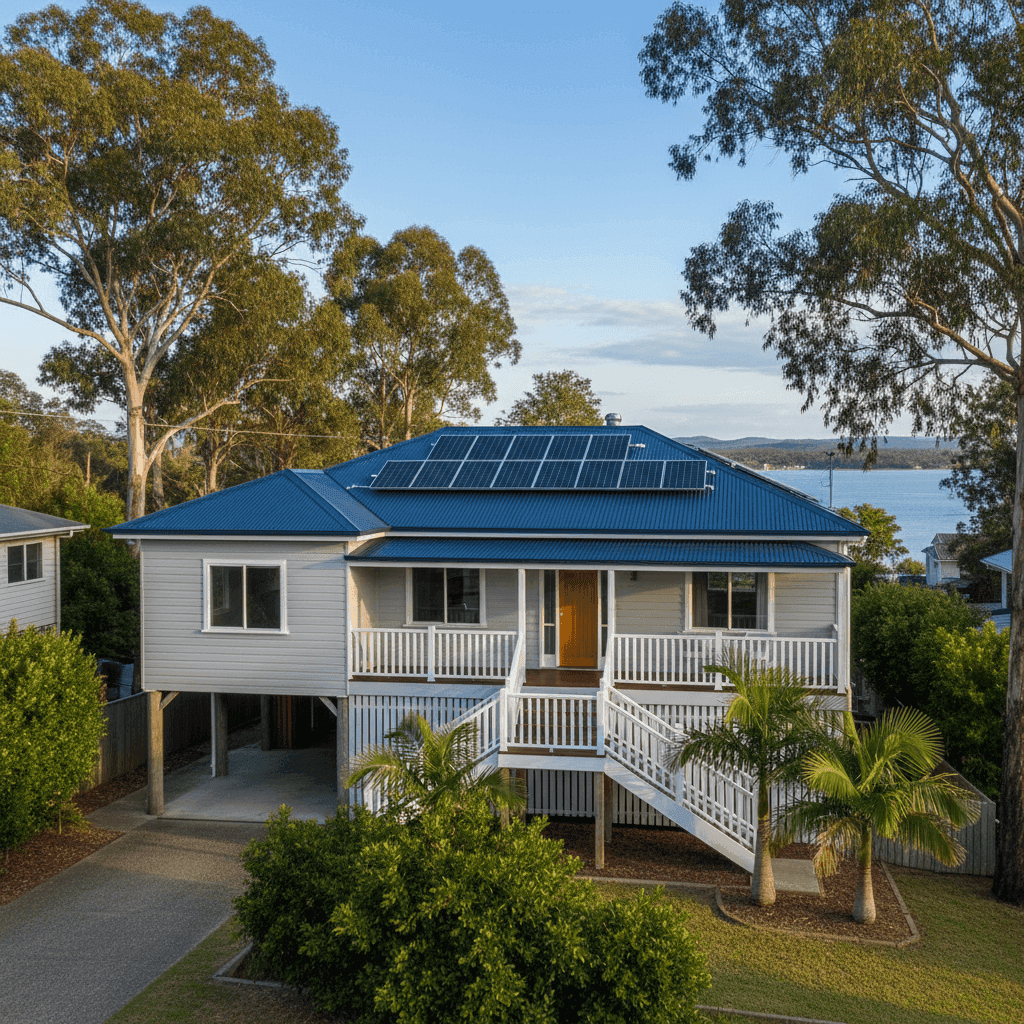
Nestled on the western shores of Lake Macquarie, Wangi Wangi is a picturesque lakeside suburb that draws homeowners seeking a relaxed coastal lifestyle within reach of Newcastle. But like any established residential area, insuring a home here comes with its own set of considerations — from ageing construction styles to elevated site conditions. This article breaks down a real home insurance quote for a four-bedroom, three-bathroom free-standing home in Wangi Wangi (NSW 2267), and puts the numbers in context so you can judge whether your own premium stacks up.
---
Is This Quote Fair?
The quote in question comes in at $4,246 per year (or $423/month) for combined home and contents cover, with a building sum insured of $900,000 and contents valued at $200,000. The building excess is $3,000 and the contents excess is $1,000.
Our price rating for this quote is FAIR — Around Average, and the data backs that up. Compared to the suburb average of $4,656/yr for Wangi Wangi, this quote is actually sitting about $410 below the local average — a modest but meaningful saving. Against the suburb median of $3,638/yr, the quote is higher, which reflects the above-average fittings quality, larger-than-typical building size (214 sqm), and the elevated site adding complexity to the risk profile.
In short: for what this property is — a well-appointed, older home on stumps with solar panels and ducted climate control — the premium is reasonable. It's not a bargain, but it's not excessive either.
---
How Wangi Wangi Compares
Understanding where your suburb sits relative to broader benchmarks is key to evaluating any insurance quote. Here's how Wangi Wangi stacks up:
| Benchmark | Average Premium | Median Premium |
|---|---|---|
| Wangi Wangi (NSW 2267) | $4,656/yr | $3,638/yr |
| Lake Macquarie LGA | $3,593/yr | — |
| NSW State | $3,801/yr | $3,410/yr |
| National | $2,965/yr | $2,716/yr |
(Based on 43 quotes sampled for the Wangi Wangi postcode.)
A few things stand out here. First, Wangi Wangi's average premium is notably higher than both the NSW state average and the Lake Macquarie LGA average — suggesting that properties in this suburb carry a somewhat elevated risk profile overall. This could be attributed to a combination of factors: proximity to the lake, older housing stock, and the prevalence of elevated or stump-founded homes that can be more expensive to rebuild.
Second, the national median of $2,716/yr feels like a world away from what Wangi Wangi homeowners typically pay. This gap is common across lakeside and coastal NSW communities, where flood adjacency, storm exposure, and higher rebuild costs all push premiums upward.
You can explore more detailed statistics for your area on the Wangi Wangi suburb stats page, or compare against NSW state-wide data and national benchmarks.
---
Property Features That Affect Your Premium
Several characteristics of this particular home have a direct influence on what insurers charge. Here's what matters most:
Construction Era (1966)
Homes built in the 1960s often feature original plumbing, wiring, and structural elements that may not meet current building codes. Insurers factor in the higher likelihood of maintenance-related claims — such as burst pipes or electrical faults — when pricing older properties. Renovations and upgrades can help offset this, but the base construction year remains a key rating factor.
Hardiplank/Hardiflex External Walls
Fibre cement cladding like Hardiplank and Hardiflex is generally viewed favourably by insurers compared to weatherboard or brick veneer. It's fire-resistant and durable, which can help moderate premiums. That said, it's not as robust as full brick construction, so it doesn't attract the lowest possible ratings.
Steel/Colorbond Roof
Colorbond roofing is a strong performer in insurance terms — it's resistant to fire, handles hail reasonably well, and is relatively straightforward to repair or replace. This is a positive factor in the premium calculation.
Elevated on Stumps
Being elevated by at least one metre is a double-edged sword. On one hand, it provides natural protection from ground-level flooding — a real benefit given the property's proximity to Lake Macquarie. On the other, elevated homes can be more costly to repair after storm or wind events, and the subfloor space introduces additional risks. Insurers typically treat stump foundations with some caution.
Above-Average Fittings
The above-average fittings quality declared for this property directly increases the estimated rebuild cost, which in turn supports the $900,000 building sum insured. Higher-quality kitchens, bathrooms, and finishes cost more to reinstate — so this is reflected in the premium.
Solar Panels & Ducted Climate Control
Both of these features add to the replacement value of the home. Solar panel systems can cost $8,000–$20,000+ to replace, and ducted HVAC systems are similarly expensive. Ensuring these are adequately covered under your building policy (and that your sum insured accounts for them) is important.
---
Tips for Homeowners in Wangi Wangi
1. Review your sum insured annually With construction costs rising across NSW, the cost to rebuild a 214 sqm home with above-average fittings has increased significantly in recent years. Make sure your $900,000 building sum insured still reflects current rebuild costs — not what it cost to build five years ago. Underinsurance is one of the most common problems homeowners face at claim time.
2. Ask about flood cover specifically Living near Lake Macquarie means flood risk is a real consideration. Not all home insurance policies automatically include flood cover — some offer it as an optional add-on. Check your Product Disclosure Statement (PDS) carefully to confirm whether riverine flooding, flash flooding, or storm surge are covered under your policy.
3. Consider your excess carefully The $3,000 building excess on this policy is on the higher side. While a higher excess typically lowers your premium, it also means a larger out-of-pocket cost if you need to make a claim. For an older home that may be more prone to maintenance-related issues, it's worth modelling whether a lower excess with a slightly higher premium makes more financial sense.
4. Don't overlook your contents A $200,000 contents sum for a four-bedroom, three-bathroom home with above-average fittings is reasonable, but it's worth doing a proper room-by-room stocktake. Many homeowners underestimate the replacement value of electronics, furniture, clothing, and appliances — particularly in a well-appointed home.
---
Compare Your Options with CoverClub
Whether you're renewing your existing policy or shopping around for the first time, comparing quotes is the single most effective way to make sure you're not overpaying. CoverClub makes it easy to see how your premium stacks up against real data from your suburb and across Australia. Get a home insurance quote today and find out if you're getting a fair deal — or if there's a better option waiting for you.