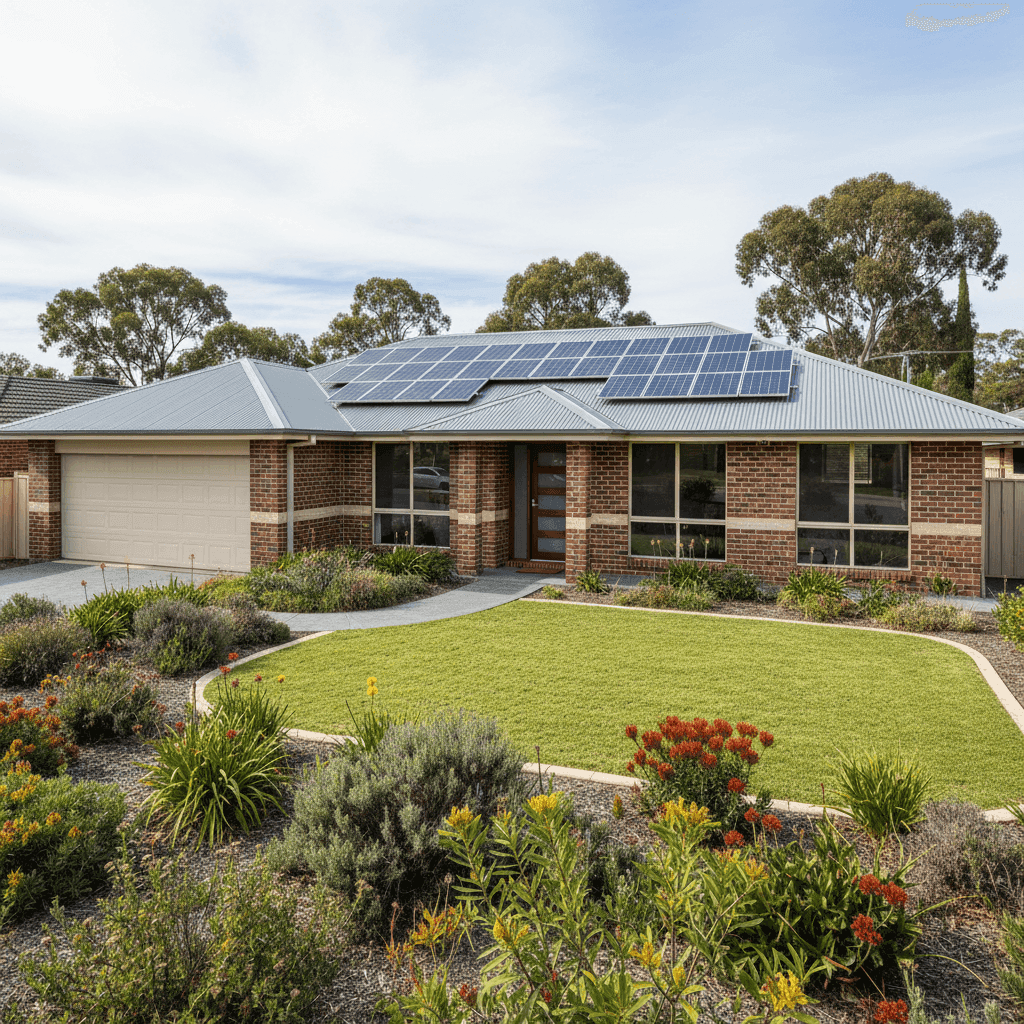
If you own a free standing home in Waramanga, ACT 2611, you're living in one of Canberra's well-established inner-south suburbs — a leafy, quiet pocket of the capital where solid brick homes from the 1960s and 70s are a familiar sight. But what should you expect to pay for home and contents insurance on a property like this? We've analysed a real quote for a 4-bedroom, 1-bathroom home in the area to help you understand what's driving the cost — and whether there's room to save.
---
Is This Quote Fair?
The quote in question comes in at $3,002 per year (or $288/month) for combined home and contents cover, with a building sum insured of $900,000 and contents valued at $357,000. Both the building and contents excess are set at $500.
Our price rating for this quote is Expensive — above average for the area.
To put that in context: the average home insurance premium across the ACT sits at $2,288 per year, with a state median of $2,186. This quote sits roughly $714 above the ACT average — a meaningful gap that's worth investigating before simply renewing.
That said, "expensive" doesn't automatically mean "wrong." A higher-than-average premium can be entirely justified depending on the property's rebuild value, the contents being insured, and the specific risk profile of the home. In this case, a $900,000 building sum insured is a substantial figure, and combined with $357,000 in contents, the total insured value of $1,257,000 is considerable. Insurers price risk proportionally, so larger sums insured will naturally attract higher premiums.
Still, it's always worth comparing — and we'll get to that shortly.
---
How Waramanga Compares
Understanding where your premium sits relative to local and national benchmarks is one of the most useful tools a homeowner has. Here's how this quote stacks up:
| Benchmark | Annual Premium |
|---|---|
| This Quote | $3,002 |
| ACT Average | $2,288 |
| ACT Median | $2,186 |
| LGA (Snowy Valleys) Average | $2,383 |
| National Average | $5,347 |
| National Median | $2,764 |
A few things stand out here. First, while this quote is above the ACT average, it actually sits below the national average of $5,347 — which reflects the fact that many parts of Australia face significantly higher insurance costs due to cyclone, flood, and bushfire exposure. Canberra, by comparison, is a relatively low-risk environment for many of those perils.
Second, the national median of $2,764 is a more useful comparison point than the national average (which is skewed upward by high-risk regions in Queensland and northern WA). This quote is $238 above that national median — not a dramatic overpayment, but enough to justify shopping around.
You can explore suburb-level insurance data for Waramanga, ACT-wide premium trends, and national home insurance statistics on CoverClub to dig deeper into the numbers.
---
Property Features That Affect Your Premium
Every home tells its own story to an insurer. Here are the key characteristics of this property and how they're likely influencing the premium:
Built in 1970 — Age matters Homes built around this era are now over 50 years old. While many are structurally sound, older properties can carry higher rebuild costs due to non-standard materials, outdated plumbing or electrical systems, and the difficulty of sourcing period-appropriate fittings. Insurers factor this in.
Brick Veneer Walls Brick veneer is one of the most common wall types in Canberra's established suburbs, and it's generally viewed favourably by insurers. It offers good fire resistance and durability, which can help moderate premiums compared to timber-framed or clad homes.
Steel/Colorbond Roof Colorbond roofing is considered a low-maintenance, resilient option. It performs well in hail events and is less prone to the cracking or leaking issues associated with older tile roofs — a positive signal for insurers.
Stumps Foundation A home on stumps (also called pier and beam) can be more susceptible to movement, particularly in areas with reactive soils. This can introduce a slightly elevated risk of subsidence or structural shifting compared to slab-on-ground construction.
Timber/Laminate Flooring These floor types can be costly to replace or repair if damaged by water or fire, which may contribute modestly to the contents and building replacement cost estimates.
Above Average Fittings Quality This is a meaningful factor. Above-average fittings — think stone benchtops, quality appliances, premium fixtures — increase the cost to rebuild or restore a home to its pre-loss condition. Insurers account for this in the building sum insured calculation.
Solar Panels Solar panels add value but also complexity. They increase the replacement cost of the home and can be a source of claims if damaged by hail, storm, or fire. Their presence can nudge premiums upward.
Ducted Climate Control Ducted systems are expensive to repair or replace and are factored into building replacement costs. In Canberra's climate — with its cold winters and warm summers — these systems are heavily used, which may increase wear-related risk over time.
No Pool, No Cyclone Risk The absence of a pool removes a liability and maintenance risk factor. And Waramanga's location in the ACT means cyclone risk is not applicable — a significant cost advantage compared to properties in northern Australia.
---
Tips for Homeowners in Waramanga
1. Review your building sum insured carefully A $900,000 sum insured is substantial. Make sure it reflects the actual cost to rebuild your home — not its market value. Use a quantity surveyor or your insurer's rebuild cost calculator to validate this figure. Over-insuring costs you money; under-insuring can leave you seriously exposed at claim time.
2. Consider a higher excess to reduce your premium With both excesses set at $500, there may be room to increase these in exchange for a lower annual premium. If you have a solid emergency fund and are unlikely to make small claims, a $1,000 or $2,000 excess could deliver meaningful savings.
3. Bundle and compare annually Home and contents cover is already bundled here, which typically attracts a discount. But bundling with the same insurer for car or landlord insurance can sometimes yield further savings. More importantly, don't auto-renew — compare quotes every year. Loyalty rarely pays in Australian insurance.
4. Document and value your contents properly With $357,000 in contents insured, it's worth maintaining an up-to-date home inventory. Photograph valuable items, keep receipts where possible, and review your contents sum insured annually. Both under- and over-insuring contents is a common and costly mistake.
---
Compare Your Options with CoverClub
Whether this quote is right for your situation depends on your specific needs — but you should never accept the first number you're given. At CoverClub, we make it easy to compare home and contents insurance quotes from a range of Australian insurers, so you can find the right cover at a fair price.
Get a home insurance quote now and see how much you could save.