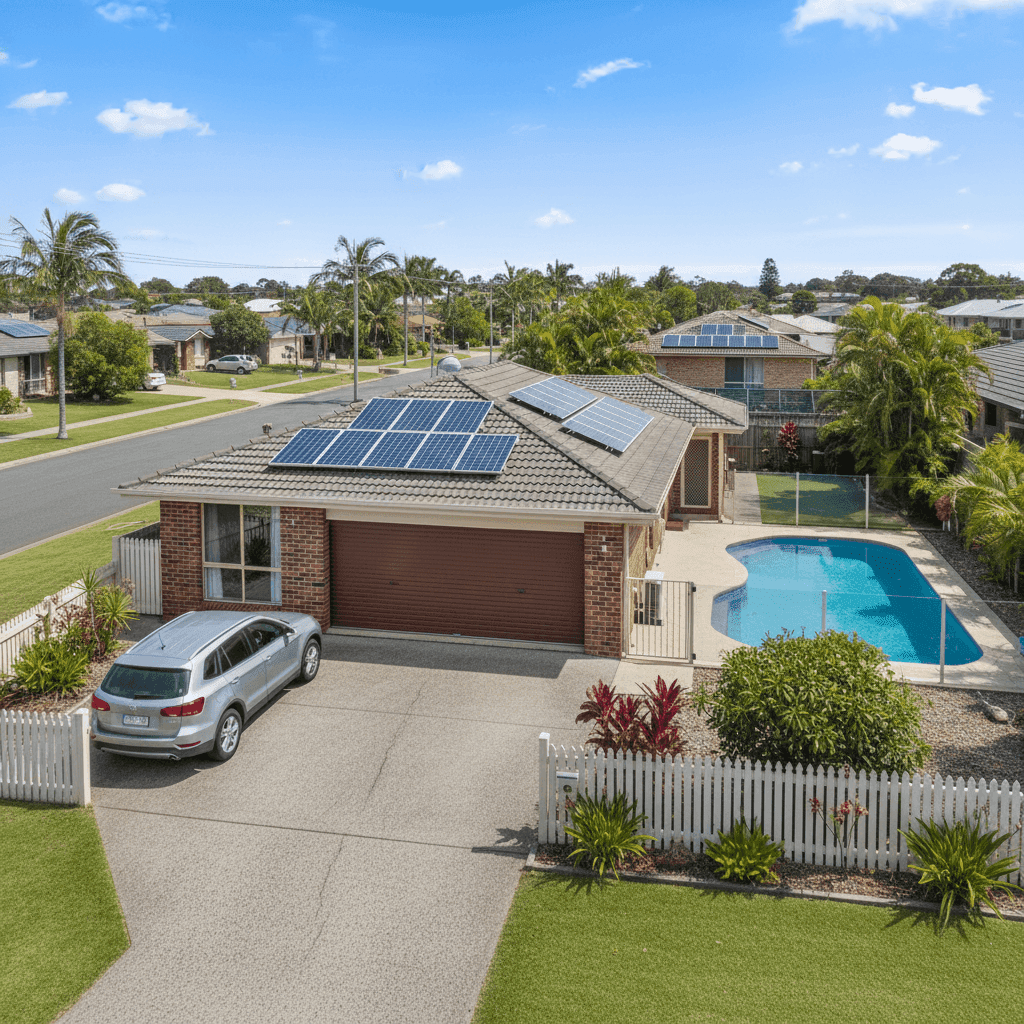
Warana is a relaxed coastal suburb on Queensland's Sunshine Coast, sitting between Bokarina and Bokarina Beach to the west and the Coral Sea to the east. It's a popular spot for families and retirees alike, and the local property market reflects that appeal — with a solid mix of freestanding homes on generous blocks. If you own a home here, understanding what you should be paying for insurance is just as important as knowing your property's market value. This article breaks down a real home and contents insurance quote for a 3-bedroom freestanding home in Warana, and puts it into context against local, state, and national benchmarks.
---
Is This Quote Fair?
The quote in question comes in at $2,636 per year (or $246/month) for a combined home and contents policy, covering a building sum insured of $486,000 and contents valued at $50,000, each with a $1,000 excess.
Our price rating for this quote is FAIR — around average. That might sound underwhelming, but in the context of Queensland's notoriously elevated insurance market, landing near the average is actually a reasonably solid outcome. Premiums across the Sunshine Coast and broader QLD have been climbing steadily in recent years, driven by extreme weather events, rising rebuild costs, and reinsurance pressures. A quote sitting at the average isn't a bargain, but it's not a red flag either — it suggests the insurer is pricing the risk fairly without loading on excessive margins.
The key question is always: average compared to what? Let's dig into the numbers.
---
How Warana Compares
Here's where this quote gets interesting. Looking at suburb-level data for Warana (4575), the picture is encouraging:
| Benchmark | Premium |
|---|---|
| This Quote | $2,636/yr |
| Suburb Average (Warana) | $3,051/yr |
| Suburb Median (Warana) | $3,033/yr |
| Suburb 25th Percentile | $2,357/yr |
| Suburb 75th Percentile | $3,374/yr |
| LGA Average (Sunshine Coast) | $4,608/yr |
| QLD State Average | $4,547/yr |
| QLD State Median | $3,931/yr |
| National Average | $2,965/yr |
| National Median | $2,716/yr |
This quote sits below both the suburb average and median, placing it in roughly the 40th–45th percentile range within Warana — meaning more than half of comparable quotes in the area come in higher. Against the broader Queensland state average of $4,547, this quote is a substantial 42% cheaper, which reflects both the relatively lower flood and cyclone risk in this part of the Sunshine Coast compared to more exposed QLD postcodes, and the property's specific characteristics.
Compared to the national average of $2,965, this quote is about 11% below, which is a meaningful saving given that QLD properties typically push well above the national norm.
The Sunshine Coast LGA average of $4,608 is particularly striking — it suggests that many properties in the broader region attract significantly higher premiums, likely due to flood-prone or cyclone-exposed addresses. Warana's position on this spectrum is favourable.
---
Property Features That Affect Your Premium
Several characteristics of this property influence how insurers calculate the risk — and by extension, the premium.
Brick Veneer Walls & Concrete Roof This combination is generally well-regarded by insurers. Brick veneer offers solid fire resistance and structural integrity, while a concrete (tile) roof is durable and performs well in high-wind events. Compared to properties with timber frames and corrugated iron roofing, this construction profile typically attracts more competitive premiums.
Slab Foundation A concrete slab foundation is standard in Queensland's coastal suburbs and is considered low-risk by most insurers. It eliminates concerns around subfloor flooding or pest ingress that can affect older raised foundations.
Timber & Laminate Flooring While aesthetically appealing and common in homes of this era, timber and laminate flooring can be more susceptible to water damage than tiles. Insurers may factor this in when assessing contents or internal fitout risk, particularly in areas with any residual storm-water risk.
1985 Construction At around 40 years old, this home sits in a bracket where insurers pay closer attention to the age of plumbing, electrical systems, and roofing. That said, a well-maintained home of this vintage with quality fittings (rated above average here) generally doesn't attract significant age-related loading.
Pool, Solar Panels & Ducted Climate Control These three features each add to the insured value and complexity of the property. A pool introduces liability considerations and equipment replacement costs. Solar panels — particularly on a concrete roof — add rebuild value and require specific coverage for inverters and panels. Ducted climate control systems can be expensive to replace and are typically included in the building sum insured. Together, these features justify a higher sum insured and contribute to the premium, but they're also a sign that the $486,000 building cover is doing real work.
No Cyclone Risk This is a meaningful premium-saver. Many Queensland coastal properties attract cyclone loading, which can add hundreds of dollars annually. Warana falls outside the designated cyclone risk zone, which helps keep this quote competitive relative to properties further north.
---
Tips for Homeowners in Warana
1. Review your building sum insured regularly Construction costs have risen sharply across Queensland in recent years. A $486,000 sum insured may have been accurate at policy inception but could fall short of today's rebuild costs for a 130 sqm brick veneer home with above-average fittings, a pool, and solar. Use a building cost calculator or ask your insurer to reassess annually — being underinsured at claim time is a costly mistake.
2. Check your solar panel coverage specifically Not all home insurance policies automatically cover solar panels as part of the building, and some apply sub-limits or exclusions for inverter damage. Given the size of a typical rooftop solar system, it's worth confirming exactly what's covered and whether the replacement value is factored into your sum insured.
3. Consider a higher excess to reduce premiums With both the building and contents excess set at $1,000, there may be room to increase this if you have savings to cover a larger out-of-pocket cost in the event of a claim. Moving to a $2,000 or $2,500 excess can reduce annual premiums noticeably — particularly useful if you're looking to trim costs without changing your coverage.
4. Compare quotes at renewal, not just at inception Insurance loyalty rarely pays off in Australia. Insurers frequently offer their best pricing to new customers, meaning long-term policyholders can end up paying well above market rate. Given that this quote is already below the Warana suburb average, it's a reasonable benchmark — but it's still worth shopping around at each renewal to make sure you're not drifting toward the 75th percentile over time.
---
Compare Your Own Quote
Whether you're a first-time buyer in Warana or a long-term homeowner reviewing your coverage, it pays to know where your premium sits relative to the market. CoverClub makes it easy to compare home and contents insurance quotes in one place, with transparent pricing data drawn from real quotes across Australia. Get a quote today at CoverClub and see how your current policy stacks up — you might be surprised what you find.