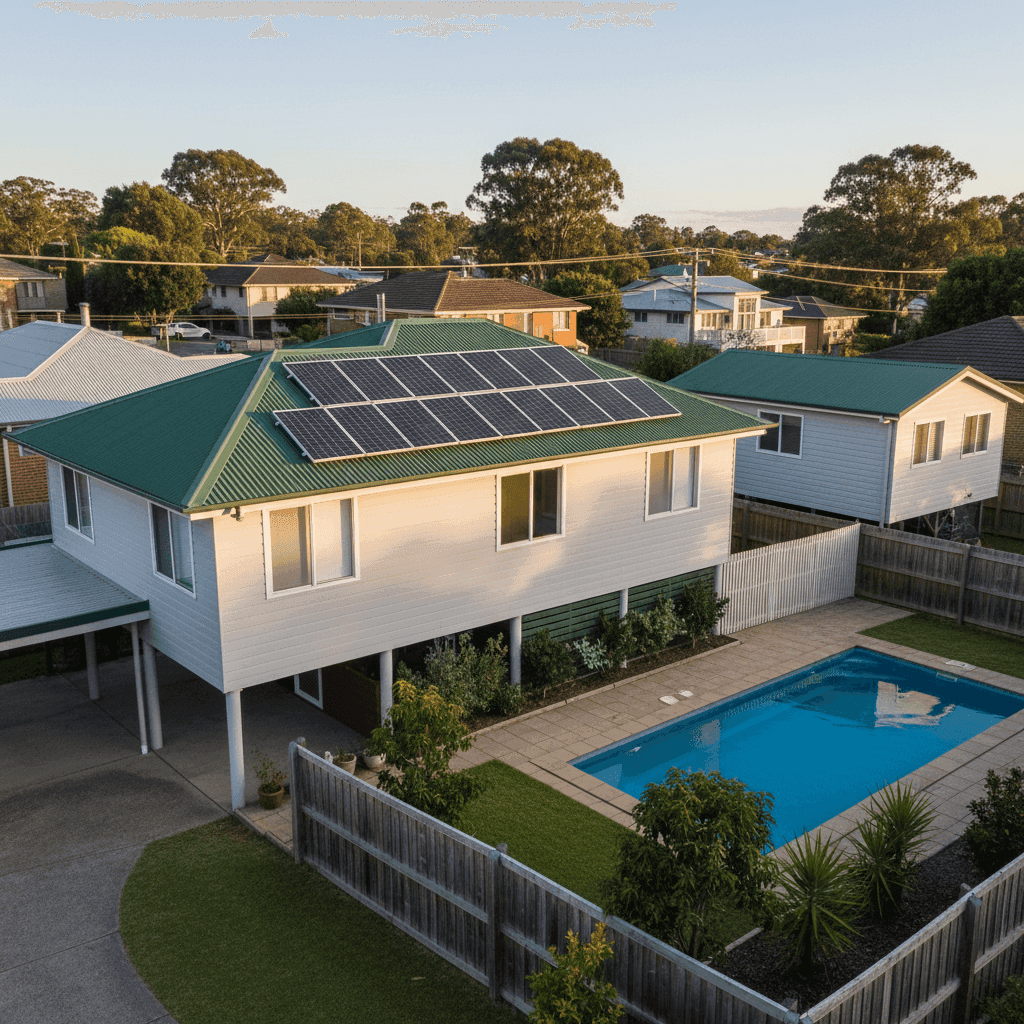
Waratah West is a quiet, established suburb sitting just west of Newcastle's city centre in New South Wales. With a mix of older character homes and a strong sense of community, it's a popular choice for families and first-home buyers alike. If you own a free standing home here — particularly one built in the mid-20th century — understanding what you should be paying for home and contents insurance is an important step in protecting one of your biggest assets.
This article breaks down a real insurance quote for a 2-bedroom, 1-bathroom free standing home in Waratah West (postcode 2298), compares it against local, state, and national benchmarks, and offers practical tips to help you get the best value cover.
---
Is This Quote Fair?
The annual premium for this property came in at $1,898 per year (or $189/month), covering both building (sum insured: $464,000) and contents ($50,000). Our pricing engine has rated this quote as FAIR — Around Average.
That rating holds up when you look at the numbers closely. The suburb average premium for Waratah West sits at $1,837 per year, meaning this quote is only about $61 above the local average — a negligible difference of roughly 3.3%. It's well within the normal range of variation you'd expect between insurers for a property of this type.
It's worth noting that the suburb median premium is $1,295/yr, which is noticeably lower than this quote. However, medians can be skewed by simpler policies, lower sums insured, or properties without additional features like pools, solar panels, or granny flats — all of which apply here. A quote at this level, given the property's characteristics, is entirely reasonable.
The building excess of $3,000 is on the higher side, which typically helps bring the annual premium down. The contents excess of $1,000 is fairly standard. If you'd prefer a lower excess, expect your premium to rise accordingly.
---
How Waratah West Compares
Putting this quote in a broader context makes for interesting reading.
| Benchmark | Premium |
|---|---|
| This Quote | $1,898/yr |
| Waratah West Suburb Average | $1,837/yr |
| Waratah West Suburb Median | $1,295/yr |
| Newcastle LGA Average | $3,835/yr |
| NSW State Average | $9,528/yr |
| NSW State Median | $3,770/yr |
| National Average | $5,347/yr |
| National Median | $2,764/yr |
(Based on 40 quotes sampled for the Waratah West area)
The contrast with state-wide figures is striking. At $9,528/yr, the NSW average is dramatically higher than what Waratah West homeowners typically pay — largely because that state figure is pulled upward by high-risk coastal and flood-prone areas across regional NSW. Similarly, the national average of $5,347/yr reflects the enormous variation in risk profiles across Australia, from cyclone-prone Queensland to bushfire-affected regions in Victoria and South Australia.
By those measures, Waratah West is genuinely affordable territory for home insurance. Even the Newcastle LGA average of $3,835/yr is roughly double what this quote costs, suggesting that properties within Waratah West itself carry a relatively lower risk profile compared to other parts of the greater Newcastle region.
The 25th–75th percentile range for the suburb runs from $1,078 to $2,458 per year, and this quote sits comfortably within that band — another signal that the pricing is reasonable and not an outlier.
---
Property Features That Affect Your Premium
Several characteristics of this property have a meaningful influence on what insurers charge. Here's how they play out:
Construction era (1964) Homes built in the 1960s carry a degree of age-related risk. Older electrical wiring, plumbing, and structural components may not meet modern building codes, which can increase the likelihood of certain claims. That said, many homes of this era have been well-maintained or partially renovated, so the impact varies.
Hardiplank/Hardiflex external walls Fibre cement cladding like Hardiplank is generally viewed favourably by insurers. It's fire-resistant, durable, and less susceptible to rot or termite damage than traditional timber weatherboard. This is a genuine plus for your premium.
Steel/Colorbond roof Colorbond roofing is one of the most insurer-friendly roof types available in Australia. It performs well in high winds, resists corrosion, and has a long lifespan — all factors that reduce the risk of weather-related claims.
Stump foundation Homes on stumps (also known as pier or post foundations) can be more susceptible to movement over time, particularly in areas with reactive soils or moisture variation. Insurers factor this in, especially for older homes where the stumps themselves may be original.
Timber/laminate flooring Timber floors add to the character and value of the home but can be costly to repair or replace following water damage. This is something to keep in mind when assessing your contents and building sum insured.
Swimming pool A pool increases liability risk and adds to the replacement cost of the property, both of which push premiums upward. Ensuring your pool fencing and safety compliance is up to date can help manage this risk.
Solar panels Solar systems are now a standard feature on many Australian homes, but they do add to the sum insured and can be damaged by hail or storms. Confirm with your insurer that your panels are explicitly covered under your building policy.
Granny flat An on-site granny flat adds significant value to the property and must be accounted for in your building sum insured. Underinsuring a property with a secondary dwelling is a common and costly mistake.
---
Tips for Homeowners in Waratah West
1. Review your sum insured regularly With a building sum insured of $464,000 and a granny flat on the property, it's essential to ensure this figure reflects the true cost of rebuilding — not the market value. Construction costs have risen sharply in recent years, and being underinsured can leave you significantly out of pocket after a major claim. Consider a professional building valuation every few years.
2. Confirm solar panels and the granny flat are explicitly covered Not all policies automatically extend to detached or semi-detached structures and solar systems. Read your Product Disclosure Statement (PDS) carefully and ask your insurer directly whether both are included in your building cover.
3. Keep up with pool safety compliance NSW has strict regulations around pool fencing and registration. Beyond the legal obligations, maintaining your pool area to a high standard reduces liability exposure. Some insurers may ask about pool safety compliance when assessing risk.
4. Compare quotes before renewal This quote has been rated Fair — Around Average, which is a solid result. But "fair" doesn't mean you can't do better. Insurers reprice policies regularly, and loyalty doesn't always pay. Running a fresh comparison at renewal time is one of the simplest ways to avoid overpaying.
---
Ready to Compare?
Whether you're reviewing an existing policy or shopping for cover for the first time, CoverClub makes it easy to see what other insurers would charge for your home. Get a personalised quote in minutes and find out if you could be paying less — without sacrificing the cover you need.
You can also explore detailed insurance pricing data for Waratah West, across NSW, and nationally to benchmark your own policy.