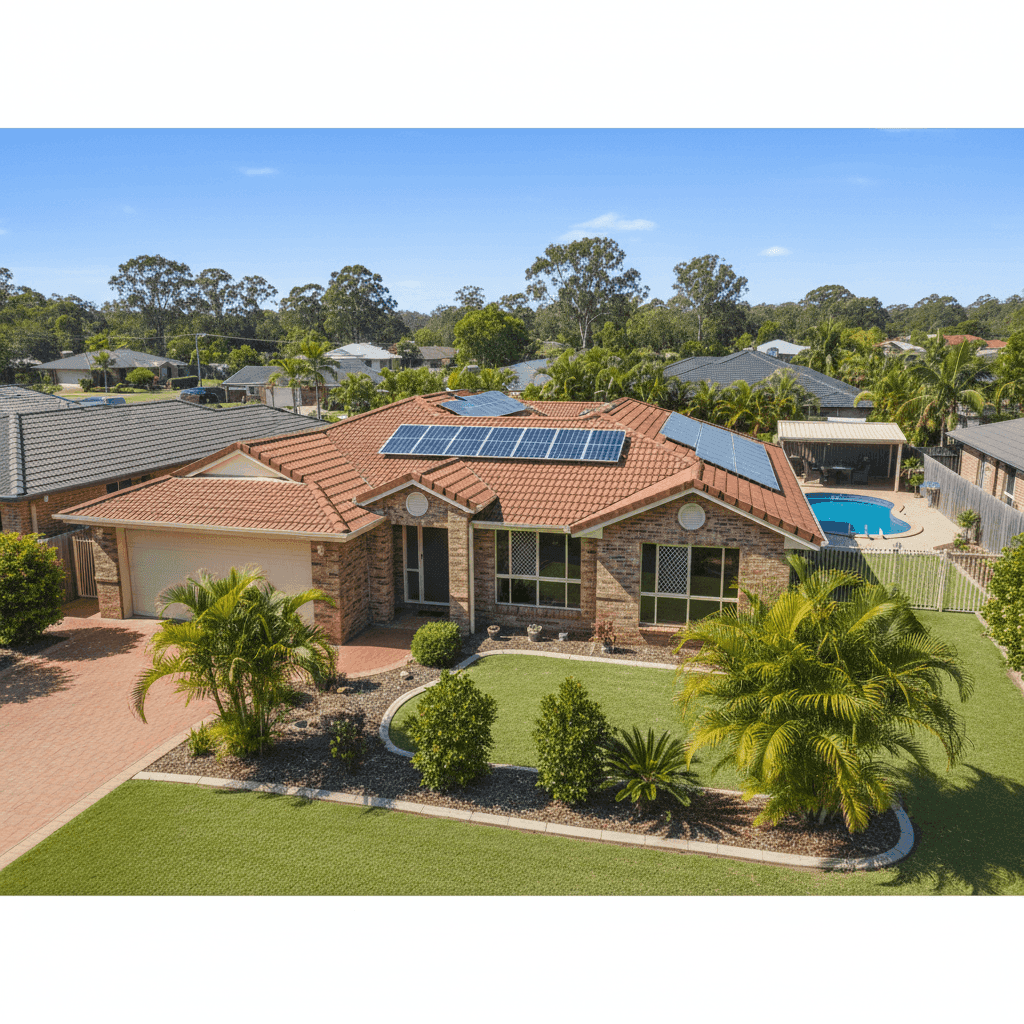
Warner is a well-established residential suburb in the Moreton Bay region of South East Queensland, known for its family-friendly streets, modern homes, and easy access to amenities. If you own a free standing home here — particularly a larger four-bedroom property built in the early 2000s — understanding what you should be paying for home and contents insurance is an important part of managing your household finances. This article breaks down a real quote for exactly that kind of property, and puts the numbers into context so you can make an informed decision.
---
Is This Quote Fair?
The quote in question comes to $2,631 per year (or $258 per month) for combined home and contents cover, with a building sum insured of $900,000 and contents valued at $137,000. Both the building and contents excess sit at $2,000.
Our price rating for this quote is FAIR — Around Average.
That assessment is backed by the data. Based on 56 quotes collected for Warner (QLD 4500), the suburb average premium sits at $2,175 per year, with a median of $2,120. This quote lands above the median, which is expected given the higher-than-typical sum insured of $900,000 — a figure that reflects a larger, well-appointed property rather than a modest entry-level home.
To put it in perspective, 25% of Warner homeowners in our dataset are paying less than $1,586 per year, while 25% are paying more than $2,788. At $2,631, this quote sits comfortably within the upper half of the local range — reasonable for a property of this size, age, and feature set, but not the cheapest available.
---
How Warner Compares to the Rest of Queensland and Australia
One of the most striking things about this quote is how favourable it looks when you zoom out beyond the suburb level.
The Queensland state average premium is a staggering $9,129 per year, driven heavily by high-risk cyclone and flood zones in North and Far North Queensland. The state median is more moderate at $3,903, but even so, Warner homeowners are paying well below both figures. This reflects Warner's relatively benign risk profile — it sits outside designated cyclone risk areas, and while parts of South East Queensland are subject to storm and flood events, Warner is not among the most exposed suburbs.
Compared to the national average of $5,347 per year and a national median of $2,764, this quote again holds up well. At $2,631, it comes in just below the national median — a solid result for a large home with a pool, solar panels, and ducted air conditioning.
Within the Moreton Bay Local Government Area, the average premium is $3,435 per year, meaning this Warner quote is tracking approximately $800 below the LGA average — another encouraging sign.
| Benchmark | Premium |
|---|---|
| This Quote | $2,631/yr |
| Warner Suburb Average | $2,175/yr |
| Warner Suburb Median | $2,120/yr |
| Moreton Bay LGA Average | $3,435/yr |
| QLD State Average | $9,129/yr |
| QLD State Median | $3,903/yr |
| National Average | $5,347/yr |
| National Median | $2,764/yr |
---
Property Features That Affect Your Premium
Several characteristics of this property directly influence the cost of cover. Understanding these factors can help you assess whether your quote is appropriate — and identify where there may be room to move.
Construction and Age
Built in 2003, this home falls into a relatively modern bracket. Insurers generally view homes built after the mid-1990s more favourably, as they were constructed under updated building codes that improved structural resilience. The brick veneer external walls and tiled roof are both well-regarded by underwriters — brick veneer offers solid fire resistance, and tiles are considered more durable and weather-resistant than corrugated iron or Colorbond in many scenarios. The concrete slab foundation is standard for the era and region, presenting no unusual risk.
Flooring
Timber and laminate flooring is popular in Queensland homes for good reason, but it does carry a modest premium implication. These materials can be more expensive to repair or replace after water damage compared to ceramic tiles, which may be reflected in the contents and building valuation.
Pool, Solar, and Climate Control
Three features on this property are worth noting from an insurance perspective. The swimming pool adds liability exposure — insurers factor in the risk of accidents on your property. Solar panels increase the replacement value of the home and can be damaged in hail or storm events, which are not uncommon in South East Queensland. Ducted climate control is a significant fixed asset that contributes to the building sum insured. All three features justify a higher sum insured and, consequently, a higher premium than a comparable home without them.
Sum Insured
At $900,000 for the building alone, this is a substantial sum insured — appropriate for a 235 sqm home with quality fixtures, a pool, and solar infrastructure. Underinsurance is a serious risk in Australia, and it is far better to pay a slightly higher premium than to discover a shortfall at claim time.
---
Tips for Homeowners in Warner
1. Review your sum insured annually. Construction costs in South East Queensland have risen sharply in recent years. A sum insured that was adequate two years ago may no longer cover the full cost of rebuilding your home. Use a building cost calculator or speak with a quantity surveyor to make sure your coverage keeps pace with inflation.
2. Check what's covered for your pool and solar panels. Not all policies treat pools and solar systems the same way. Some insurers include them automatically under building cover; others require specific endorsements or exclude certain types of damage. Read your Product Disclosure Statement carefully and ask your insurer directly if you're unsure.
3. Don't forget storm and water damage provisions. While Warner is not in a cyclone risk zone, South East Queensland experiences intense summer storms, hail events, and localised flooding. Make sure your policy covers storm surge, rainwater ingress, and accidental water damage — and understand any sub-limits that may apply.
4. Consider your excess strategically. This quote carries a $2,000 excess for both building and contents. A higher excess generally reduces your premium, but it also means a larger out-of-pocket cost when you claim. If you have the financial buffer to absorb a higher excess, it can be a smart way to bring your annual premium down — particularly if you're unlikely to make small claims.
---
Compare Your Options with CoverClub
Whether you're reviewing an existing policy or shopping for cover on a new property, it pays to compare. CoverClub makes it easy to see how your quote stacks up against real data from your suburb, your region, and across Australia. Get a quote today and find out if you're getting a fair deal — or if there's a better option waiting for you.