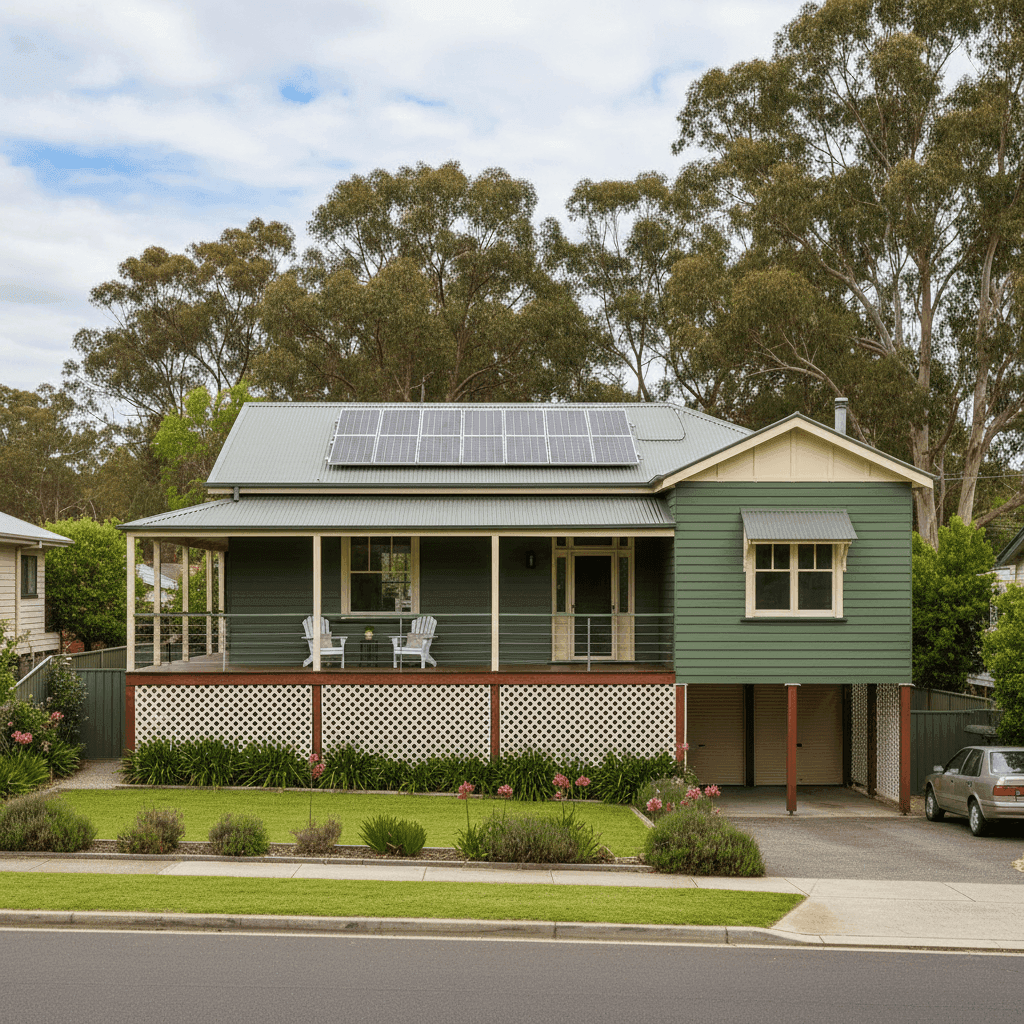
If you own a free standing home in Warners Bay, NSW 2282, you've probably wondered whether you're paying a fair price for your home insurance — or whether there's a better deal out there. Warners Bay is a leafy lakeside suburb on the shores of Lake Macquarie, popular for its relaxed lifestyle and established housing stock. But like anywhere in Australia, the cost of insuring your home here can vary dramatically depending on the property's characteristics, the level of cover you choose, and which insurer you go with.
This article breaks down a real home and contents insurance quote for a 4-bedroom free standing home in Warners Bay, compares it against suburb, state, and national benchmarks, and gives you practical tips to make sure you're not overpaying.
---
Is This Quote Fair?
The quote in question comes in at $3,479 per year (or $333/month) for combined home and contents cover, with a building sum insured of $510,000 and contents cover of $210,000. Both the building and contents excess are set at $1,000.
Our price rating for this quote is FAIR — Around Average, and the data backs that up. Based on 62 quotes collected for Warners Bay (postcode 2282), the suburb median premium sits at $3,696/year — meaning this quote is actually slightly below the midpoint for the area. It also falls comfortably within the interquartile range: the 25th percentile is $2,738/year and the 75th percentile is $5,589/year.
In other words, roughly half of all home insurance quotes in Warners Bay fall between $2,738 and $5,589 per year. At $3,479, this quote sits in the lower half of that range — not the cheapest available, but certainly not excessive either.
It's worth noting that the suburb average premium is a striking $26,062/year — far above the median. This kind of gap between average and median is typically caused by a small number of very high-risk or high-value properties pulling the average upward. The median is generally a more reliable benchmark for a typical home in the area, and by that measure, this quote is competitive.
---
How Warners Bay Compares
To put this quote in broader context, here's how Warners Bay stacks up against NSW state figures and national benchmarks:
| Benchmark | Average Premium | Median Premium |
|---|---|---|
| Warners Bay (2282) | $26,062/yr | $3,696/yr |
| Lake Macquarie LGA | $11,064/yr | — |
| NSW | $9,528/yr | $3,770/yr |
| National | $5,347/yr | $2,764/yr |
A few things stand out here. First, the NSW median ($3,770/yr) and the Warners Bay median ($3,696/yr) are remarkably close — suggesting that, for a typical home, insurance costs in this suburb are broadly in line with the state norm. Second, the national median of $2,764/yr is noticeably lower, which reflects the fact that NSW — particularly areas near water — tends to attract higher premiums than many other parts of the country.
The Lake Macquarie LGA average of $11,064/year is elevated, again likely skewed by high-risk waterfront properties or large-sum-insured homes within the council area. For a standard residential property like this one, the median figures are the more meaningful comparison point.
---
Property Features That Affect Your Premium
Several characteristics of this particular property have a meaningful influence on what insurers charge. Understanding these factors can help you anticipate costs and identify potential savings.
Weatherboard timber construction is one of the most significant premium drivers here. Weatherboard homes are considered higher risk than brick veneer or full brick homes, primarily because timber is more susceptible to fire, pest damage, and general wear. Insurers typically apply a loading to weatherboard properties as a result.
Elevated foundations (stumps) add another layer of complexity. While being elevated by at least 1 metre can actually reduce flood risk in some circumstances — since water may pass beneath the home rather than through it — it can also increase the cost of rebuilding due to the additional structural complexity involved. Insurers factor in both the risk profile and the estimated rebuild cost.
Construction era (1975) is also relevant. Homes built in the mid-1970s may have older electrical wiring, plumbing, and roofing systems that haven't been updated, which can increase the likelihood of certain types of claims. That said, a well-maintained home of this era is perfectly insurable — it may just attract a modest loading compared to newer builds.
On the positive side, the Colorbond steel roof is a durable, low-maintenance option that insurers generally view favourably. It's resistant to fire, rot, and corrosion, and tends to perform well in storms — all of which can help keep premiums in check relative to, say, terracotta tiles or older corrugated iron.
The presence of solar panels is worth flagging. Most home insurance policies do cover rooftop solar panels as part of the building sum insured, but it's important to confirm this with your insurer and ensure the building sum insured is sufficient to cover their replacement value. Similarly, ducted climate control systems should be included in your building or contents sum insured — check your policy wording carefully.
The property is not located in a cyclone risk zone, which is a meaningful cost saving compared to properties in Queensland or northern WA, where cyclone cover can add substantially to premiums.
---
Tips for Homeowners in Warners Bay
1. Review your building sum insured regularly With a 214 sqm weatherboard home on stumps, the cost to rebuild — including demolition, restumping, and reconstruction — can be significant. Building costs have risen sharply across Australia in recent years, so a sum insured that was adequate three years ago may now be insufficient. Use a building cost calculator or speak to a quantity surveyor to make sure $510,000 still reflects your true rebuild cost.
2. Consider increasing your excess to lower your premium Both the building and contents excess on this quote are set at $1,000. If you have the financial capacity to absorb a higher out-of-pocket cost in the event of a claim, increasing your excess to $2,000 or more can meaningfully reduce your annual premium. Just make sure the saving is worth the additional risk exposure.
3. Bundle your home and contents cover This quote already combines home and contents insurance, which is often more cost-effective than holding two separate policies. If you haven't already bundled, it's worth comparing the combined price against standalone options — many insurers offer a discount for packaging the two together.
4. Shop around at renewal time Insurer loyalty rarely pays off. Many Australian insurers quietly increase premiums at renewal without a corresponding change in your risk profile. Making a habit of comparing quotes annually — especially through a platform like CoverClub — ensures you're not paying a "loyalty tax" on your cover.
---
Compare Your Own Quote
Whether you're insuring a weatherboard classic or a modern build, the best way to know if you're getting a fair deal is to compare. At CoverClub, we make it easy to benchmark your premium against real quotes from your suburb, your state, and across Australia.