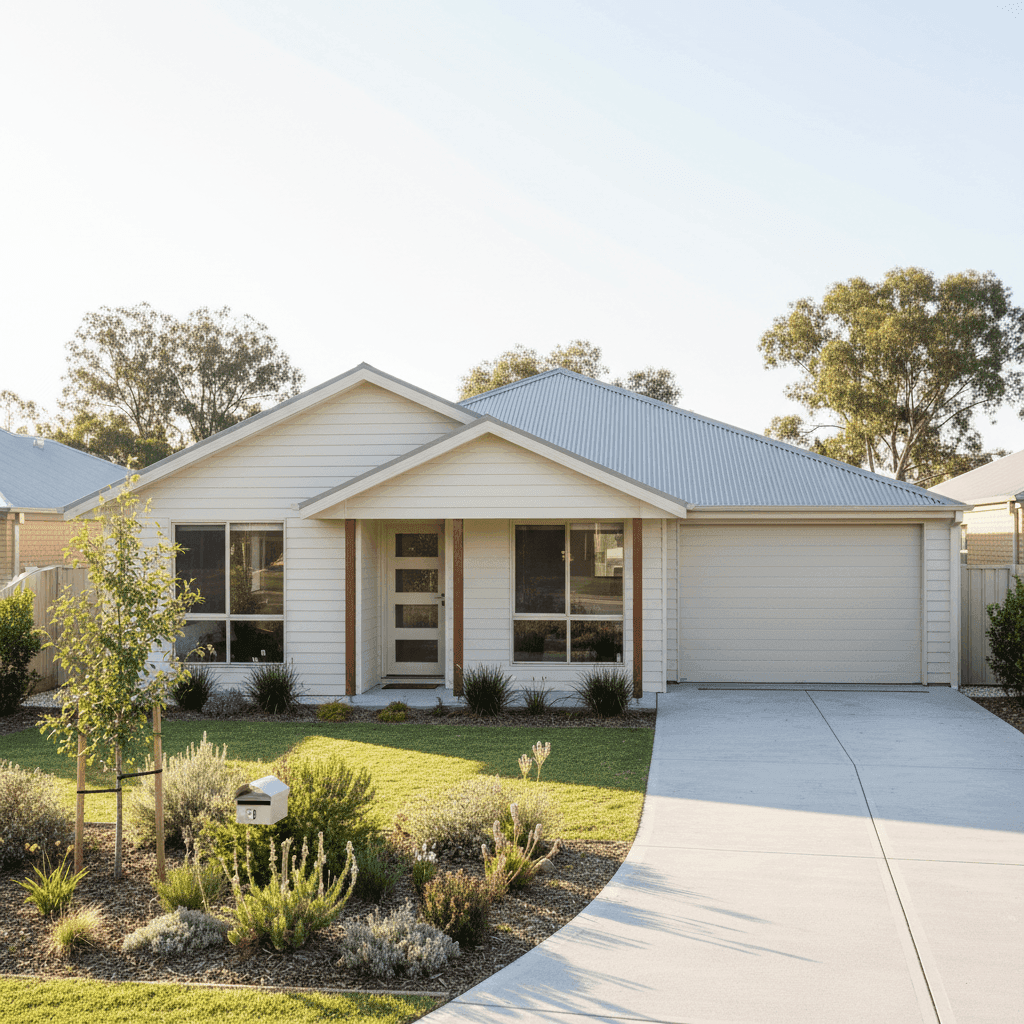
If you own a free standing home in Warnervale, NSW 2259, you've probably wondered whether you're paying a fair price for home insurance — or whether you're leaving money on the table. This article breaks down a real home and contents insurance quote for a three-bedroom, two-bathroom property in the suburb, and puts it in context against local, state, and national benchmarks.
---
Is This Quote Fair?
The quote in question comes in at $2,721 per year (or $261 per month) for combined home and contents cover, with a building sum insured of $450,000 and contents valued at $40,000. Both the building and contents excess are set at $2,000.
Our price rating for this quote is CHEAP — below average — and the numbers back that up convincingly.
Compared to the suburb average for Warnervale of $4,405 per year, this quote represents a saving of roughly $1,684 annually. That's not a rounding error — that's real money. Even against the suburb's 25th percentile (the cheapest quarter of quotes in the area) of $3,604 per year, this quote still comes in well below the mark.
Put simply, if you've received a quote in this range for a comparable property in Warnervale, you're in a strong position.
---
How Warnervale Compares
To understand just how well this quote performs, it helps to zoom out and look at the broader picture.
| Benchmark | Annual Premium |
|---|---|
| This quote | $2,721 |
| Warnervale suburb average | $4,405 |
| Warnervale suburb median | $4,883 |
| NSW state average | $9,528 |
| NSW state median | $3,770 |
| National average | $5,347 |
| National median | $2,764 |
| Cessnock LGA average | $2,462 |
A few things stand out here. First, the NSW state average of $9,528 is dramatically higher than what most Warnervale homeowners are paying — this figure is heavily influenced by high-risk and high-value properties across the state, particularly in flood-prone or bushfire-affected regions. The state median of $3,770 is a more representative figure for typical NSW homeowners.
At the national level, the average sits at $5,347 per year, while the national median is $2,764 — very close to this quote. That tells us this premium is roughly in line with what the typical Australian homeowner pays, but significantly cheaper than the Warnervale suburb average.
It's also worth noting that the Cessnock LGA average of $2,462 per year is actually slightly below this quote, suggesting that properties in the broader local government area tend to attract relatively competitive premiums overall. Warnervale sits within the Central Coast Council area, but its proximity to the Cessnock LGA corridor likely contributes to its more moderate risk profile compared to other parts of NSW.
---
Property Features That Affect Your Premium
Several characteristics of this property are worth examining, as they directly influence the cost of cover.
Hardiplank/Hardiflex external walls are a fibre cement cladding product that insurers generally view favourably. It's durable, low-maintenance, and performs well in both fire and moisture resistance — all factors that can help keep premiums competitive compared to older weatherboard or solid brick constructions.
Steel/Colorbond roofing is another tick in the box. Colorbond is widely used across Australian suburbs and is well-regarded by insurers for its resilience against wind, hail, and fire. It's a far lower-risk profile than terracotta tiles (which can crack and leak) or older corrugated iron.
The property is built on stumps (stump foundations), which is a common construction method for homes of this era in coastal NSW. Stump foundations can be a minor risk factor due to the potential for subfloor moisture issues or pest damage over time, but for a well-maintained home, this typically has a limited impact on premiums.
Timber and laminate flooring is noted as a feature, which is fairly standard and doesn't significantly alter the risk profile. However, it's worth ensuring your contents cover adequately accounts for floor coverings if they're not included under the building policy.
The home was built in 1989, placing it in a generation of construction that's generally well-understood by insurers — past the era of some older materials concerns, but old enough that wear and maintenance history matters. Regular upkeep can help avoid claim complications down the track.
Finally, the presence of ducted climate control is worth noting. This system adds value to the property and should be reflected in your building sum insured to avoid being underinsured.
---
Tips for Homeowners in Warnervale
1. Review your building sum insured regularly At $450,000, the building cover here needs to reflect the full cost of rebuilding — not the market value of the property. With construction costs rising across NSW, it's worth getting a building replacement cost estimate every year or two to make sure you're not underinsured. The Cordell Sum Sure Calculator is a useful free tool for this.
2. Don't overlook your contents value A contents sum insured of $40,000 is on the modest side for a three-bedroom home. Take the time to do a room-by-room audit — furniture, appliances, clothing, electronics, and white goods can add up quickly. Underinsuring your contents means you may not be fully covered in the event of a total loss.
3. Consider your excess carefully Both the building and contents excess are set at $2,000. A higher excess typically reduces your annual premium, but make sure it's an amount you could comfortably pay out of pocket at short notice. If $2,000 would be a financial stretch, it may be worth adjusting your excess and accepting a slightly higher premium.
4. Compare quotes at renewal time Even if your current premium is competitive, the insurance market shifts constantly. Insurers reprice risk regularly, and the best deal today may not be the best deal in 12 months. Using a comparison platform like CoverClub at renewal time takes only a few minutes and can surface meaningfully cheaper options.
---
Ready to Find a Better Deal?
Whether you're a first-time buyer or a long-time Warnervale homeowner, it pays to know what the market looks like before you commit to a policy. CoverClub makes it easy to compare home and contents quotes side by side — so you can see exactly where your premium sits relative to your neighbours.
Get a home insurance quote for your Warnervale property →
You can also explore detailed premium data for your postcode at our Warnervale suburb stats page, or browse NSW state-wide insurance trends for broader context.