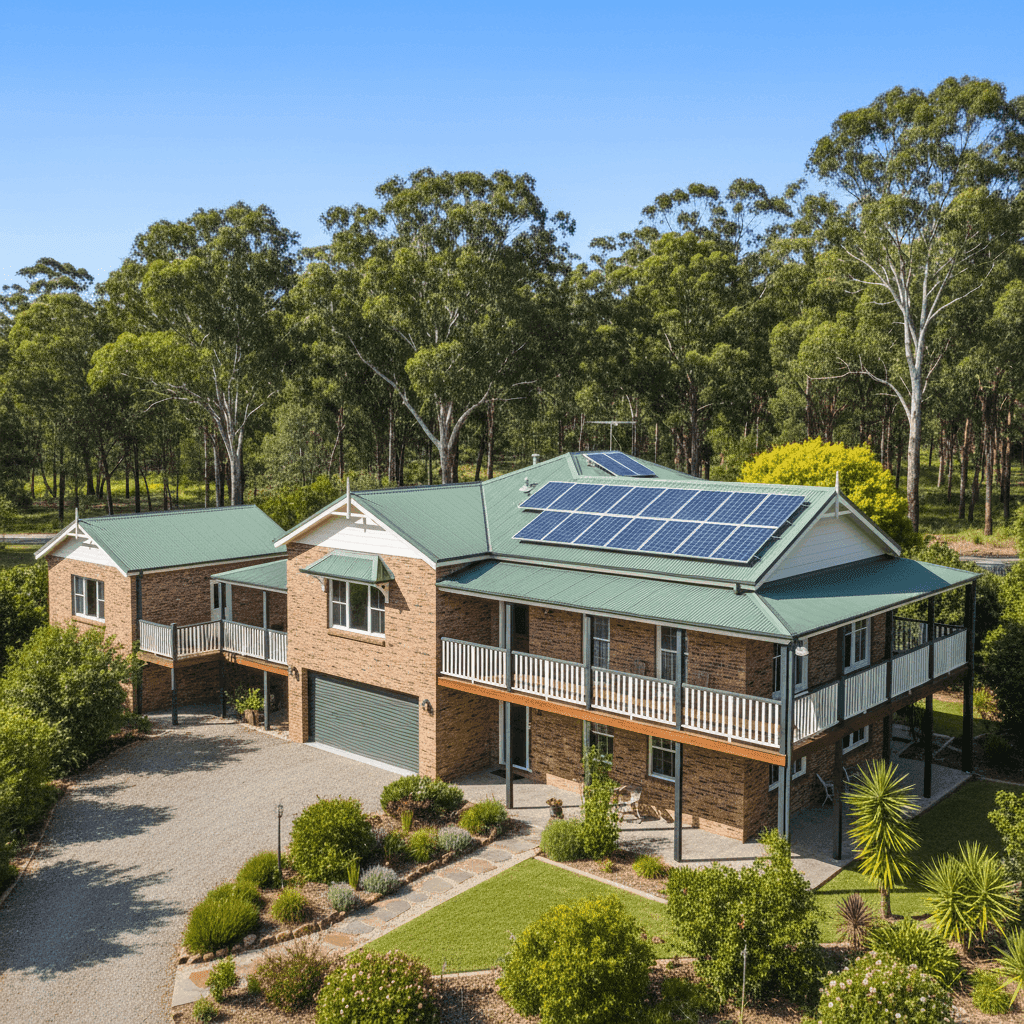
Warragul is a thriving regional hub in Victoria's Baw Baw Shire, sitting roughly 100 kilometres east of Melbourne in the lush West Gippsland corridor. It's an increasingly popular destination for families and tree-changers seeking more space without sacrificing connectivity — and with that growth comes a growing need to understand what home insurance really costs in the area. This article takes a close look at a real home and contents insurance quote for a four-bedroom, two-bathroom free standing home in Warragul, unpacking whether the price stacks up and what's driving it.
---
Is This Quote Fair?
The annual premium on this quote comes in at $3,413 per year (or $327 per month), covering a building sum insured of $851,000 and contents valued at $80,000. The building excess is $2,000 and the contents excess sits at $1,000.
Our pricing analysis rates this quote as Expensive — Above Average for the Warragul area.
To put that in perspective, the suburb average premium across 63 quotes collected for Warragul (3820) is $1,957 per year, with a median of $1,725. This quote sits well above the 75th percentile for the suburb, which is $2,387 — meaning it's more expensive than at least three-quarters of comparable quotes in the area.
That said, context matters. A higher-than-average premium doesn't automatically mean you're being overcharged. Several property-specific factors — which we'll explore below — can legitimately push a premium upward. The key is understanding why the number is what it is, so you can make an informed decision about whether to accept it or shop around.
---
How Warragul Compares
Zooming out beyond the suburb level paints an interesting picture:
| Benchmark | Average Premium | Median Premium |
|---|---|---|
| Warragul (3820) | $1,957/yr | $1,725/yr |
| Baw Baw LGA | $2,647/yr | — |
| Victoria | $3,000/yr | $2,718/yr |
| National | $5,347/yr | $2,764/yr |
You can explore the full Victoria home insurance statistics and national home insurance data on CoverClub.
A few things stand out here. First, Warragul's suburb-level averages are notably lower than both the Baw Baw LGA average ($2,647) and the Victorian state average ($3,000). This suggests that within the broader region, Warragul properties may generally be considered lower risk — or that the homes being quoted tend to be more modest in size and value.
Second, the quote in question ($3,413) actually falls below the Victorian state average, which is a more relevant yardstick for a property of this size and value than the suburb average alone. When you factor in the $851,000 building sum insured — which is on the higher end for the area — the premium begins to look more justifiable.
At the national level, the average premium of $5,347 reflects the significant weight that high-risk areas (particularly cyclone-prone Queensland and flood-affected regions) add to the broader market. Warragul, by comparison, sits in a relatively benign risk zone.
---
Property Features That Affect Your Premium
Several characteristics of this property are worth examining in the context of insurance pricing:
Age of Construction (1960) Homes built in the 1960s present a mixed picture for insurers. On one hand, older homes may have aging plumbing, wiring, and roofing materials that increase the likelihood of a claim. On the other, a well-maintained brick veneer home from this era can be structurally sound. The 1960 construction year is likely contributing to a modest risk loading on this premium.
Brick Veneer Walls with Colorbond Roof Brick veneer is a popular and generally well-regarded construction type in Victoria. It offers solid fire resistance and durability. The steel Colorbond roof is a modern, low-maintenance choice that insurers typically view favourably — it's resistant to corrosion and performs well in high-wind events. This combination is unlikely to be pushing the premium up significantly.
Stumps Foundation The home sits on stumps, which is common for older Victorian properties. Stump foundations can be a consideration for insurers, particularly around subsidence or movement risk. Depending on the condition of the stumps (timber vs. concrete), this may attract some additional loading.
Elevated by at Least 1 Metre The elevated nature of the property is a double-edged sword. On the positive side, elevation can reduce flood risk — water is less likely to enter the living areas during heavy rainfall events. However, elevated homes can also be more exposed to wind and may carry higher rebuilding costs due to the additional structural complexity.
Solar Panels With solar panels installed, the insurer needs to account for the replacement cost of the system in the event of damage. This is typically factored into the building sum insured, and may contribute a small uplift to the overall premium.
Ducted Climate Control Ducted heating and cooling systems are a significant fixed asset and can be costly to repair or replace. Their inclusion in the building sum insured is appropriate and will have a minor effect on the overall premium.
Granny Flat The presence of a granny flat is a meaningful factor. It effectively increases the total insurable area and rebuilding cost of the property, which is likely one of the stronger contributors to the higher-than-suburb-average premium. A separate dwelling on the same property adds complexity and cost to any rebuild scenario.
Building Size: 214 sqm At 214 square metres (not including the granny flat), this is a reasonably sized home. Combined with the granny flat, the total insurable footprint is substantial, which helps explain the $851,000 building sum insured.
---
Tips for Homeowners in Warragul
1. Review your building sum insured carefully The $851,000 building sum insured is the single biggest lever on your premium. Make sure it reflects the actual cost to rebuild — not the market value of the property. Use a quantity surveyor or your insurer's calculator to validate this figure. Over-insuring is a common and costly mistake.
2. Ask about granny flat coverage specifics Not all policies treat ancillary structures the same way. Confirm that your granny flat is explicitly covered under the policy and understand whether it's included in the main building sum insured or requires a separate listing. Gaps in coverage here can be expensive.
3. Shop around — especially above the 75th percentile When a quote lands above the 75th percentile for your suburb, it's a strong signal to compare. Use CoverClub to get competing quotes for your property. Premiums for the same home can vary by hundreds — sometimes thousands — of dollars between insurers.
4. Consider your excess settings The building excess on this policy is $2,000. Opting for a higher voluntary excess can meaningfully reduce your annual premium. If you have the financial buffer to absorb a larger out-of-pocket cost in a claim, this is often a smart trade-off — particularly for lower-probability events like storm or fire damage.
---
Compare Your Options with CoverClub
Whether you're reviewing an existing policy or shopping for the first time, understanding where your premium sits relative to the market is the first step to making a smarter decision. CoverClub makes it easy to compare home and contents insurance quotes across Australia, with transparent pricing data for suburbs like Warragul and beyond.
Get a quote today at CoverClub and see how much you could save on your home insurance.