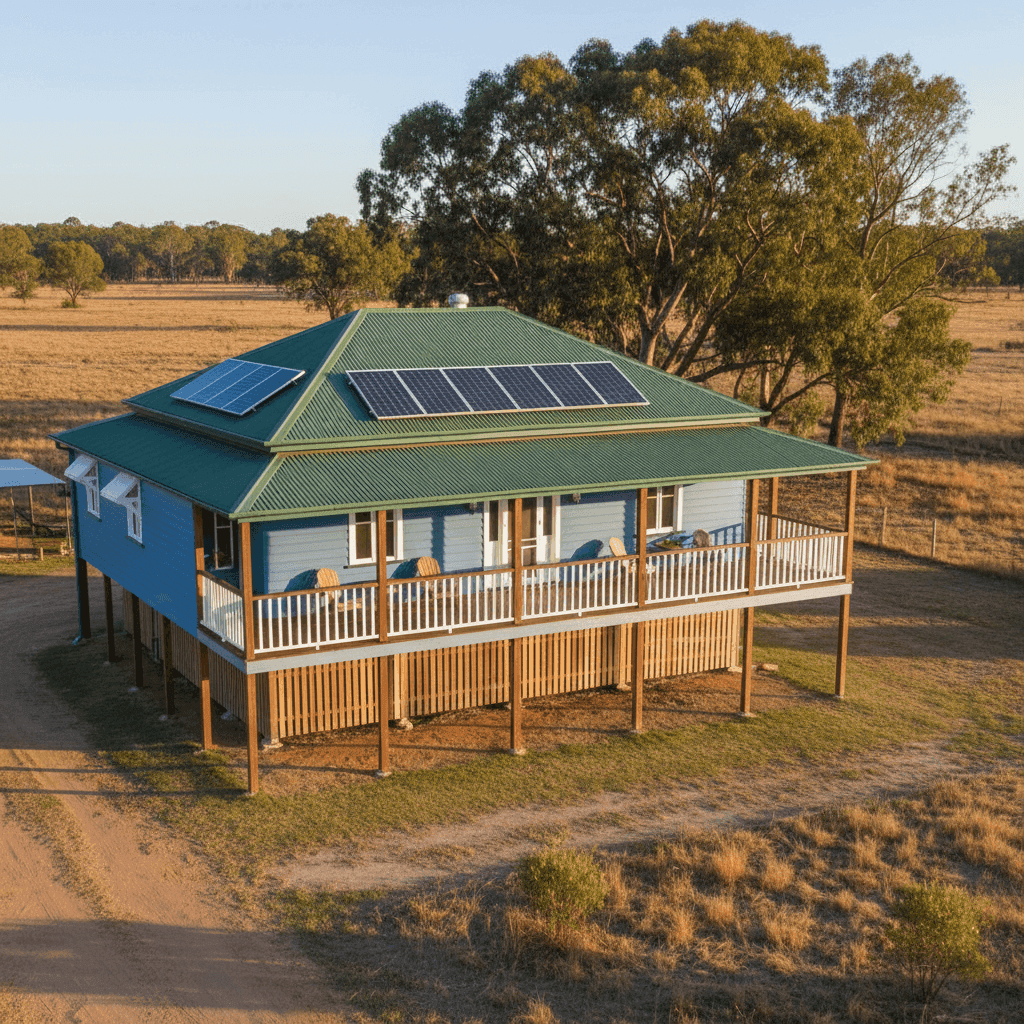
If you own a free standing home in Warroo, QLD 4387, you're likely no stranger to the unique challenges that come with insuring rural Queensland property. From ageing timber construction to the wide-open spaces of the Goondiwindi region, there's plenty that insurers weigh up before settling on a premium. This article breaks down a real home and contents insurance quote for a four-bedroom, two-bathroom weatherboard home in Warroo — and explains what's driving the numbers.
---
Is This Quote Fair?
The short answer: yes, and then some. This quote comes in at $4,663 per year (or $447 per month), and it has been rated Cheap — below average for the area. That's a meaningful distinction in a state where home insurance costs are among the highest in the country.
To put it in perspective, the Queensland state average premium sits at $9,129 per year, meaning this homeowner is paying roughly half what the typical Queenslander forks out annually. Even against the state median of $3,903, this quote is only modestly higher — and given the $970,000 building sum insured and $76,000 in contents cover, that's a solid outcome.
Nationally, the picture is similarly encouraging. The Australian average home insurance premium is $5,347/yr, with a national median of $2,764. This quote sits between those two figures, which is entirely reasonable for the level of cover in place.
In short, this is a competitive premium for a well-covered property, and homeowners in a similar position should feel confident they're not being overcharged.
---
How Warroo Compares
Suburb-level comparison data isn't available for Warroo at this stage, but the broader regional and state figures still tell an interesting story. You can explore available local insurance statistics for Warroo and the surrounding area here.
Here's how this quote stacks up across the key benchmarks:
| Benchmark | Annual Premium |
|---|---|
| This Quote | $4,663 |
| LGA (Goondiwindi) Average | $6,634 |
| QLD State Average | $9,129 |
| QLD State Median | $3,903 |
| National Average | $5,347 |
| National Median | $2,764 |
The Goondiwindi LGA average of $6,634 is particularly telling — this quote comes in nearly $2,000 below what the typical homeowner in the same local government area is paying. That's a significant saving, especially when you factor in that this policy covers both building and contents.
Queensland's elevated state average is largely driven by cyclone-prone coastal and far-north regions, where premiums can be eye-watering. Inland areas like Warroo benefit from being outside the cyclone risk zone, which helps keep costs more manageable.
---
Property Features That Affect Your Premium
Several characteristics of this property have a direct bearing on what insurers charge. Here's what matters most:
Weatherboard Timber Construction
Weatherboard wood external walls are common in older Queensland homes, but they do attract attention from underwriters. Timber is more susceptible to fire, termite damage, and general wear than brick or rendered masonry — factors that can push premiums higher. That said, well-maintained weatherboard homes are entirely insurable, and many insurers price them fairly.
Age of the Property
Built in 1955, this home is now over 70 years old. Older properties often carry higher rebuild costs due to non-standard materials, the need for heritage-sympathetic repairs, and the likelihood of outdated plumbing or electrical systems. The $970,000 building sum insured reflects this reality — it's important that older homes aren't underinsured.
Elevated Foundations (Stumps)
The home sits on stumps and is elevated by at least one metre — a hallmark of classic Queensland architecture. This "Queenslander" style actually offers some flood resilience, allowing water to pass beneath the structure rather than through it. Insurers may view this positively in flood-prone regions, though it also introduces risks like subfloor damage and structural movement over time.
Steel/Colorbond Roof
A Colorbond steel roof is generally viewed favourably by insurers. It's durable, low-maintenance, fire-resistant, and performs well in hail events compared to terracotta or concrete tiles. This is one feature that likely helps keep the premium competitive.
Solar Panels
The presence of solar panels adds replacement value to the building sum insured. Panels can be damaged by hail, storms, or falling debris, and quality home insurance should cover them as a fixed fixture of the home. It's worth confirming with your insurer that solar panels are explicitly covered under your policy.
Ducted Climate Control
Ducted air conditioning is another fixed asset that contributes to the building's replacement value. In a four-bedroom home, a full ducted system can cost tens of thousands of dollars to replace — so ensuring it's captured in your sum insured is important.
No Pool, No Cyclone Risk
The absence of a swimming pool removes a common source of liability and maintenance-related claims. And being outside a cyclone risk zone is a significant premium advantage for Queensland homeowners — cyclone cover is one of the biggest cost drivers in the state's northern and coastal regions.
---
Tips for Homeowners in Warroo
1. Review your sum insured regularly With a building sum insured of $970,000, this policy accounts for the cost of a full rebuild — not the market value of the land. Construction costs have risen sharply in recent years, so it's worth reassessing your sum insured annually to avoid being caught underinsured after a major event.
2. Confirm solar panel and ducted system coverage Not all policies automatically extend full cover to solar panels and ducted climate control systems. Read your Product Disclosure Statement (PDS) carefully, or ask your insurer directly, to confirm these assets are covered for their full replacement value.
3. Maintain your weatherboard exterior Timber homes require regular upkeep — painting, sealing, and checking for termite activity. Some insurers can reduce or void claims if damage is attributed to poor maintenance rather than a defined insured event. Keeping records of maintenance work is a smart habit.
4. Compare quotes at renewal time Even if your current premium is competitive, the insurance market shifts year to year. Loyalty doesn't always pay — insurers sometimes offer their best rates to new customers. Running a comparison at renewal is one of the easiest ways to ensure you're still getting value.
---
Find a Better Deal with CoverClub
Whether you're renewing soon or just curious about what else is out there, CoverClub makes it easy to compare home and contents insurance quotes across multiple providers. With a property like this one in Warroo — older construction, elevated, with solar — getting the right cover at the right price takes a little know-how. Let us do the heavy lifting. Get a home insurance quote today and see how your current premium stacks up.