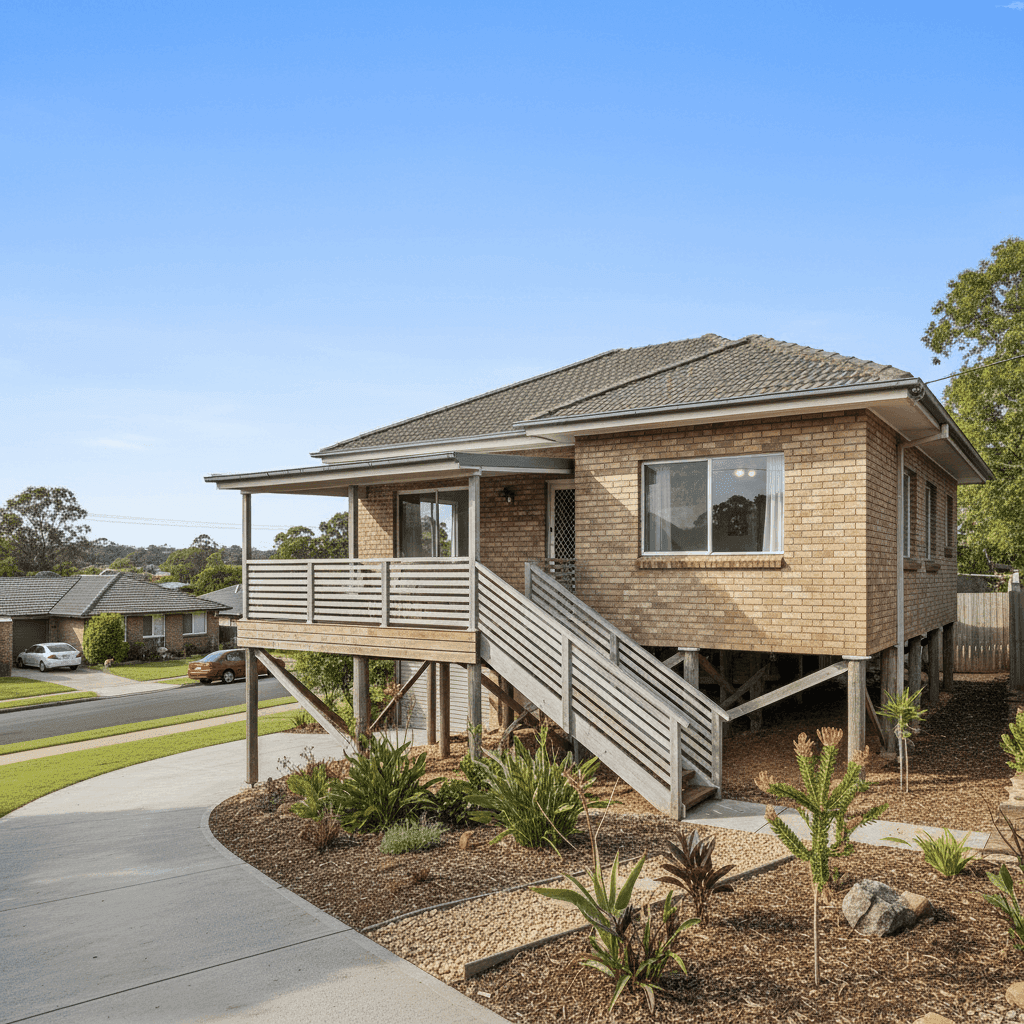
If you own a free standing home in Watanobbi, NSW 2259, you may be wondering whether your home insurance premium is reasonable — or whether you're paying more than you should. Watanobbi is a quiet residential suburb on the Central Coast of New South Wales, and like many areas across the state, home insurance costs here can vary quite significantly depending on your property's characteristics, the level of cover you choose, and the insurer you're with. In this article, we analyse a recent home and contents insurance quote for a 3-bedroom brick veneer home in the suburb, and put it in context against local, state, and national benchmarks.
---
Is This Quote Fair?
The quote in question comes to $3,308 per year (or about $317 per month) for a combined home and contents policy. This covers a building sum insured of $450,000 and a contents value of $10,000, with a $500 excess on both building and contents claims.
Based on our pricing data, this quote is rated Expensive — above average for the Watanobbi area.
To put that in perspective: the suburb average premium sits at $1,893/yr, and the median is just $1,263/yr. That means this quote is roughly 75% above the suburb average and more than 2.6 times the local median. Even compared to the 75th percentile of quotes in the area ($2,374/yr), this premium still comes in notably higher.
That said, it's worth understanding why a quote might sit above the local average before concluding it's simply overpriced. The building sum insured of $450,000 is a significant figure for a 105 sqm home, and the property's specific features — including its elevated foundation on stumps and timber/laminate flooring — can all influence how insurers assess risk and replacement cost. We'll explore those factors in more detail below.
---
How Watanobbi Compares
Understanding how Watanobbi fits into the broader insurance landscape helps put this quote in proper context. You can explore the full local data on the Watanobbi suburb insurance stats page.
| Benchmark | Average Premium | Median Premium |
|---|---|---|
| Watanobbi (suburb) | $1,893/yr | $1,263/yr |
| Cessnock LGA | $2,462/yr | — |
| NSW (state) | $9,528/yr | $3,770/yr |
| National | $5,347/yr | $2,764/yr |
A few things stand out here. First, Watanobbi's local premiums are well below both the NSW state average and the national average — which reflects the Central Coast's relatively lower risk profile compared to flood-prone inland areas or high-value coastal pockets. The NSW state insurance stats show an average of $9,528/yr, which is heavily skewed by high-risk and high-value properties across the state. Similarly, the national average of $5,347/yr is pulled upward by cyclone-prone Queensland and bushfire-affected regions.
Against the Cessnock LGA average of $2,462/yr, this quote is still elevated — but the LGA covers a wide range of property types and values, so individual quotes will naturally vary.
The key takeaway: for Watanobbi specifically, this $3,308 quote is on the higher end of what locals are paying, and it's worth shopping around to see if a more competitive rate is available for equivalent cover.
---
Property Features That Affect Your Premium
Several characteristics of this property are likely influencing the premium, both positively and negatively.
Elevated Foundation on Stumps
The home sits elevated by at least 1 metre on stumps — a common foundation style for older homes on the Central Coast. While this can offer some protection against minor surface water flooding, it also introduces structural complexity. Insurers may factor in the cost of repairing or replacing subfloor structures, bearers, and joists when calculating the building sum insured and associated risk.
Brick Veneer Walls and Tiled Roof
Brick veneer construction is generally viewed favourably by insurers — it's durable, fire-resistant, and widely understood in terms of repair costs. Combined with a tiled roof, this property has a fairly standard and low-risk external profile. These features typically help moderate premiums rather than inflate them.
Timber and Laminate Flooring
Timber and laminate flooring can be more expensive to repair or replace than concrete or carpet, particularly in an elevated home where subfloor moisture or movement may cause warping over time. This can nudge building replacement cost estimates upward.
Ducted Climate Control
The presence of ducted climate control adds to the overall building value and replacement cost. This type of system is expensive to install and is factored into how insurers calculate the cost to rebuild the home to its current standard.
Construction Year: 1995
At approximately 30 years old, this home sits in a generation of builds that are generally well-understood by insurers — past the early-build teething issues, but old enough that some systems (roofing, plumbing, electrical) may be approaching the end of their useful life. This can marginally increase risk assessments.
Building Sum Insured: $450,000
For a 105 sqm home, a $450,000 sum insured is at the higher end. While it's always important to insure for the full cost of rebuilding (not market value), it's worth using a building replacement cost calculator to confirm this figure is accurate. Over-insuring can result in unnecessarily high premiums.
---
Tips for Homeowners in Watanobbi
If you're looking to make sure you're getting good value on your home insurance, here are some practical steps to consider:
1. Review Your Building Sum Insured
Make sure your sum insured reflects the actual cost to rebuild your home, not its market value. Use an independent building cost estimator or ask a quantity surveyor for guidance. For a 105 sqm home, $450,000 may be accurate — but confirming this can prevent both under-insurance and unnecessary overpayment.
2. Compare Multiple Quotes
The single most effective way to reduce your premium is to compare quotes from multiple insurers. With a suburb median of just $1,263/yr, there's clearly a wide range of pricing in Watanobbi — and the right insurer for your property profile could offer significantly better value. Get a comparison quote at CoverClub to see what's available.
3. Ask About Discounts for Security and Safety Features
Many insurers offer discounts for homes with deadbolt locks, alarm systems, or smoke detectors. If your home has any of these features, make sure they're noted on your policy application — they can make a meaningful difference to your annual premium.
4. Consider Your Excess Level
The building and contents excess on this policy is set at $500 — a fairly standard level. Opting for a higher voluntary excess (say, $1,000 or $2,000) can reduce your annual premium, provided you're comfortable covering more of any claim out of pocket. This is a useful lever if your priority is lowering ongoing costs.
---
Ready to Compare?
Whether you're reviewing an existing policy or shopping for cover for the first time, it pays to compare. CoverClub makes it easy to see how your quote stacks up against real data from your suburb and across Australia. Start your comparison at CoverClub and find out if there's a better deal waiting for you in Watanobbi.