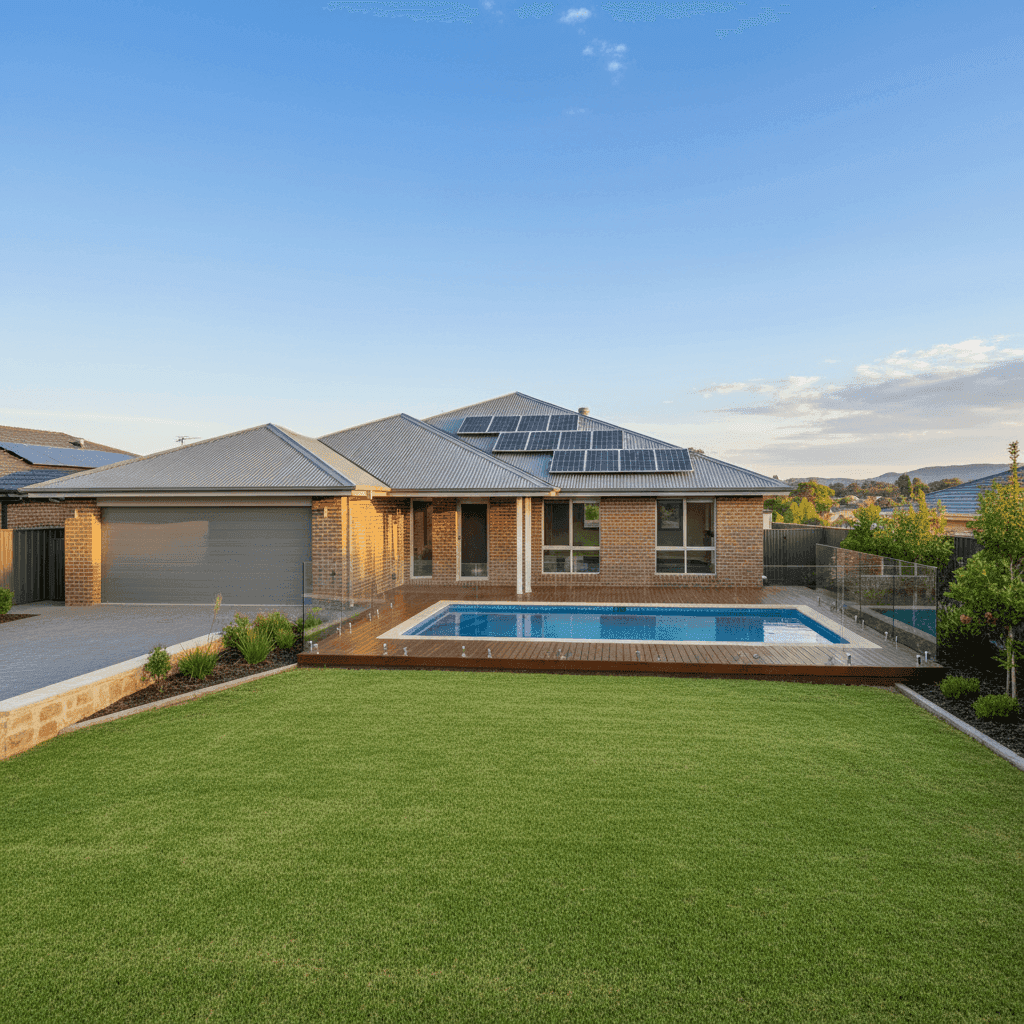
If you own a free standing home in Waterview Heights, NSW 2460, you're likely no stranger to the challenge of finding competitive home insurance. This picturesque locality in the Richmond Valley sits in a region where premiums can vary enormously — and understanding why your quote lands where it does is the first step toward making a smarter financial decision.
This article breaks down a recent Home and Contents insurance quote for a five-bedroom, three-bathroom brick veneer home in Waterview Heights, comparing it against suburb, state, and national benchmarks to help you assess whether you're getting a fair deal.
---
Is This Quote Fair?
The quote in question comes in at $3,305 per year (or $310 per month), covering a building sum insured of $846,000 and contents valued at $30,000. Both the building and contents excess are set at $5,000.
Our price rating for this quote is Expensive — Above Average.
To put that in perspective, the suburb average premium in Waterview Heights sits at just $1,469 per year, with a median of $1,481. This quote is more than twice the local average, which is a significant gap worth examining closely.
That said, context matters. The building sum insured of $846,000 is substantial for the area, and a 334 sqm home with a pool and solar panels carries more risk exposure than a modest three-bedroom property. Higher coverage naturally attracts a higher premium — but even accounting for those factors, this quote warrants scrutiny and comparison shopping.
---
How Waterview Heights Compares
Understanding where your suburb sits relative to broader benchmarks can reveal a lot about local risk factors and insurer pricing strategies.
| Benchmark | Average Premium | Median Premium |
|---|---|---|
| Waterview Heights (suburb) | $1,469/yr | $1,481/yr |
| New South Wales (state) | $9,528/yr | $3,770/yr |
| National | $5,347/yr | $2,764/yr |
| Richmond Valley LGA | $41,437/yr | — |
A few things stand out here. First, the NSW state average of $9,528 per year is dramatically higher than the suburb average — largely because NSW encompasses high-risk coastal, flood-prone, and bushfire-affected areas that push the mean upward. The state median of $3,770 is a more reliable indicator of what a typical NSW homeowner pays.
At the national level, the average of $5,347 and median of $2,764 similarly reflect the influence of cyclone-prone Queensland and flood-affected regions across the country.
What's particularly striking is the Richmond Valley LGA average of $41,437 per year. This figure is heavily skewed by high-risk properties within the LGA — likely those in flood-prone zones along the Clarence River catchment. Waterview Heights itself appears to attract more moderate premiums, suggesting it sits in a comparatively lower-risk pocket of the LGA.
With only 13 quotes in the suburb sample, the local data is somewhat limited, but the consistency between the average and median ($1,469 vs $1,481) suggests a relatively stable pricing environment at the suburb level. The quote analysed here, at $3,305, falls well above the suburb's 75th percentile of $1,684 — meaning it's more expensive than at least three-quarters of comparable quotes in the area.
---
Property Features That Affect Your Premium
Several characteristics of this property directly influence the insurance premium. Here's how each factor plays a role:
Size and bedrooms: At 334 sqm with five bedrooms and three bathrooms, this is a large home by any measure. Larger homes cost more to rebuild, which is reflected in the $846,000 building sum insured — and in turn, the premium.
Construction type: Brick veneer walls are generally viewed favourably by insurers, offering solid fire resistance compared to timber-clad homes. However, brick veneer can be more expensive to repair after structural movement or subsidence events, which may temper any premium benefit.
Steel/Colorbond roof: Colorbond roofing is durable, low-maintenance, and performs well in bushfire-prone environments. Insurers typically regard it positively, and it's a common choice for homes built in regional NSW.
Slab foundation: A concrete slab is a stable foundation type that generally presents lower risk of subsidence compared to older timber stumps or piers. This is a neutral-to-positive factor for insurers.
Swimming pool: Pools introduce additional liability risk — particularly for injury claims — and can increase the contents or liability component of a policy. They also add to the overall replacement value of the property.
Solar panels: Solar panel systems are increasingly common across regional NSW, but they do add to the insured value of the home. Panels can be damaged by hail, storms, or falling debris, and their replacement cost is factored into the building sum insured.
Construction year (1991): A home built in 1991 is now over 30 years old. While it predates some modern building codes, it's not so old as to attract significant age-related loading. However, ageing plumbing, wiring, and roofing components may be a consideration for insurers.
Flooring (carpet): Carpet is more susceptible to water damage than hard flooring, which can marginally influence contents or building claims assessments.
---
Tips for Homeowners in Waterview Heights
If your premium is coming in above the suburb average, there are several practical steps you can take to bring costs down or ensure you're getting the best value.
- Shop around and compare multiple quotes. With only 13 quotes in the suburb sample, there's meaningful variation in what different insurers will charge for the same property. Don't accept the first quote you receive — use a comparison tool like CoverClub to see a range of options side by side.
- Review your building sum insured. At $846,000, the sum insured is the single biggest driver of your premium. It's worth getting an independent building replacement cost estimate to ensure you're not over-insured. While under-insurance is a serious risk, paying to insure well above your actual rebuild cost is an unnecessary expense.
- Consider your excess level. This quote carries a $5,000 excess on both building and contents — which is relatively high. While a higher excess reduces your premium, make sure it's an amount you could genuinely afford to pay in the event of a claim. If $5,000 would be a financial stretch, a lower excess (even if it costs slightly more in premiums) may be the wiser choice.
- Ask about discounts for security and safety features. Homes with monitored alarm systems, deadbolts, and fire safety equipment may qualify for premium discounts with some insurers. It's always worth asking — and documenting — what safety measures are in place at your property.
---
Compare Your Options with CoverClub
Whether this quote feels right or leaves you wondering if you can do better, the smartest move is to compare. At CoverClub, we help Australian homeowners see how their premiums stack up and find cover that suits their property and budget. Get a home insurance quote today and see what's available for your Waterview Heights home — you might be surprised by the difference a little comparison shopping can make.
For more localised data on insurance costs in your area, visit our Waterview Heights insurance stats page or explore NSW-wide premium benchmarks.