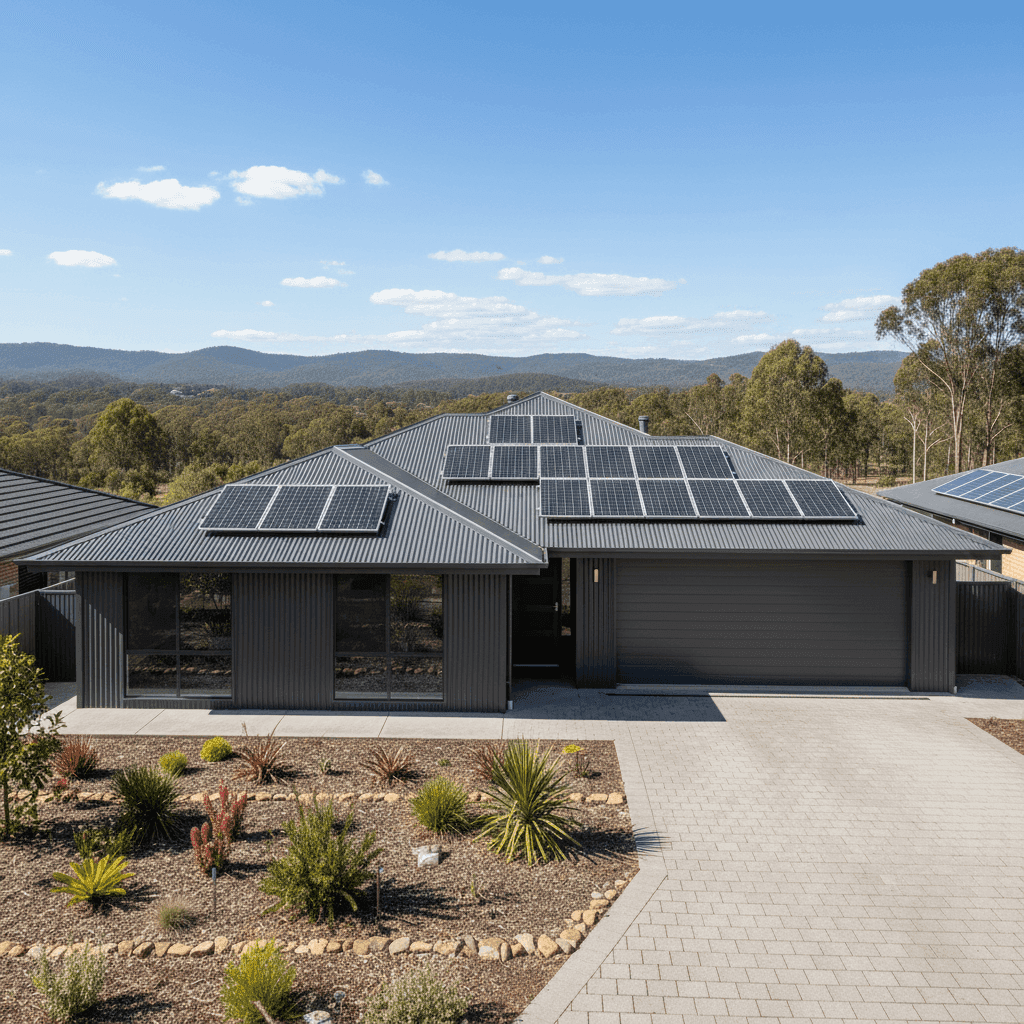
If you own a free standing home in Waterview Heights, NSW 2460, you're probably curious about what your neighbours are paying for home insurance — and whether your own premium is reasonable. This article breaks down a real home and contents insurance quote for a three-bedroom property in the area, compares it against local, state, and national benchmarks, and offers practical tips to help you get better value on your cover.
---
Is This Quote Fair?
The quote in question sits at $4,021 per year (or $378 per month) for combined home and contents cover, with a building sum insured of $360,000 and contents valued at $150,000. Both the building and contents excesses are set at $1,000.
Our rating for this premium is Expensive — above average for the Waterview Heights suburb. To put that in perspective, the suburb average annual premium sits at just $1,469, and the median is $1,481. This quote is nearly 2.7 times the local average, which is a significant gap worth investigating before simply accepting the renewal or proceeding with this insurer.
That said, context matters. The sum insured here is substantial — $360,000 for the building alone is a meaningful coverage level — and contents cover of $150,000 adds further to the risk pool the insurer is pricing. Higher sums insured naturally attract higher premiums, so part of the gap may be explained by the coverage amounts rather than the insurer's base rate alone.
---
How Waterview Heights Compares
To understand whether this quote is out of step with the broader market, it helps to look at the numbers across three levels: suburb, state, and nation.
| Benchmark | Average Premium | Median Premium |
|---|---|---|
| Waterview Heights (suburb) | $1,469/yr | $1,481/yr |
| New South Wales | $9,528/yr | $3,770/yr |
| National | $5,347/yr | $2,764/yr |
A few things stand out here. First, the NSW state average of $9,528 is dramatically higher than the state median of $3,770 — a sign that a relatively small number of very high-risk properties (think flood zones, bushfire-prone areas, or coastal locations) are pulling the average up significantly. The median is usually a more reliable guide for typical households.
Second, the suburb average of $1,469 is well below both the NSW median and the national median. This suggests that Waterview Heights is generally considered a lower-risk suburb by insurers — which makes the $4,021 quote stand out even more.
For broader context on insurance pricing across the postcode, you can explore Waterview Heights suburb insurance stats on CoverClub, or compare against NSW state-wide data and national insurance benchmarks.
It's also worth noting that the Richmond Valley LGA average is a striking $41,437 per year — an extreme figure almost certainly driven by high-risk rural and flood-affected properties within the broader local government area. Waterview Heights, as an individual suburb, tells a very different story.
---
Property Features That Affect Your Premium
Every insurer prices risk differently, but certain property characteristics are known to influence premiums. Here's how the features of this particular home might be factoring into the quote:
- Aluminium external walls: Aluminium cladding is generally viewed favourably by insurers due to its durability and resistance to rot and pests. This shouldn't be inflating the premium.
- Steel/Colorbond roof: Colorbond roofing is among the most insurer-friendly roof types in Australia. It's fire-resistant, long-lasting, and handles weather well — typically a neutral-to-positive factor for pricing.
- Slab foundation: A concrete slab is a stable, low-maintenance foundation type that generally doesn't raise insurer concerns.
- Construction year (2001): A home built in 2001 is relatively modern and would have been constructed under more rigorous building codes than older properties. This is usually a positive factor.
- Solar panels: Solar panels are increasingly common, but they do add to the insured value of the property and can represent a claims risk (hail damage, for example). Some insurers factor this into their pricing.
- Ducted climate control: Ducted air conditioning systems are expensive to repair or replace and can be a source of water damage claims. This may contribute modestly to the premium.
- Elevated by less than 1 metre: A slight elevation can help with drainage and minor flooding, but the impact on premium is typically minimal at this height.
- Carpet flooring and standard fittings: These are standard risk factors with no particular premium loading expected.
- No pool: The absence of a pool removes one liability and maintenance risk from the equation.
Overall, the property's features don't suggest an obvious reason for a premium this far above the suburb average. The most likely driver is the relatively high sum insured — $510,000 in total coverage — combined with the insurer's own pricing model.
---
Tips for Homeowners in Waterview Heights
If you're looking at a quote like this and wondering how to bring costs down, here are four practical steps worth considering:
- Review your sum insured carefully. It's important not to be underinsured, but overinsurance is also costly. Use a building cost calculator to verify whether $360,000 accurately reflects your home's rebuild cost (not its market value). If the figure is higher than needed, adjusting it could reduce your premium.
- Compare multiple insurers. The gap between this quote and the suburb average is large enough that shopping around is strongly advisable. Premiums for the same property can vary by hundreds — sometimes thousands — of dollars between insurers. Get a comparison quote at CoverClub to see what other providers are offering.
- Consider a higher excess. Increasing your excess from $1,000 to $1,500 or $2,000 can meaningfully reduce your annual premium. If you have an emergency fund and rarely make small claims, a higher excess can be a smart trade-off.
- Ask about discounts. Many insurers offer discounts for bundling home and contents (which this policy already does), paying annually rather than monthly, or having security features like deadlocks and alarm systems. It's worth calling your insurer directly to ask what discounts you may be eligible for.
---
Compare Your Options with CoverClub
A premium of $4,021 per year is a significant household expense — and given how far it sits above the Waterview Heights suburb average, it's well worth taking the time to explore your options. CoverClub makes it easy to compare home and contents insurance quotes from multiple providers in one place, so you can see whether a better deal is available for your property.
Start comparing home insurance quotes for your Waterview Heights property today — it takes just a few minutes and could save you hundreds of dollars a year.