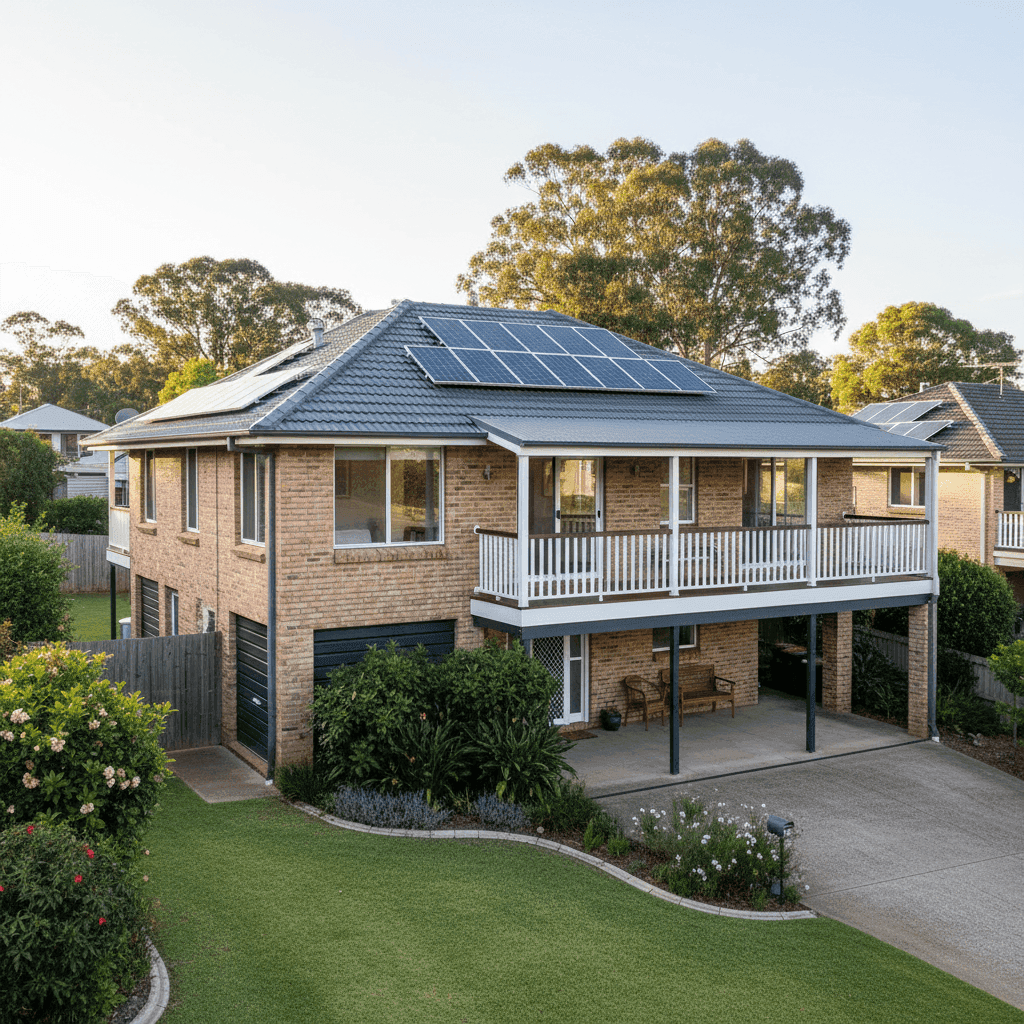
If you own a free standing home in Waterview Heights, NSW 2460, you've probably noticed that home insurance doesn't come cheap. This article takes a close look at a real home and contents insurance quote for a four-bedroom property in the suburb — breaking down what's driving the cost, how it stacks up against local and national benchmarks, and what you can do to make sure you're getting value for money.
---
Is This Quote Fair?
The quote in question sits at $6,472 per year (or $613 per month) for combined home and contents cover, with a building sum insured of $905,000 and contents valued at $170,000. Both the building and contents excess are set at $1,000.
Our price rating for this quote is Expensive — above average. That assessment is based on how the premium compares to other quotes in the suburb, across New South Wales, and nationally. While no two properties are identical, this premium is notably higher than what most Waterview Heights homeowners are paying, and that gap warrants a closer look.
That said, "expensive" doesn't automatically mean "wrong." Several characteristics of this particular property — which we'll cover shortly — legitimately push premiums upward. The key question is whether the coverage on offer justifies the cost.
---
How Waterview Heights Compares
To put the $6,472 annual premium in context, here's how it sits against broader benchmarks:
| Benchmark | Average Premium | Median Premium |
|---|---|---|
| Waterview Heights (suburb) | $1,469/yr | $1,481/yr |
| New South Wales (state) | $9,528/yr | $3,770/yr |
| Australia (national) | $5,347/yr | $2,764/yr |
| Richmond Valley LGA | $41,437/yr | — |
(Suburb data based on 13 quotes. [View full Waterview Heights stats](https://coverclub.com.au/stats/NSW/2460/waterview-heights) | [NSW stats](https://coverclub.com.au/stats/NSW) | [National stats](https://coverclub.com.au/stats/national))
A few things stand out here. The suburb average of $1,469 is dramatically lower than this quote — but it's worth noting that the suburb sample is small (13 quotes), and those quotes may reflect properties with lower sum insured values, simpler construction, or fewer features. The suburb's 75th percentile sits at just $1,684, meaning this quote is well above what even the most expensive local comparisons suggest.
At the same time, the NSW average of $9,528 is higher than this quote, though the NSW median of $3,770 is considerably lower — indicating that a handful of very high-risk or high-value properties are pulling that state average up significantly. Nationally, the median sits at $2,764, which further underscores that this premium is on the higher end of the spectrum.
The Richmond Valley LGA average of $41,437 is extraordinarily high, likely driven by flood-affected properties in the broader council area — a reminder that geography plays a major role in pricing.
---
Property Features That Affect Your Premium
Several characteristics of this property have a direct bearing on what insurers charge. Here's what's at play:
High Sum Insured
At $905,000 for the building alone, this is a high-value home. Rebuild costs in regional NSW can be significant, and top-of-the-range fittings — as noted for this property — push that figure higher. Insurers price accordingly.
Construction Type: Brick Veneer Walls & Concrete Roof
Brick veneer is generally viewed favourably by insurers due to its fire resistance and durability. A concrete tile roof is similarly robust and resistant to fire and storm damage. These features can actually work in the homeowner's favour compared to, say, a weatherboard home with a metal or fibreglass roof.
Pole/Stump Foundation (Elevated by at Least 1 metre)
This is a significant pricing factor. Elevated homes — often referred to as Queenslander-style construction — are more expensive to repair or rebuild due to the complexity of the subfloor structure. Insurers typically apply a loading to elevated homes, particularly those on poles, as repairs to the stumps, flooring, and underfloor areas can be costly.
Top-of-the-Range Fittings
High-end fixtures and finishes — think stone benchtops, premium cabinetry, quality flooring — increase the cost to rebuild or repair, and insurers factor this into their pricing. This is one of the more controllable variables: if your sum insured accurately reflects your fit-out quality, you're appropriately covered, but you're also paying for that level of finish.
Solar Panels
Solar systems add replacement value to the property and can complicate roof repairs. Most insurers include solar panels under building cover, but their presence does contribute to the overall insured value.
Ducted Climate Control
Ducted air conditioning systems are expensive to replace and are typically covered under building insurance. Their inclusion adds to the overall rebuild cost and, by extension, the premium.
No Flood or Cyclone Overlay
Waterview Heights is not classified as a cyclone risk area, which is a positive. However, the broader Richmond Valley region has a well-documented flood history, and proximity to waterways can still influence insurer risk assessments even where a specific property isn't directly flood-prone.
---
Tips for Homeowners in Waterview Heights
1. Review Your Sum Insured Carefully
With a building sum insured of $905,000, it's worth verifying this figure against a current building cost estimate. Overcovering your home means you're paying more in premiums than necessary; undercovering leaves you exposed at claim time. Use a quantity surveyor or an online rebuild calculator to sense-check the number annually.
2. Compare Quotes — Don't Renew on Autopilot
The gap between this quote and the suburb average is stark. While some of that difference is explained by the property's features, it's still worth shopping around at renewal time. Insurers price risk differently, and you may find a policy with equivalent coverage at a meaningfully lower premium. Get a comparison quote at CoverClub to see what else is available.
3. Consider Your Excess Settings
Both the building and contents excess are set at $1,000. Opting for a higher voluntary excess — say, $2,000 or $2,500 — can reduce your annual premium noticeably. Just make sure the excess level is one you could comfortably cover out of pocket in the event of a claim.
4. Check What's Included for Solar and Climate Control
Given that this property has both solar panels and ducted climate control, it's worth reading your policy's Product Disclosure Statement carefully to confirm both are covered under the building sum insured, and that the coverage limits are adequate. Some policies cap specific items or exclude certain types of damage to solar systems.
---
Ready to Compare?
Whether you're renewing soon or just want to know if your current cover is competitive, CoverClub makes it easy to compare home insurance quotes tailored to your property. With suburb-level data and transparent pricing comparisons, you can see exactly where your quote sits — and whether there's a better deal out there.
Compare home insurance quotes for Waterview Heights at CoverClub →