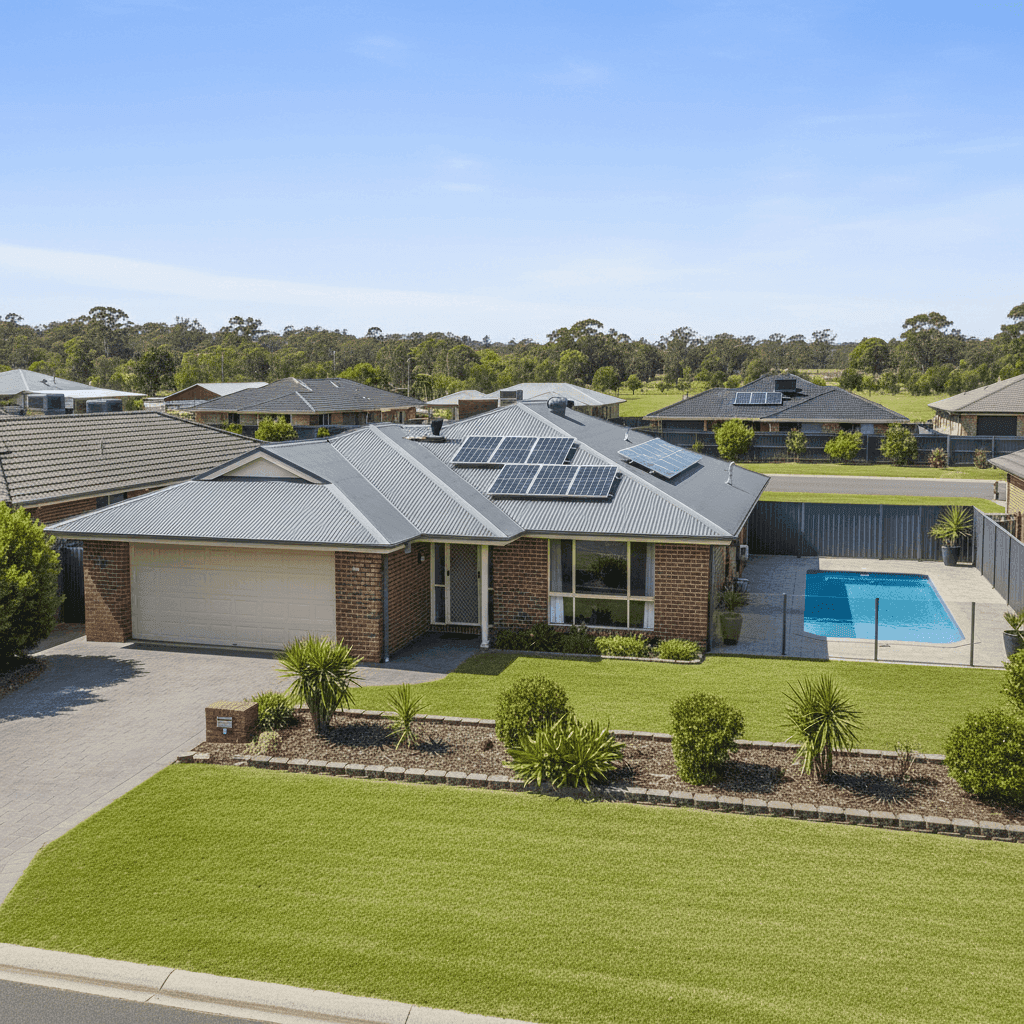
If you own a free standing home in Waterview Heights, NSW 2460, you've probably noticed that home insurance isn't cheap — and the numbers behind a recent quote we analysed confirm that. This article breaks down a home and contents insurance quote for a four-bedroom brick veneer property in the area, benchmarks it against local, state, and national data, and offers practical tips to help you get better value on your cover.
---
Is This Quote Fair?
The quote in question comes in at $4,957 per year (or $468/month) for combined home and contents insurance, covering a building sum insured of $1,157,000 and contents valued at $201,000. Both the building and contents excess are set at $2,000.
Our price rating for this quote is Expensive — Above Average.
To put that in context: the average home and contents premium across Waterview Heights sits at just $1,469 per year, with a median of $1,481. This quote is more than three times the local average, which is a significant gap worth understanding.
That said, it's important not to jump to conclusions. The sum insured here — over $1.15 million for the building alone — is substantially higher than what many comparable properties in the suburb are insured for. A higher replacement value naturally drives up the premium, and a 235 sqm home with above-average fittings, a swimming pool, and solar panels is genuinely more expensive to rebuild than a modest weatherboard cottage. The $4,957 figure may well reflect the true cost of adequately insuring this property, rather than an insurer overcharging.
Still, "expensive" is the honest rating, and it's worth shopping around to ensure you're not paying more than you need to.
---
How Waterview Heights Compares
Understanding where this quote sits relative to broader benchmarks helps frame the conversation. Here's a quick snapshot:
| Benchmark | Average Premium | Median Premium |
|---|---|---|
| Waterview Heights (suburb) | $1,469/yr | $1,481/yr |
| New South Wales | $9,528/yr | $3,770/yr |
| National | $5,347/yr | $2,764/yr |
| Richmond Valley LGA | $41,437/yr | — |
A few things stand out immediately. The NSW state average of $9,528 is skewed heavily upward by high-risk and high-value properties — the median of $3,770 is a more reliable indicator of what most NSW homeowners actually pay. Similarly, the national average of $5,347 is pulled up by extreme outliers, with the national median sitting at $2,764.
The Richmond Valley LGA average of $41,437 looks alarming at first glance, but this figure is almost certainly distorted by a small number of very high-value rural or commercial properties in the dataset, and shouldn't be read as representative of typical residential premiums in the area.
For Waterview Heights specifically, the suburb's 25th to 75th percentile range runs from $1,111 to $1,684 — based on a sample of 13 quotes. That's a fairly tight band, and this quote sits well above it. You can explore the full local data on the Waterview Heights insurance stats page.
---
Property Features That Affect Your Premium
Several characteristics of this property have a meaningful influence on what insurers charge. Here's how each one plays into the pricing:
Brick Veneer Walls & Colorbond Roof Brick veneer is generally viewed favourably by insurers — it's durable, fire-resistant, and relatively low-maintenance. A Colorbond steel roof is similarly well-regarded for its longevity and resistance to the elements. These construction materials typically attract more competitive premiums compared to timber or fibre cement cladding.
Stump Foundation The property sits on stumps, which is common for homes built in the region during that era. While stumps can introduce some vulnerability to subsidence and moisture over time, they also allow for easier inspection and repair of underfloor areas. Insurers may price this slightly higher than a concrete slab, particularly if the stumps are original timber.
Timber and Laminate Flooring Flooring type affects contents and building claims alike. Timber and laminate floors are susceptible to water damage and can be costly to replace, which may contribute modestly to the premium.
Above-Average Fittings This is a significant pricing factor. Kitchens and bathrooms with above-average fixtures, appliances, and finishes cost considerably more to repair or replace after a claim. Insurers adjust their pricing accordingly, and this is likely one of the stronger drivers of the higher building sum insured.
Swimming Pool A pool adds liability exposure and increases the overall replacement cost of the property. Most insurers include pool structures in the building cover, but the added risk of injury and the cost of pool equipment replacement both push premiums up.
Solar Panels Solar systems are now a standard feature on many Australian homes, but they do add to the replacement value of the building and introduce some risk of electrical faults or storm damage. Ensuring your solar panels are explicitly covered under your policy — and that your sum insured accounts for their replacement cost — is essential.
1993 Build Year A home built in the early 1990s is now over 30 years old. While well-maintained brick veneer homes of this era remain structurally sound, older properties can carry higher risk of wear-related claims, particularly around roofing, plumbing, and electrical systems.
---
Tips for Homeowners in Waterview Heights
1. Review your sum insured carefully The building is insured for $1,157,000 — a figure that needs to reflect the true cost of rebuilding, not the market value of the property. Use an independent building cost calculator or consult a quantity surveyor to confirm this figure is accurate. Overinsuring inflates your premium; underinsuring leaves you exposed at claim time.
2. Compare at least three quotes With a premium this size, even a 10–15% saving represents hundreds of dollars annually. Use a comparison platform like CoverClub to see multiple quotes side by side, and make sure you're comparing equivalent levels of cover — not just the cheapest headline price.
3. Ask about bundling discounts Some insurers offer discounts when you hold multiple policies — for example, combining home and contents cover (as this quote already does) or adding car insurance. It's worth asking directly, as these discounts aren't always advertised prominently.
4. Consider your excess settings Both the building and contents excesses here are set at $2,000. Opting for a higher excess can reduce your annual premium, but make sure the excess is an amount you could comfortably pay out of pocket if you needed to make a claim. It's a trade-off worth modelling against your likely savings.
---
Ready to Compare?
Whether this quote is right for your situation or you're simply curious what else is out there, it pays to look. Head to CoverClub to compare home and contents insurance quotes for your Waterview Heights property — it takes just a few minutes and could save you a meaningful amount each year.