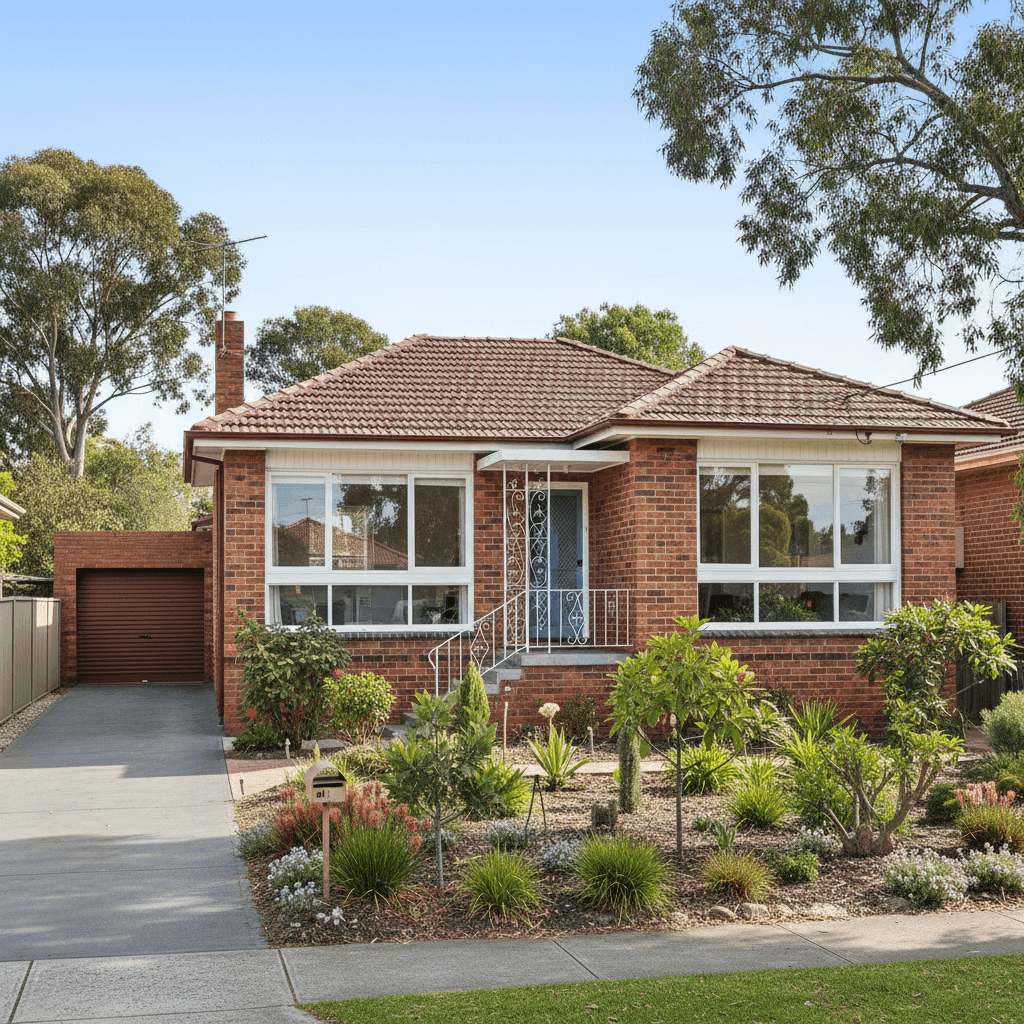
If you own a free standing home in Watsonia, VIC 3087, you've probably wondered whether you're paying a fair price for building insurance — or leaving money on the table. This article breaks down a real building-only insurance quote for a 3-bedroom, 2-bathroom home in the suburb, and puts it in context against local, state, and national benchmarks.
---
Is This Quote Fair?
The quote in question comes in at $1,036 per year (or $99/month) for building-only cover, with a sum insured of $369,000 and a building excess of $5,000.
Our price rating for this quote is FAIR — Around Average.
That assessment holds up when you look at the numbers. The suburb average premium for Watsonia sits at $1,187/year, and the median is slightly higher at $1,226/year. This quote lands comfortably below both figures, placing it between the 25th percentile ($975/yr) and the median — meaning it's better than roughly half the quotes seen in the area, based on a sample of 33 quotes from the suburb.
In other words, while it's not the cheapest available, it's a solid result. Homeowners paying closer to the 75th percentile ($1,338/yr) for comparable cover are spending nearly 30% more annually for what may be a very similar policy.
---
How Watsonia Compares
Zooming out reveals just how well-priced Watsonia home insurance tends to be relative to broader benchmarks.
| Benchmark | Average Premium |
|---|---|
| Watsonia (suburb average) | $1,187/yr |
| Banyule LGA average | $2,085/yr |
| Victoria state average | $3,000/yr |
| Victoria state median | $2,718/yr |
| National average | $5,347/yr |
| National median | $2,764/yr |
The suburb average of $1,187/yr is significantly lower than the Victorian state average of $3,000/yr — less than 40 cents in the dollar compared to the state norm. Even against the state median of $2,718/yr, Watsonia comes out well ahead.
Nationally, the contrast is even starker. The national average premium of $5,347/yr is heavily skewed by high-risk regions — think cyclone-prone Far North Queensland, flood-affected river towns, and bushfire corridors. Watsonia's suburban Melbourne location simply doesn't carry those elevated risk profiles, which is reflected in the pricing.
You can explore Watsonia suburb insurance statistics, Victoria-wide data, or national home insurance benchmarks to dig deeper into the comparisons.
---
Property Features That Affect Your Premium
Several characteristics of this particular property influence how insurers price the risk — and understanding them helps explain why this quote lands where it does.
Brick Veneer Construction
Brick veneer walls are generally viewed favourably by insurers. They offer reasonable fire resistance and structural durability, which typically translates to lower premiums compared to weatherboard or clad homes. That said, brick veneer is not the same as full double-brick construction, so it doesn't always attract the very lowest tier of pricing.
Tiled Roof
A tiled roof is a standard, well-regarded roofing material in Australian suburban homes. Tiles are durable, widely understood by assessors, and generally associated with lower claims risk than older corrugated iron or asbestos-cement roofing. This works in the homeowner's favour at pricing time.
Stump Foundation
Built in 1975, this home sits on stumps — a common foundation type for that era, particularly in Melbourne's middle suburbs. Stump foundations can introduce some risk around subsidence and movement over time, which some insurers factor into their pricing. It's worth ensuring your policy covers damage arising from foundation movement, as exclusions vary between providers.
Timber and Laminate Flooring
Timber and laminate floors are a feature in many homes of this vintage and can affect the cost to rebuild or repair. They're generally straightforward for insurers to assess but can be more expensive to replace than, say, ceramic tiles — something worth keeping in mind when reviewing your sum insured.
Ducted Climate Control
The presence of ducted climate control adds to the replacement value of the home. It's a fixed asset that should be factored into your building sum insured, and it's good to see it accounted for in a building-only policy.
No Pool, No Solar Panels
The absence of a pool and solar panels keeps the risk profile clean. Both features can introduce additional liability or replacement cost considerations, so their absence simplifies the underwriting picture.
Sum Insured: $369,000 for 130 sqm
At roughly $2,838 per square metre, the sum insured appears reasonable for a brick veneer home of this age and specification in Melbourne's northern suburbs. However, it's always wise to review this figure regularly — construction costs have risen sharply in recent years, and underinsurance remains one of the most common issues homeowners face at claim time.
---
Tips for Homeowners in Watsonia
1. Review your sum insured annually Building costs in Victoria have climbed considerably since the pandemic. A sum insured that was accurate two years ago may no longer reflect the true cost to rebuild. Use a building cost calculator or speak with a quantity surveyor to make sure you're adequately covered.
2. Consider your excess carefully This quote carries a $5,000 building excess — which is on the higher end. A higher excess typically reduces your premium, but it means you'll need to cover more out of pocket if you need to make a claim. Make sure you have that amount readily accessible, or consider whether a lower excess is worth the additional premium cost.
3. Shop around at renewal time Even if your current premium feels fair, the insurance market shifts regularly. Insurers re-price their books, and a policy that was competitive last year may not be this year. Comparing quotes through CoverClub at renewal time takes only a few minutes and could save you hundreds.
4. Check what's included — and what's not Building-only cover protects the structure of your home, but not your belongings. If you rent out the property or have significant personal assets inside, consider whether a combined building and contents policy makes more sense for your situation. Also review policy exclusions around stump foundations and gradual damage, which can catch homeowners off guard.
---
Compare Your Own Quote
Whether you're reviewing an existing policy or shopping for cover on a new purchase, it pays to see the full picture. CoverClub makes it easy to compare home insurance quotes from multiple providers in one place — so you can see exactly where your premium sits relative to your neighbours.