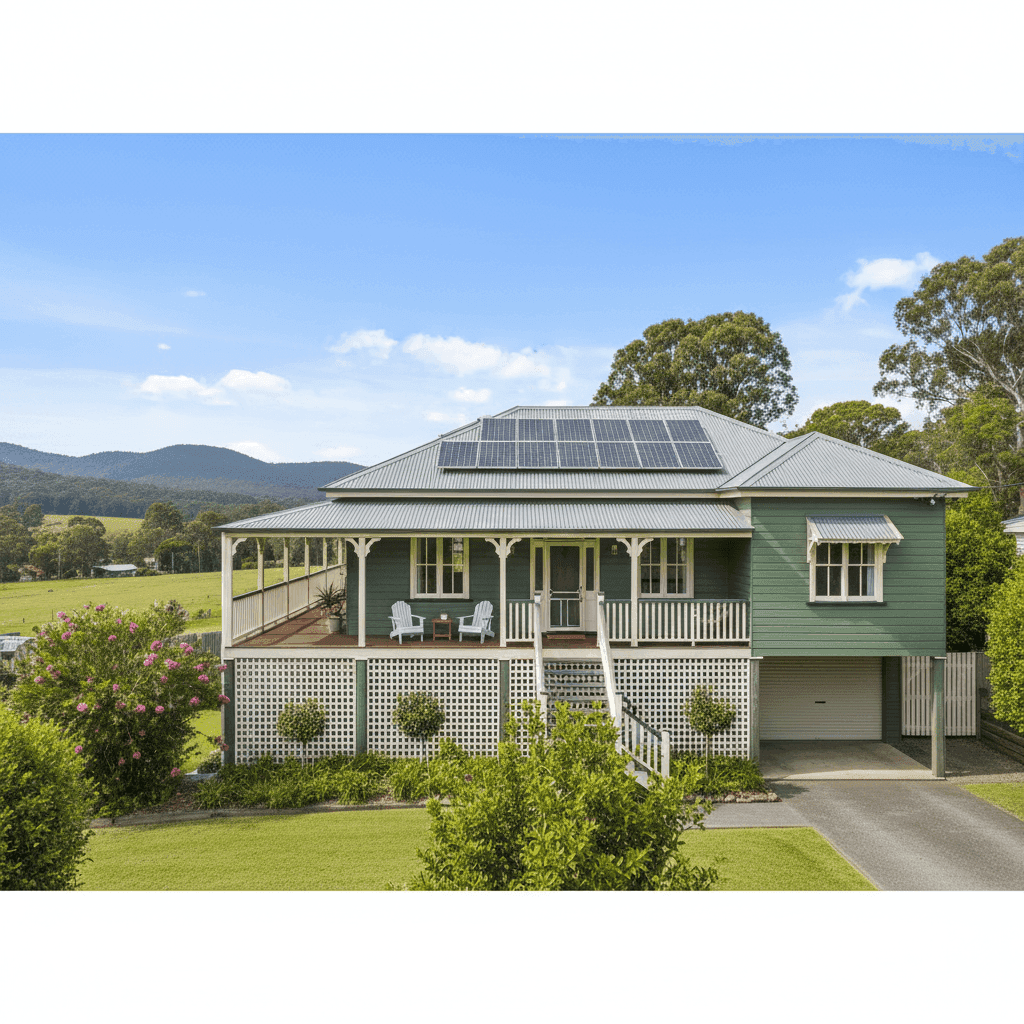
If you own a free standing home in Wauchope, NSW 2446, you've probably noticed that insurance premiums can vary quite a bit depending on who you ask. This article breaks down a real home and contents insurance quote for a three-bedroom, two-bathroom weatherboard property in the area — and helps you understand whether the price stacks up against what others in the suburb, state, and across Australia are paying.
---
Is This Quote Fair?
The quote in question comes in at $3,938 per year (or $377 per month) for combined home and contents cover, with a $626,000 building sum insured and $50,000 in contents cover. Both the building and contents excess sit at $1,000.
Our price rating for this quote is Expensive — above average for the Wauchope area.
To put that in perspective, the average home insurance premium among the 52 quotes we've recorded for postcode 2446 sits at $2,224 per year, with a median of $1,946. This quote is nearly 77% above the suburb average and more than double the median. Even comparing it to the 75th percentile — meaning only 25% of quotes in the area are higher — the figure of $3,109 is still well below what's being quoted here.
That said, context matters. Several property-specific factors (discussed below) can legitimately push a premium above typical benchmarks. But the gap is significant enough that it's well worth shopping around before accepting this price.
---
How Wauchope Compares
Understanding where Wauchope sits relative to broader benchmarks gives useful context when evaluating any quote. Here's a snapshot:
| Benchmark | Average Premium | Median Premium |
|---|---|---|
| Wauchope (2446) | $2,224/yr | $1,946/yr |
| LGA (Walcha area) | $2,935/yr | — |
| NSW | $9,528/yr | $3,770/yr |
| National | $5,347/yr | $2,764/yr |
A few things stand out here. First, Wauchope is actually a relatively affordable suburb by NSW standards — the state average of $9,528 is dramatically higher, driven largely by high-value properties and elevated-risk areas in greater Sydney and coastal zones. Even the NSW median of $3,770 is above what most Wauchope homeowners are paying.
Nationally, the picture is similar — the Australian average of $5,347 reflects the full range of risk profiles across the country, from cyclone-prone Queensland to bushfire-affected regions of Victoria and South Australia.
What this tells us is that Wauchope, on the whole, is a lower-risk, lower-cost area for home insurance. The quote analysed here sits above the local norm, which makes it worth interrogating further — and worth comparing.
You can explore the full data for Wauchope and postcode 2446, browse NSW home insurance statistics, or check out national home insurance benchmarks to see how your own situation compares.
---
Property Features That Affect Your Premium
Several characteristics of this particular property are likely contributing to a higher-than-average premium. Here's what insurers are likely factoring in:
Weatherboard Timber Construction
Weatherboard wood external walls are one of the most significant premium drivers for older Australian homes. Timber is more susceptible to fire, rot, and pest damage than brick or fibre cement, and many insurers price this risk accordingly. Combined with a 1953 construction year, the property falls into a category where wiring, plumbing, and structural components may be ageing — all of which increases the likelihood of a claim.
Elevated on Stumps
The home sits elevated by at least one metre on stumps — a classic Queensland-style construction that was common across coastal and hinterland NSW in the mid-twentieth century. While elevation can actually reduce flood risk by keeping the living area above ground level, stump foundations can be costly to repair or replace if they deteriorate. Insurers often view this foundation type as a higher-risk structural element.
Timber and Laminate Flooring
Flooring type feeds into the overall contents and building replacement cost. Timber floors — particularly in older homes — can be expensive to repair or replace after water damage or fire, which may be reflected in the building sum insured and, by extension, the premium.
Solar Panels
The property has solar panels installed, which adds to the replacement value of the building. Solar systems typically cost $5,000–$15,000 or more to replace, and most insurers include them under building cover. This is a legitimate reason for a slightly higher sum insured.
Ducted Climate Control
Ducted air conditioning systems are expensive to repair and replace — often $10,000 or more for a full system. Like solar panels, this contributes to a higher overall building replacement cost and can nudge premiums upward.
Steel/Colorbond Roof
On the positive side, a Colorbond steel roof is generally viewed favourably by insurers. It's durable, fire-resistant, and low-maintenance compared to terracotta tiles or older corrugated iron. This may be partially offsetting some of the other risk factors.
---
Tips for Homeowners in Wauchope
If you're a homeowner in Wauchope — or anywhere in the Port Macquarie-Hastings region — here are some practical steps to make sure you're getting value from your home insurance:
- Compare multiple quotes, not just one. The spread of premiums in postcode 2446 is wide — from $1,190 at the 25th percentile to over $3,100 at the 75th. A single quote tells you very little about what's available. Use a comparison tool like CoverClub to see quotes side by side.
- Review your sum insured carefully. A $626,000 building sum insured is substantial for a 169 sqm weatherboard home in regional NSW. Make sure this figure reflects the actual cost to rebuild — not the market value of the property. Overinsuring is a common and costly mistake. Use a building cost calculator to sense-check the number.
- Ask about discounts for security and safety features. Some insurers offer reduced premiums for homes with monitored alarms, deadbolts, or smoke detectors. It's worth asking each insurer directly what discounts apply to your property.
- Consider your excess strategically. A $1,000 excess is fairly standard, but opting for a higher excess (say, $2,000) can meaningfully reduce your annual premium. If you have a solid emergency fund and are unlikely to make small claims, a higher excess may save you money over time.
---
Ready to Find a Better Deal?
A premium of nearly $4,000 a year is a significant household expense — and as the data shows, there's a real chance you could be paying less for comparable cover. CoverClub makes it easy to compare home and contents insurance quotes from a range of Australian insurers in one place.
Get a quote today at CoverClub and see how much you could save on your Wauchope home insurance.